
This is a looking guide, not a promise that every object will occupy the same room. Loans, conservation, renovations, and staffing move art. Check the museum’s live gallery schedule and collection record before visiting.
Greek and Roman sculpture: bodies built for movement
1. Diana of Versailles: look for direction
This Roman marble adapts a lost Greek sculptural type associated with Artemis. Her head turns, one hand reaches toward the quiver, and the shortened garment frees the stride. Walk around her and notice how the sculpture directs your attention beyond itself toward an unseen hunt. The deer is part of the work’s restoration history, so do not treat every visible element as equally ancient.
2. Sleeping Hermaphroditus: look twice
The sculpture deliberately changes as you circle it. Its pose first recalls a reclining nude; the second viewpoint complicates the viewer’s assumptions about sex and beauty. Bernini’s astonishing mattress is a 17th-century addition, creating a productive clash between ancient body and Baroque illusion.
3. Venus de Milo: stop reconstructing the arms
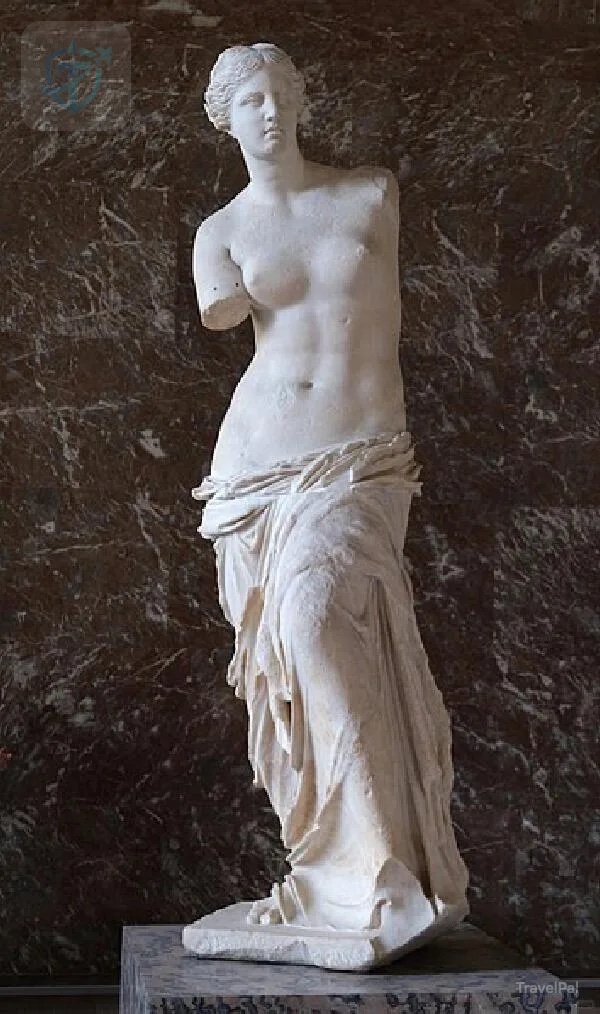
The sculpture, dated by the Louvre to roughly 150–125 BCE, combines a classically calm face with a turning torso and deep Hellenistic drapery. The missing arms invite speculation, but no reconstruction is certain. The better question is how the exposed upper body, heavy cloth, and shifting weight create a continuous spiral.
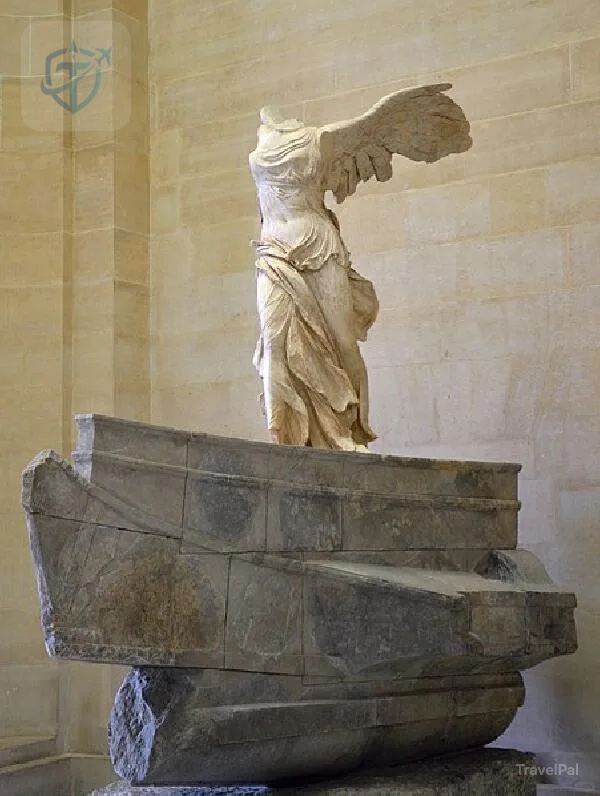
4. Winged Victory: let the wind provide the body
The figure lands or stands at the prow of a ship. Cloth presses against her abdomen and streams around the legs, making invisible air feel physical. Approach from below, then compare the frontal stability with the side view’s forward drive. The contrasting stone of figure and ship helps separate divine apparition from vessel.
Renaissance painting: gesture, gaze, and atmosphere
5. Botticelli’s Tornabuoni fresco: joy with a solemn face
Venus and the Three Graces Presenting Gifts to a Young Woman once belonged to a Florentine domestic setting. The mortal woman’s dress distinguishes her from the barefoot mythological figures, while the gifts turn classical learning into a statement about virtue, marriage, and elite identity. Botticelli’s linear grace is unmistakable, yet the mood remains strangely restrained.
6. Leonardo portraits: notice the turn
In La Belle Ferronnière, the sitter’s body and gaze do not simply face the viewer. The turn, parapet, controlled light, and precise fabric create psychological distance. Compare that compact authority with The Virgin and Child with Saint Anne, where overlapping bodies form a unified pyramid and a chain of glances moves through three generations.
Do not repeat the popular “vulture in the drapery” interpretation as established fact. It comes from a mistranslation in Freud’s analysis and is a warning about how seductive stories can outrun evidence.
The Salle des États: turn around
7. Mona Lisa: look at transitions, not celebrity
The portrait shows Lisa Gherardini, wife of Francesco del Giocondo. Its effect is not a single secret but an accumulation of controlled ambiguities: the body turns toward us, contours soften through thin glazes, the mouth changes with viewing distance, and the landscape refuses a simple stable horizon. The 1911 theft amplified modern celebrity, but the painting’s technical authority long predates it.
8. Wedding Feast at Cana: look for the quiet center
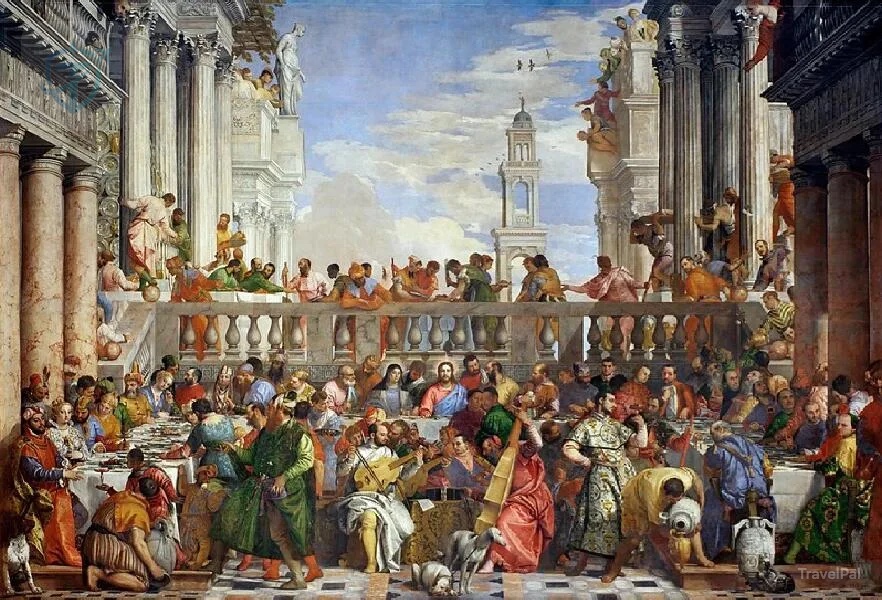
Veronese translates a biblical wedding into an immense contemporary Venetian banquet of roughly 130 figures. Christ occupies the compositional center, but musicians, servants, architecture, costumes, and vessels compete for attention. Search for the moment water becomes wine: the miracle is structurally central and socially almost invisible.
The canvas was painted for the refectory of San Giorgio Maggiore in Venice and seized by French troops in 1797. Its presence in Paris is part of the work’s history, not merely a neutral museum fact.
French Romanticism: current events at monumental scale
9. The Raft of the Medusa: follow two diagonals
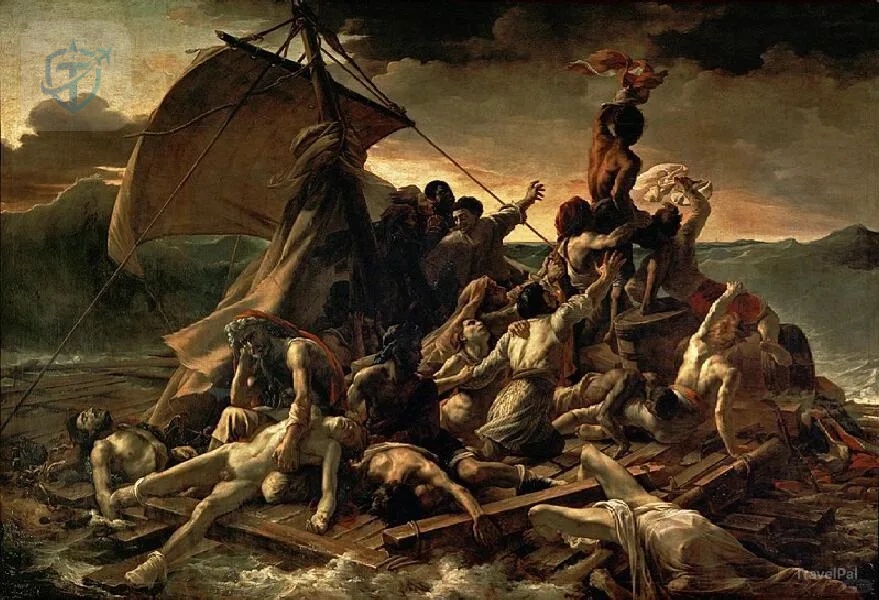
Géricault transformed the 1816 Méduse disaster—a recent political scandal—into history painting. Fifteen of roughly 150 people survived thirteen days on the raft. The bodies are more heroic than starving survivors would have been, but that classical anatomy makes the contemporary failure impossible to dismiss as a minor news event.
10. Liberty Leading the People: separate allegory from reportage
Delacroix combines bodies, smoke, recognizable Parisian types, and the July Revolution of 1830 with an allegorical woman carrying the tricolor. She is not simply a portrait of one participant. The painting’s power comes from forcing symbolic Liberty to step across the material cost of revolution.
Richelieu’s Mesopotamian galleries: power before Greece
11a. Ebih-Il: meet an ancient gaze
The alabaster votive figure from Mari, about 2400 BCE, sits with clasped hands on a wicker stool. Shell, lapis lazuli, and bitumen create eyes designed for sustained attention; the imported lapis also points toward long-distance exchange. The Akkadian inscription identifies Ebih-Il and dedicates the statue to Ishtar. It is not merely a portrait but a permanent act of devotion.
11b. Lamassu: count the legs
The colossal human-headed winged bulls from Sargon II’s Assyrian capital guarded architectural thresholds. From the front, the creature stands firm; from the side, it strides. The sculptor resolves those incompatible views with five legs. Walk rather than taking one frontal photograph—the object’s intelligence only appears through motion.
A final change of scale: Vermeer’s Lacemaker
After colossal guardians and political canvases, Vermeer’s small painting asks for intimacy. The woman’s concentration creates silence, while the sharp focal area dissolves into softer threads and foreground color. Suggestions that Vermeer used a camera obscura remain debated; the optical effects are worth observing without turning a hypothesis into biography.
The useful ending question is simple: how does a painting this small control your attention in one of the world’s largest museums?
Titles, dates, interpretations, locations, and display status were checked against Louvre collection and visitor-trail records on July 16, 2026. Room numbers and open galleries can change.