
A history-first Nara day
| Time | Stop | Why it fits |
|---|---|---|
| 8:00–10:00 a.m. | Hōryū-ji | Ancient architecture before day-trippers gather |
| Late morning | Transfer to central Nara | Lunch near the park or museum |
| 12:30–2:00 p.m. | Tōdai-ji | Monumental temple architecture and sculpture |
| 2:15–4:30 p.m. | Nara National Museum | Buddhist sculpture indoors during afternoon heat |
| Optional | Shin-Yakushi-ji | A quieter final temple if time remains |
Nara Park becomes a corridor rather than the destination. Walk through it, keep food secured around deer, and spend the limited hours on buildings and collections that cannot be replicated elsewhere.
Why Hōryū-ji is the essential first stop
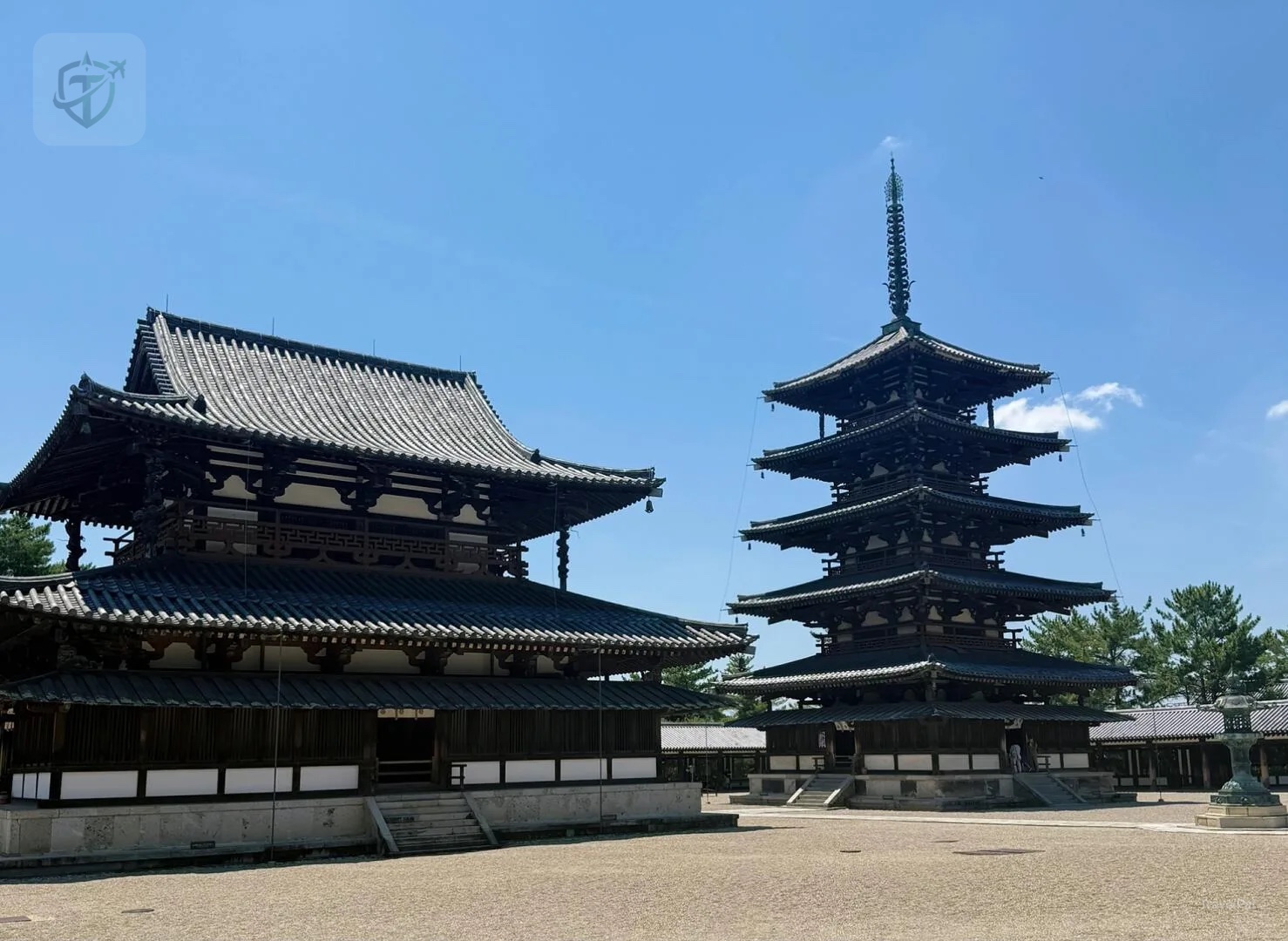
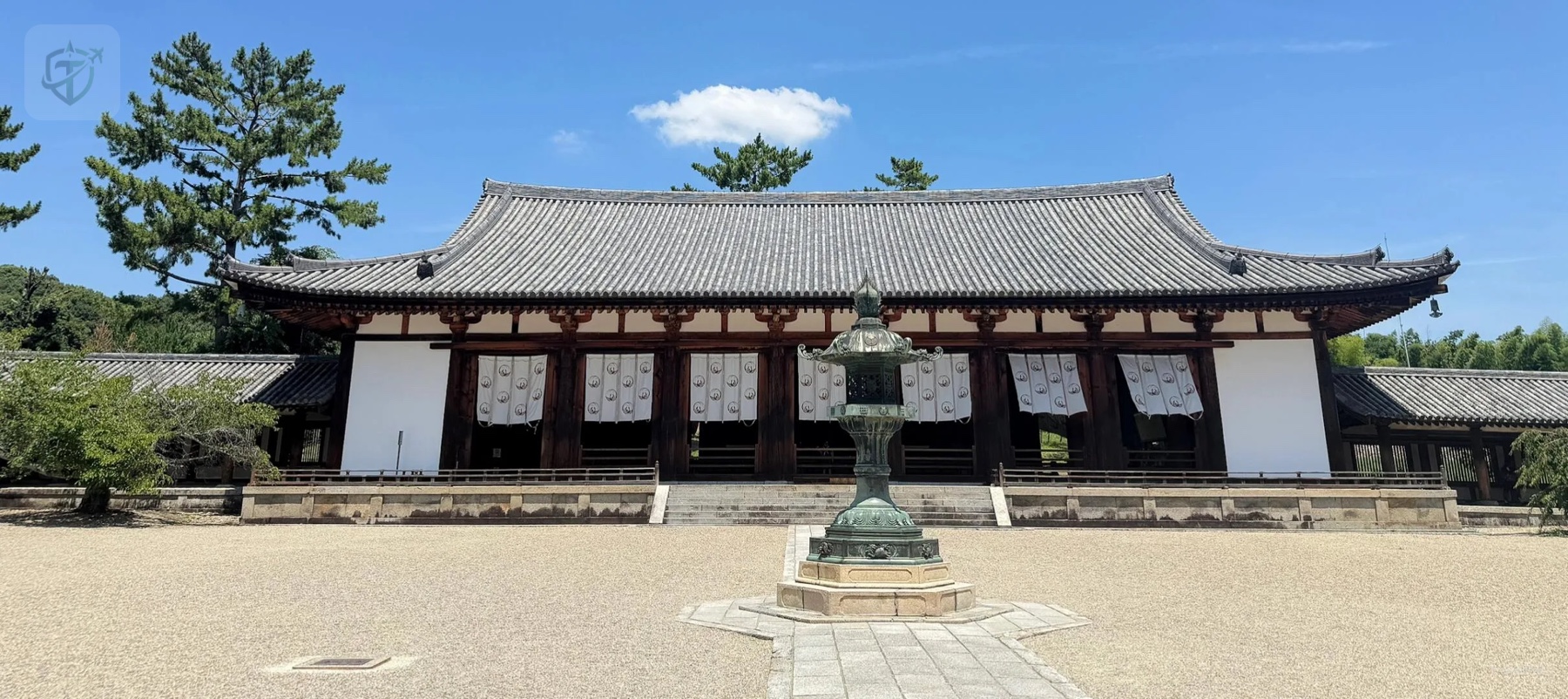
Hōryū-ji is associated with Prince Shōtoku and preserves some of the world’s oldest surviving wooden buildings. The Western Precinct’s Golden Hall and five-story pagoda communicate early Japanese Buddhist architecture with unusual directness: balanced timber frames, deep tiled roofs, bracket systems, and an enclosed court that still reads as a coherent sacred environment.
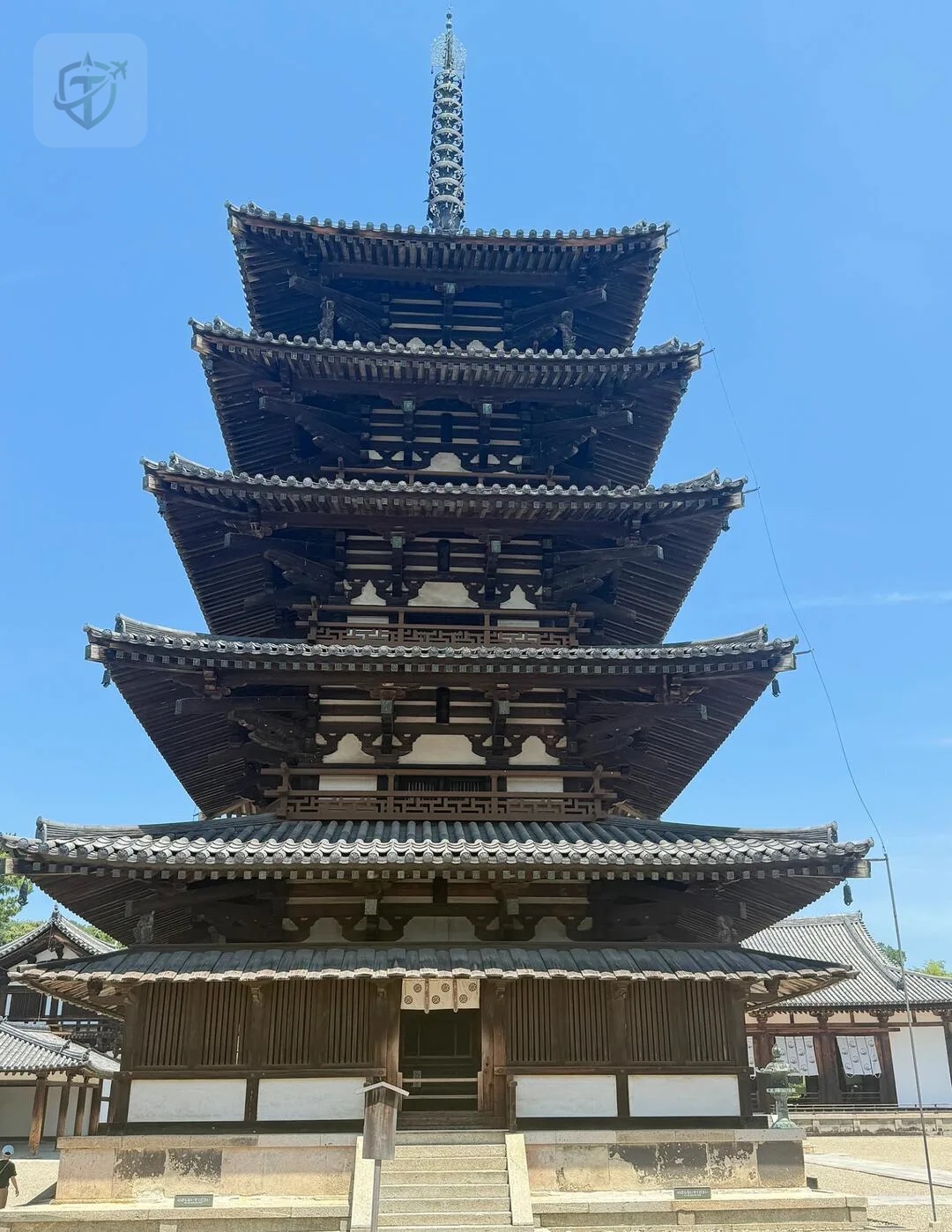
The importance is not simply age. Hōryū-ji preserves a complete relationship among architecture, sculpture, ritual space, gates, corridors, and landscape. For visitors familiar with Chinese Buddhist history, it also offers a rare physical encounter with forms connected to the broader East Asian world of the Sui and Tang periods.
We found the precinct significantly quieter than central Nara. Two hours gave us time to study the pagoda and Golden Hall, continue through the major collections, and photograph the exterior without turning the visit into a race.
Getting to Hōryū-ji from Osaka
Take the JR Yamatoji Line from Osaka Station or Tennoji to Hōryūji Station. The official temple information estimates about 31 minutes from Osaka Station and 20 minutes from Tennoji on an appropriate rapid service. From Hōryūji Station, walk roughly 15 minutes or take the short local bus.
Starting here is more efficient than central Nara because the temple opens early and lies west of the main park district. Afterward, return by JR toward Nara rather than backtracking to Osaka.
Tōdai-ji without making deer the itinerary
Tōdai-ji earns its crowds. The Great Buddha Hall and bronze Vairocana Buddha operate at a monumental scale different from Hōryū-ji’s intimate early precinct. Give the temple at least an hour, and add its museum if the current exhibition complements your interests.
Kasuga Taisha is visually rich but extends the walking considerably. For a history-first day, choose it only if shrine architecture matters more than the museum. Shin-Yakushi-ji, south of the main park, offers a quieter alternative centered on its Yakushi image and group of guardian figures.
Use Nara National Museum for depth—and shade
Nara National Museum is our strongest recommendation in central Nara. Its Buddhist Sculpture Hall allows comparisons across periods, materials, expressions, and temple traditions that become difficult when objects remain dispersed across many sites. The Ritual Bronzes Gallery broadens the context beyond Japanese sculpture.
Current standard hours are 9:30 a.m.–5:00 p.m., with Saturday opening until 7:00 p.m. during the current 2026 schedule. Last admission is 30 minutes before closing. The museum is generally closed Monday and December 28–January 1, with holiday exceptions and additional openings around major Nara events.
Permanent-collection admission is currently ¥700 for adults and ¥350 for college students; visitors under 18, high-school students and younger, visitors 70 and older, and eligible disability-certificate holders receive free admission under the stated conditions. Special exhibitions use separate pricing.
Current Hōryū-ji details
| Address | 1-1 Hōryūji Sannai, Ikaruga, Nara 636-0115 |
|---|---|
| Hours, Feb. 22–Nov. 3 | 8:00 a.m.–5:00 p.m. |
| Hours, Nov. 4–Feb. 21 | 8:00 a.m.–4:30 p.m. |
| Adult admission | ¥2,000 |
| Junior-high admission | ¥1,700 |
| Primary-school admission | ¥1,000 |
| Typical visit | About 2 hours |
- Arrive at opening for the quietest experience and coolest summer temperatures.
- Wear shoes suitable for repeated thresholds, gravel, and substantial walking.
- Temple interiors restrict photography; follow the signs even when another visitor ignores them.
- Do not overfill the day. Hōryū-ji, Tōdai-ji, and the museum already create a serious itinerary.
Confirm information with Hōryū-ji and the Nara National Museum before traveling.
Temple and museum hours, admission, exhibitions, bus schedules, photography rules, and access change. Details were verified against official sources on July 16, 2026.