
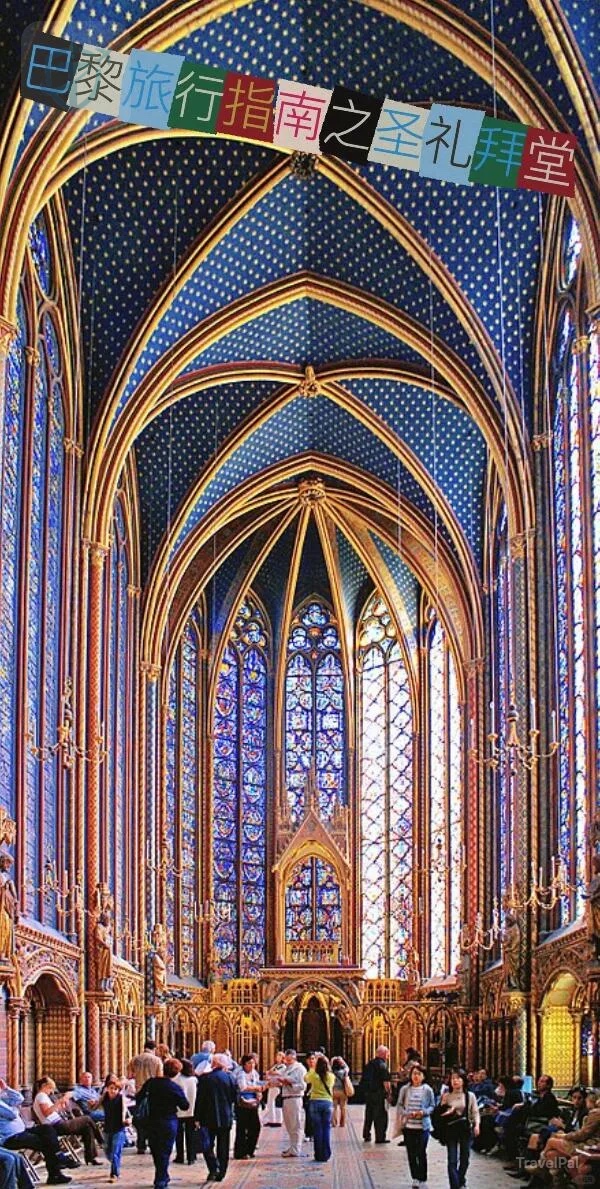
Why it was built
Louis IX commissioned Sainte-Chapelle in the 1240s within the royal palace on Île de la Cité to house Passion relics, including the Crown of Thorns. The building was completed with extraordinary speed and made sacred possession, Capetian authority, and Paris’s claim to Christian importance visible in architecture.
How to read the windows
The fifteen great windows contain 1,113 scenes. Read generally from lower panels upward and move through the chapel’s biblical sequence rather than expecting every image to be visible unaided. Binoculars or the monument’s interpretation tools help. Borders of fleurs-de-lis and Castilian castles connect the program to Louis IX and Blanche of Castile.
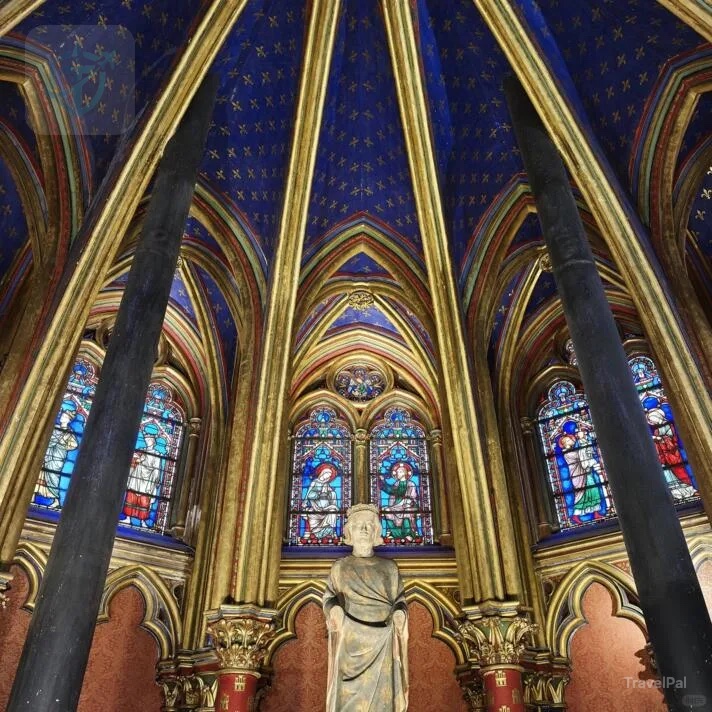
The rose window belongs to a later century
The west rose illustrates Revelation and dates to the late 15th century, more than two centuries after the main 13th-century glazing. Its flamboyant tracery and broader yellow-green range make that change visible. It is not merely the last window in a continuous original campaign.
Practical 2026 visit
| April–September | 9:00 a.m.–7:00 p.m. |
|---|---|
| October–March | 9:00 a.m.–5:00 p.m. |
| Last access | 30 minutes before closing |
| 2026 individual ticket | €22 non-EEA visitor rate; €16 qualifying EEA national/resident rate |
| Combined with Conciergerie | €30 or €23 under the corresponding rate rules |
- Reserve a timed slot even with the Paris Museum Pass.
- Book every visitor, including those qualifying for free admission.
- Allow courthouse security time; Sainte-Chapelle sits inside the Palais de Justice complex.
- There is no cloakroom. Luggage, scooters, and motorcycle helmets are prohibited.
- Pair it with the Conciergerie and nearby Notre-Dame.
Hours, prices, closures, security, and reservation rules change. Details were checked against the official Sainte-Chapelle site on July 16, 2026.