
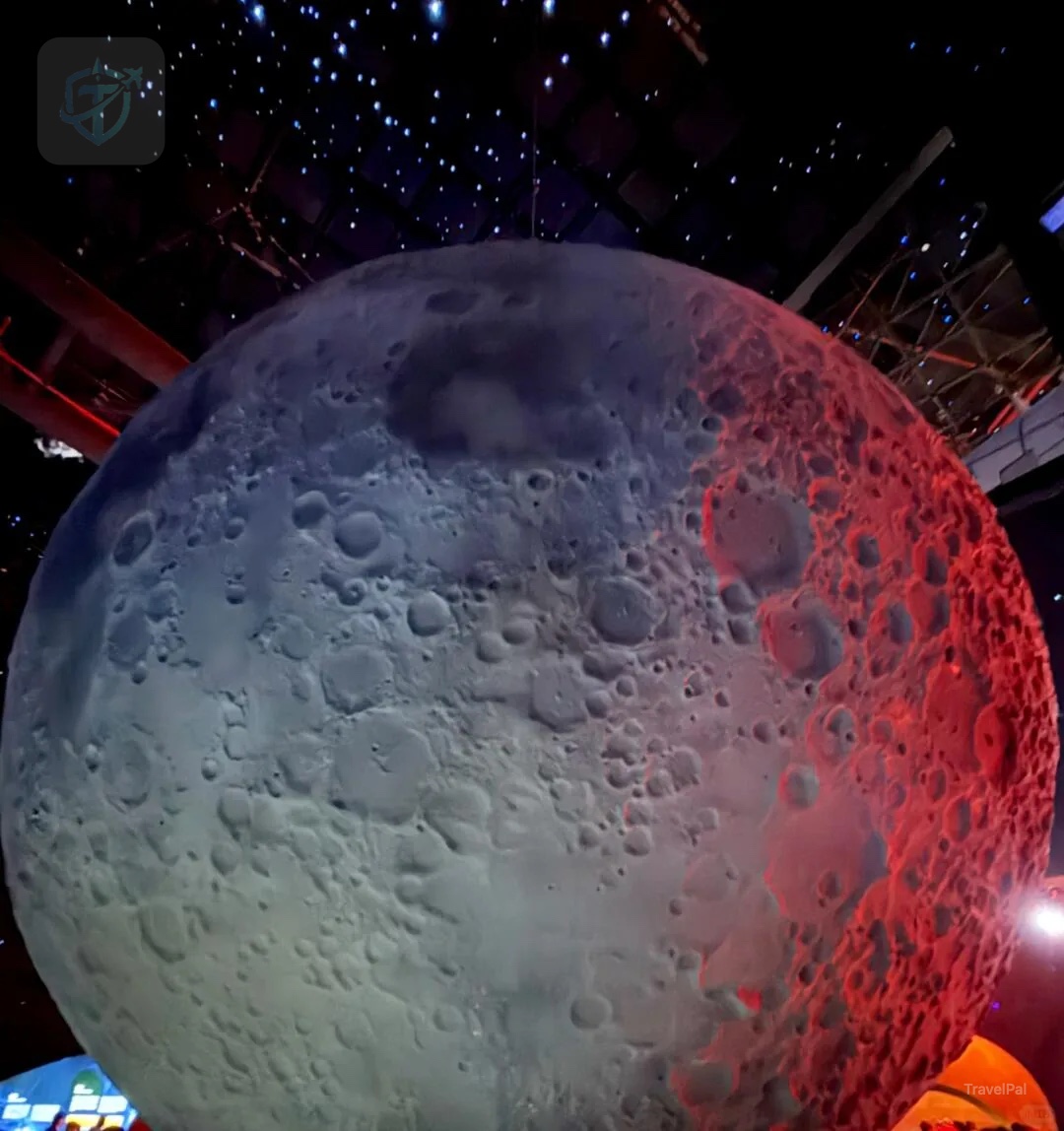
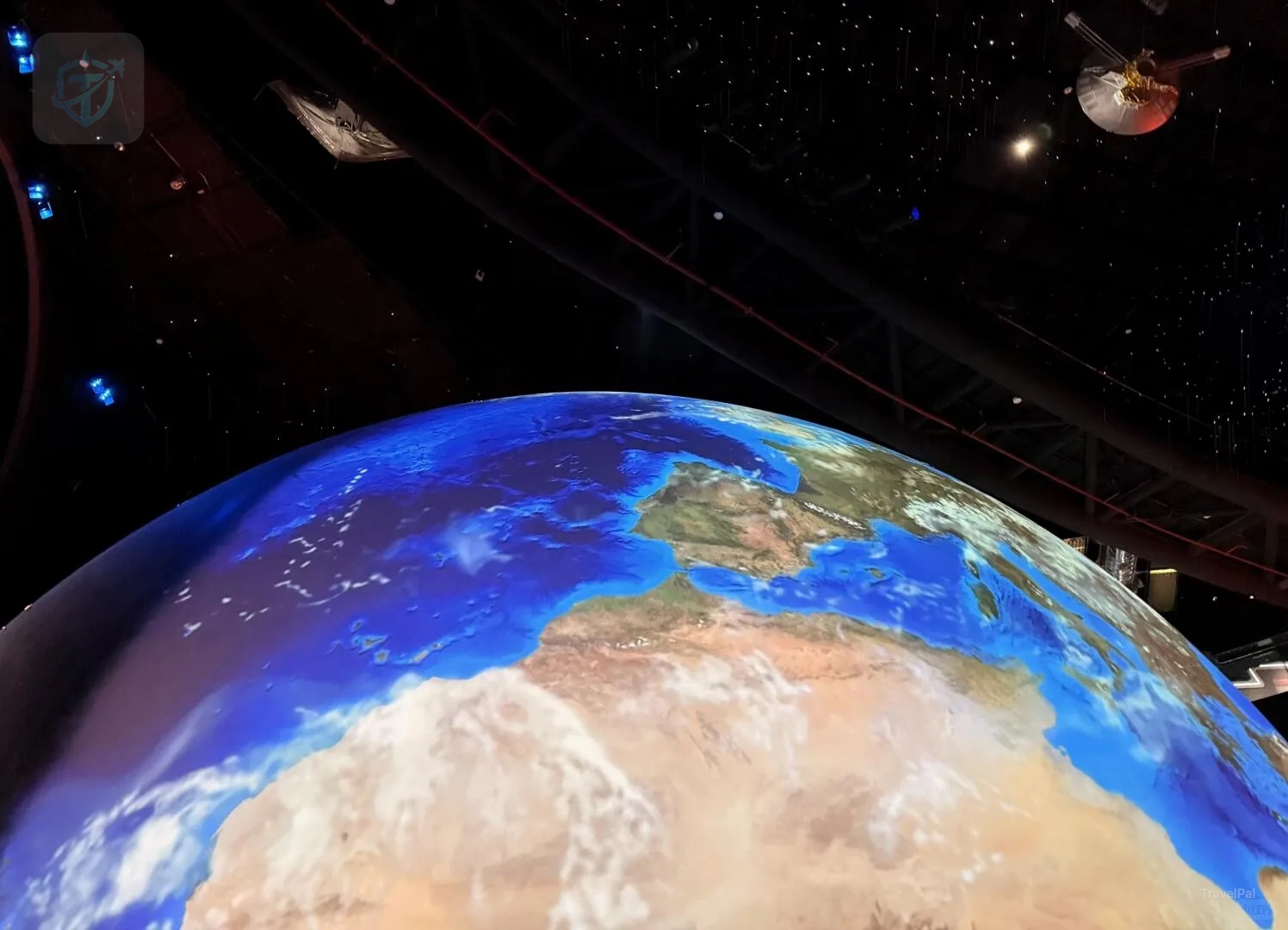
Shanghai Astronomy Museum is one of the most visually ambitious museums I have visited. A suspended Earth, a giant Moon, a Foucault pendulum, spacecraft models, and dramatic dark galleries turn astronomy into physical theater. The Ennead-designed building is itself part of the exhibition.
But after visiting many planetariums, I left with a reservation: the museum’s size and visual technology promise more intellectual depth than every gallery delivers. Some displays feel built for a photograph or quick interaction rather than a sustained explanation. That does not make it bad—it changes who will get the most from the long trip to Lingang.
Quick verdict
| Overall rating | 4 out of 5 |
|---|---|
| Best for | Families, first-time astronomy visitors, architecture fans, and photographers |
| Time needed | At least half a day at the museum, plus substantial transport time |
| Main drawback | Remote location and uneven depth across a very large exhibition |
Bottom line: worth visiting once if astronomy, children’s science museums, or architecture interests you. It is harder to recommend as a casual add-on to a short central-Shanghai itinerary.
Tickets, hours, and reservations
The museum is at 380 Lingang Avenue, Pudong, near Dishui Lake. Shanghai’s official tourism listing currently gives regular hours as 9:30 a.m.–4 p.m., with last entry at 3 p.m., and closure on Mondays except when holiday notices say otherwise. It lists admission at RMB 30 for adults, RMB 15 for students, and RMB 25 for ages 60–69, with qualifying free categories. Check the current official Shanghai tourism listing before leaving.
General admission and dome-theater tickets are separate. Booking procedures have changed over time and can differ during holidays or special evening sessions. Use the official WeChat account or ticket mini program identified by the museum system, enter each visitor’s real identification details, and read the refund terms before payment. Popular school-holiday dates can sell out quickly.
Do not build a trip around an old claim that tickets always release at one fixed time. Recheck the current release window in the official mini program for your exact visit date.
Getting there from central Shanghai
The museum is far southeast of central Shanghai. Metro Line 16 reaches Dishui Lake, but the full ride can exceed an hour before the final walk or short car ride.
My practical route was to reach Longyang Road, transfer to Line 16, and choose an express service when the timetable aligned. Local and express patterns can change, so read the platform display rather than relying on a remembered “top of the hour” rule. From Dishui Lake station, use the signed exit and local transport appropriate that day.
If you have a timed film, aim to arrive at the museum at least 30 minutes beforehand. Security screening, station navigation, and the walk through the building all consume time. A 15-minute buffer proved too fragile for me.
The dome theater is worth adding
I watched a film about the two Voyager probes and their journey beyond the outer planets. Surrounded by stars across the dome, it became the strongest part of the visit: visually immersive, emotionally clear, and more focused than many individual gallery displays.
Because admission and film tickets are separate, check whether your film requires a same-day museum ticket and whether late arrival is permitted. The entrance is inside the building; ask staff for the dome theater as soon as you clear security rather than wandering first.
What the museum does well—and what it lacks
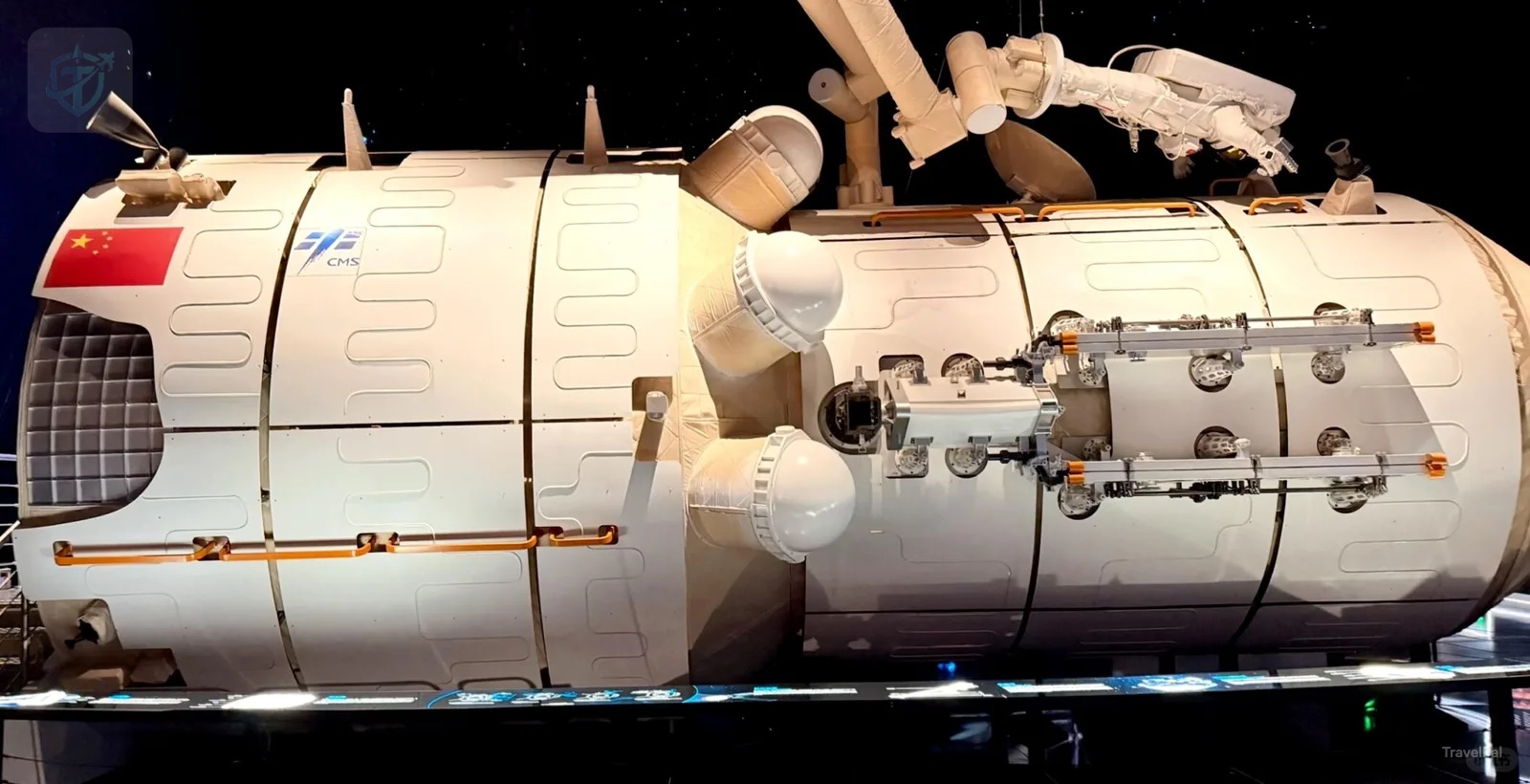
The museum’s main story is organized around humanity’s relationship with the universe, with major thematic areas commonly translated as Home, Cosmos, and Odyssey. Highlights include Chinese astronomical history, lunar and spacecraft displays, the Foucault pendulum, a suspended or projected Earth, and architecture shaped around celestial movement.
What works
- Architecture: the building makes orbital motion, light, and cosmic geometry tangible before you read a label.
- Immersion: the giant Moon, Earth visualization, dark ceilings, and spacecraft create memorable scale.
- Accessibility for beginners: children and first-time astronomy visitors get immediate visual entry points.
- Live interpretation: the staff-led explanation I heard was engaging and added context missing from some displays.
Where it falls short
Knowledge density is uneven. The museum contains many artifacts and technologies, yet some sections move quickly from spectacle to spectacle without developing the science as deeply as an experienced astronomy visitor may want. English-language depth may also vary by display, so international visitors should consider a translation app or guided interpretation.
This is not a reason to skip the museum. It is a reason to pair the strongest visual exhibits with a film, staff talk, or your own follow-up reading.
Who should make the journey?
Go if:
- You are introducing a child to astronomy.
- You enjoy contemporary museum or architectural design.
- You want an immersive planetarium film.
- You are already spending time around Lingang or Dishui Lake.
- You have enough Shanghai days to devote most of one to this excursion.
Skip or postpone if:
- You have only two or three days in Shanghai and have not seen the central city.
- You want a highly technical, text-rich astronomy museum above all else.
- You cannot secure both the admission and timed experiences you care about.
- A long metro journey will outweigh the museum’s visual strengths for your group.
Shanghai Astronomy Museum is best treated as a destination, not a quick museum stop. Plan the transport, reserve the film, listen to at least one live explanation, and give the architecture time to work. Under those conditions, it earns the journey.
This independent review reflects one firsthand visit. Hours, ticket prices, release schedules, refund rules, film programs, transit services, and exhibit access change. Verify current details through the official museum ticketing channels before travel.