
Is the Cathedral of Saint Paul worth visiting?
Yes. It is one of the Twin Cities’ essential architectural interiors and a living place of worship rather than a static monument. A focused self-guided visit needs 45–60 minutes; architecture and sacred-art enthusiasts can spend longer.
Our two visits felt completely different. On a weekend, we arrived during Mass and chose not to photograph inside. On a return morning just after Mass, the priest passed us with a nod, incense lingered faintly, and every footstep returned from the dome. Both experiences clarified the same rule: the Cathedral’s religious purpose comes before a visitor’s checklist.
Both a cathedral and a national shrine
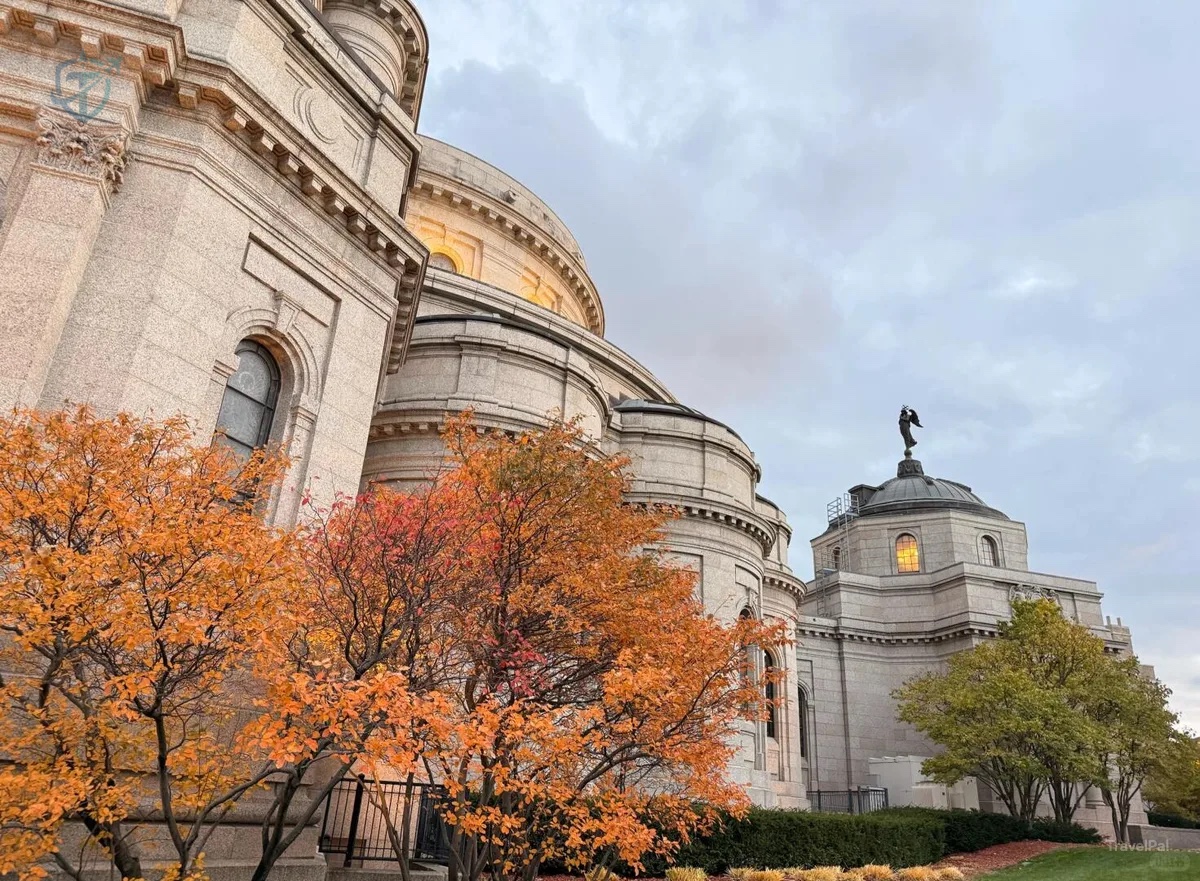
The present building is the fourth Cathedral of Saint Paul. Archbishop John Ireland selected French architect Emmanuel Louis Masqueray, trained at Paris’s École des Beaux-Arts, to design it in 1905. The first Mass was celebrated here on Palm Sunday in 1915; the church was consecrated in 1958 and entered on the National Register of Historic Places in 1974.
It is the mother church of the Roman Catholic Archdiocese of Saint Paul and Minneapolis—the archbishop’s cathedral. In 2009, the Vatican and U.S. bishops designated it the National Shrine of the Apostle Paul. That means the building functions simultaneously as parish church, diocesan center, pilgrimage destination, civic landmark, and work of Beaux-Arts architecture.
The exterior uses Saint Cloud granite and takes the form of a nearly equal-armed Greek cross. Its 120-foot-wide copper-clad dome and lantern carry the building to roughly 306 feet above Summit Hill.
Begin on the centerline beneath the dome
Stand on the nave’s central axis and look upward before circling the chapels. The interior dome is 96 feet across and rises 175 feet above the floor. Warm cream and gold surfaces, 24 stained-glass windows, and an eight-pointed chandelier create the luminous effect that struck us immediately after morning Mass.
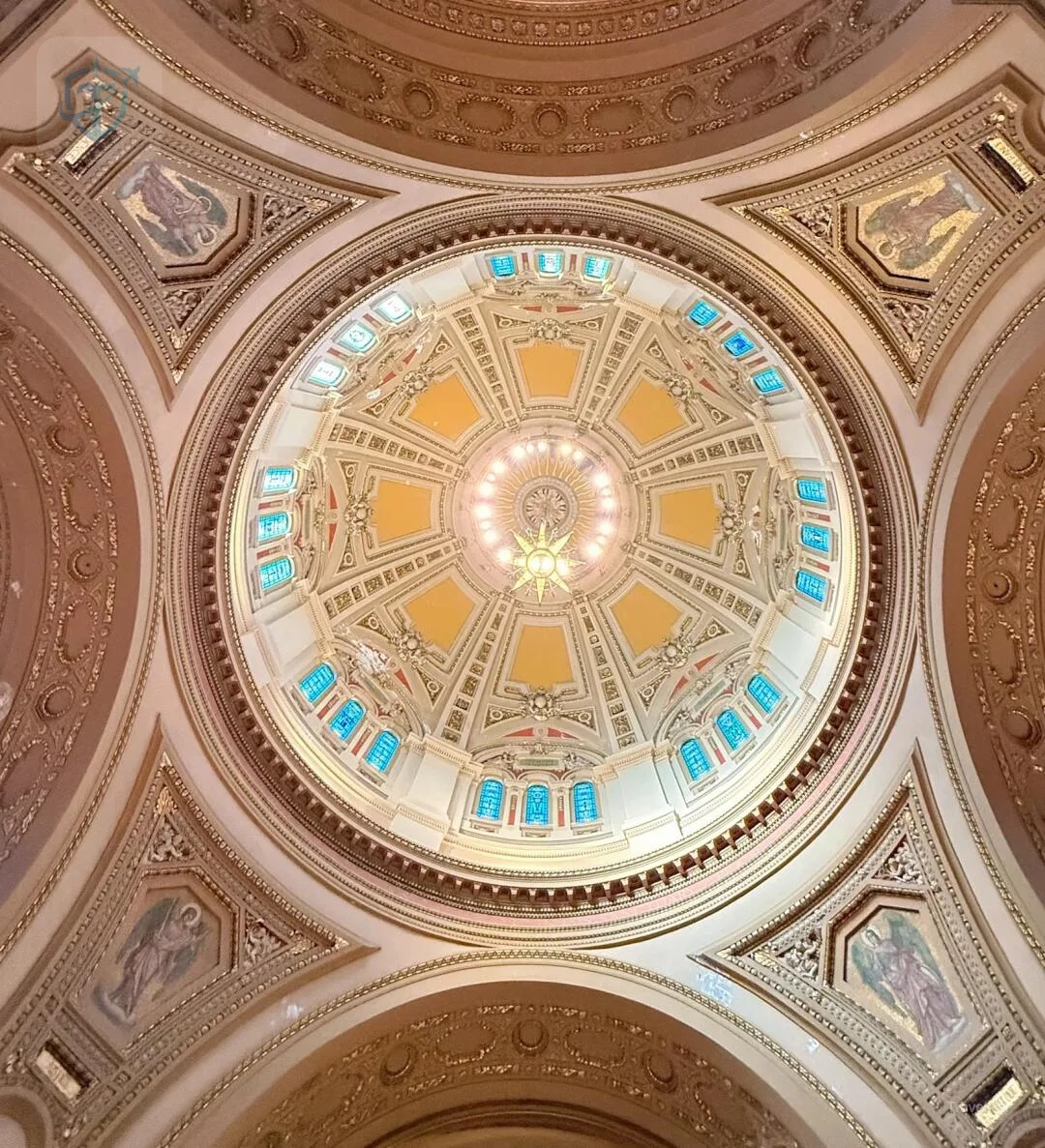
Four huge piers support the dome. High mosaics represent Prudence, Temperance, Fortitude, and Justice; 12-foot statues at their bases represent the Gospel writers Matthew, Mark, Luke, and John. Their traditional symbols—a winged human, lion, ox, and eagle—make each figure identifiable.
The high altar and baldachin
The visual center of the sanctuary is the marble high altar and its baldachin, designed by Whitney Warren, the architect associated with New York’s Grand Central Terminal. Six monolithic black-and-gold marble columns, each 24 feet high, hold a bronze canopy with angels and Saint Paul.
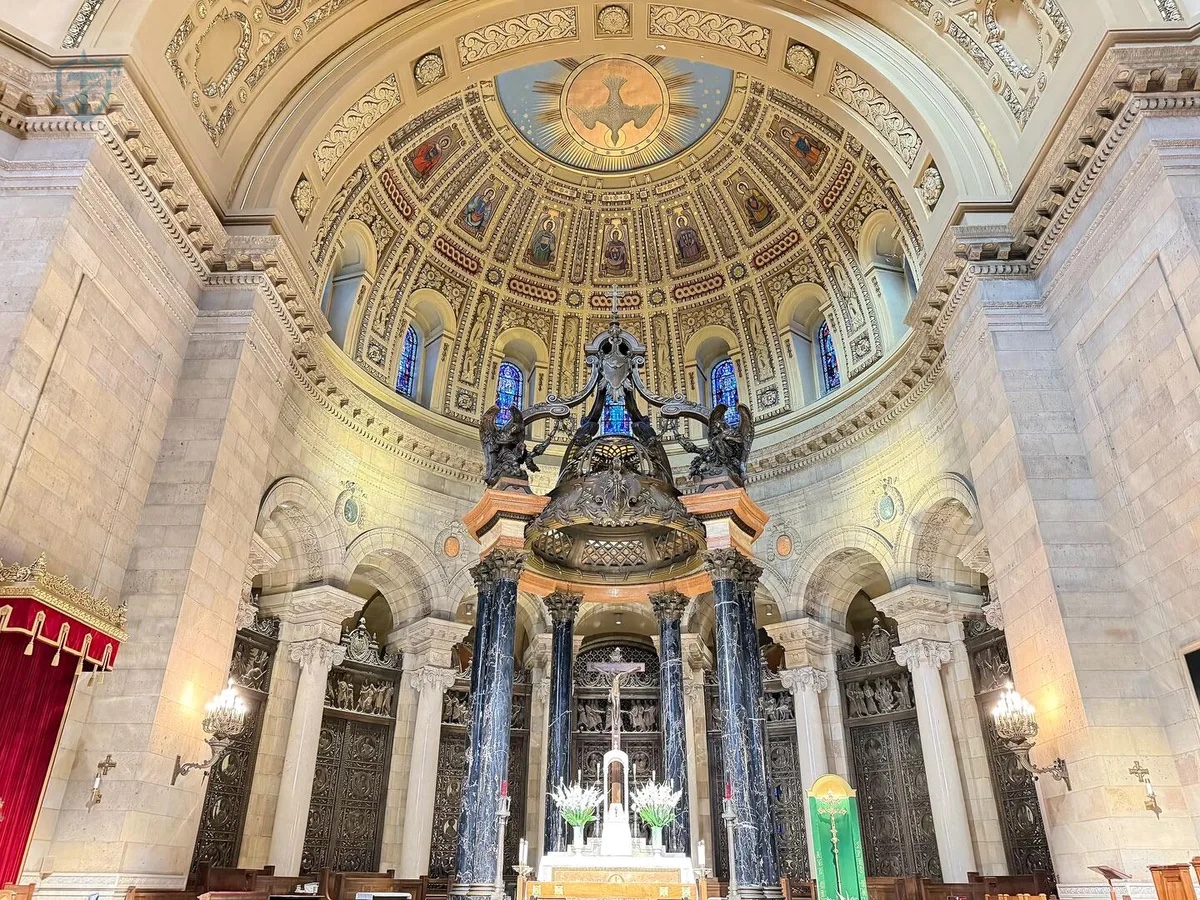
Do not cross the communion rail or enter the sanctuary for a closer photograph. The official photography policy identifies the sanctuary as sacred space; the architecture was designed to be read from the nave.
Turn around for the rose window and two organs
After studying the altar, turn back toward the entrance. The east-facing Resurrection Window fills the center above the gallery, framed by the pipes of the Aeolian-Skinner organ installed in 1963. A second Ernest Skinner organ, installed in 1927, serves the sanctuary.
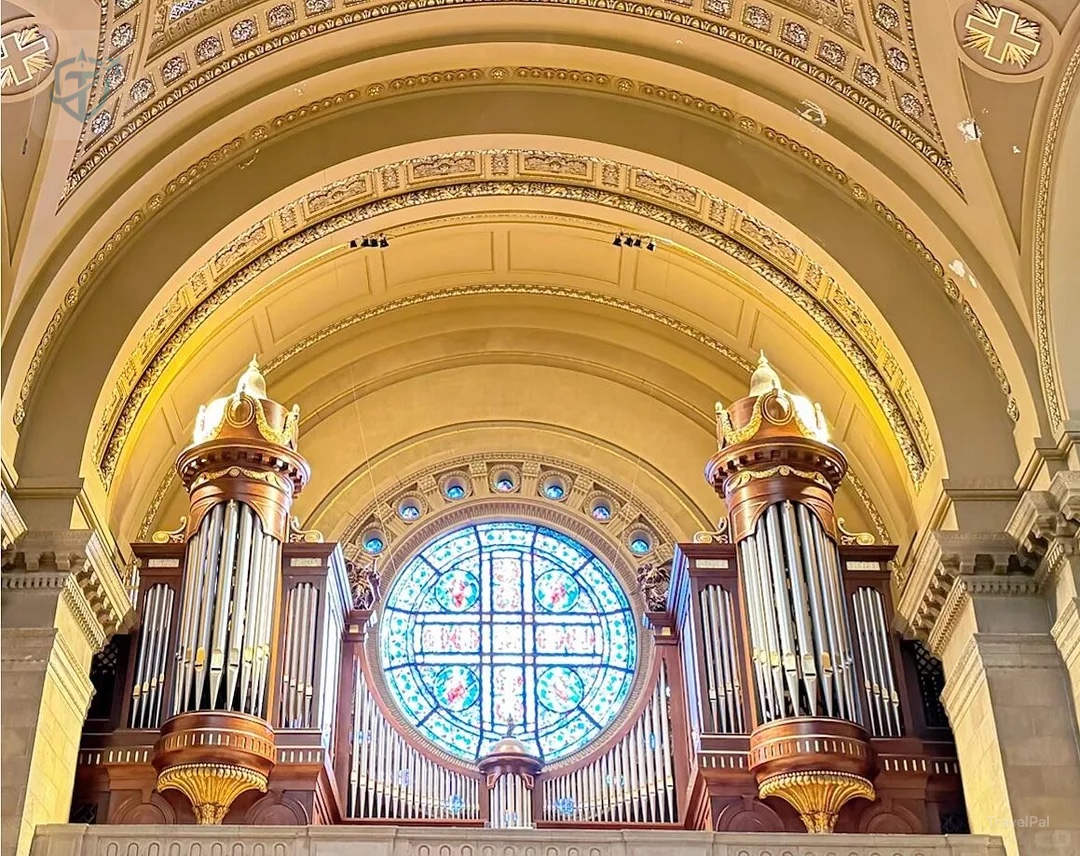
The Cathedral’s three principal rose windows have distinct programs. The east window centers on the Lamb of God and Resurrection; the north remembers the eight North American martyrs; the south interprets the Beatitudes through saints of the Americas. Watch how their colors change as the sun moves rather than treating them as one quick photograph.
Shrine of Nations, side chapels, and Pietà
Behind the sanctuary, the Shrine of Nations records the immigrant communities that helped build Catholic Minnesota. Six shrines honor Saint Anthony of Padua for Italians, John the Baptist for French Canadians, Saint Patrick for Ireland, Saint Boniface for Germany, Saints Cyril and Methodius for Slavic nations, and Saint Thérèse as patron of missions.
Each combines a patron statue, altar, stained glass, and marble linked to the represented community. This is not decorative diversity added after the fact: immigrant groups financed the shrines, inscribing their place within a shared church.
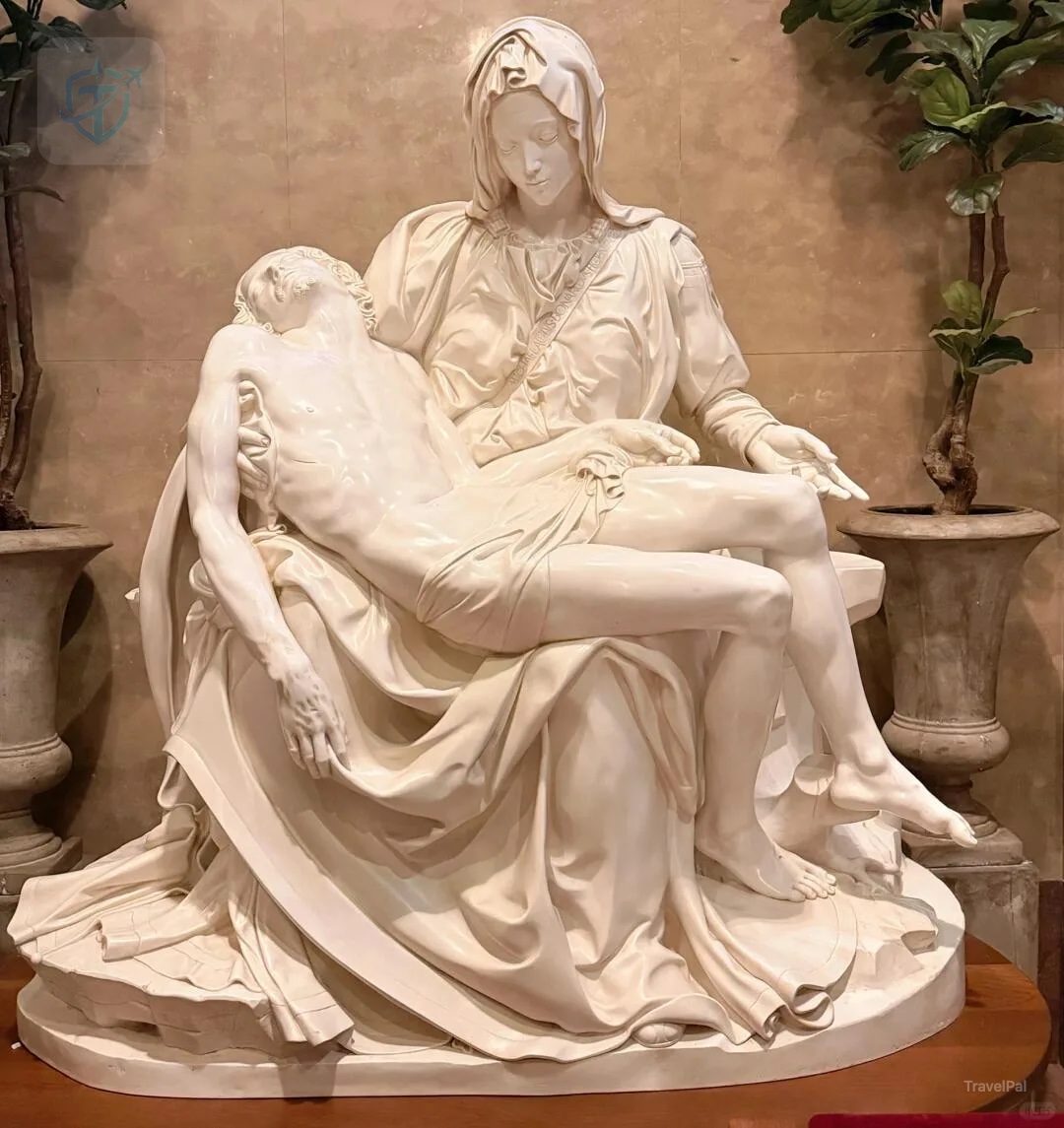
The side chapels and sculptural works—including a Pietà reproduction—deserve the same quiet attention. The lower-level museum and archives have limited volunteer-dependent hours; ask at the Welcome Desk rather than assuming they are open.
When and how to photograph respectfully
Casual tourist photography is welcomed outside liturgies, but the Cathedral’s rules are specific. Flash photography and tourist visits are not allowed during Mass, Confession, Eucharistic Adoration, weddings, funerals, or other services. Do not photograph identifiable people without consent.
For personal images, three compositions worked especially well:
- Dome: stand on the centerline and use a wide lens, keeping the chandelier within the frame.
- Sanctuary: photograph from below the sanctuary steps, centered on the baldachin—without crossing into sacred space.
- East wall: turn from the altar and align the rose window with both organ cases.
Professional, staged, commercial, wedding, and event photography require advance permission. Even casual photography can be stopped if it disrupts worship or visitors.
Current hours, tours, parking, and accessibility
| Address | 239 Selby Avenue, Saint Paul, MN 55102 |
|---|---|
| Church hours | Daily 7:00 a.m.–7:00 p.m., except holidays and special events |
| Admission | Free for a casual self-guided visit |
| Weekday guided tour | Normally 1:00 p.m. Monday–Friday by advance request and subject to availability |
| Suggested guided-tour donation | Currently $15 per person for up to nine people; $5 per person for groups of ten or more |
| Typical visit | 45–60 minutes self-guided; guided tours about one hour |
Tour availability changes around holy days, civic holidays, weddings, funerals, and other liturgies. Request a guided tour in advance rather than appearing at 1:00 p.m. and assuming a docent will be available.
Parking is available across Selby Avenue, in lots across John Ireland Boulevard, and along Selby and Dayton avenues. Check posted restrictions and event closures rather than assuming every space is free.
The accessible main-church entrance is off Selby Avenue; the accessible lower-level entrance is on Dayton Avenue. An elevator operates inside. Designated accessible street parking is available near the Selby entrance, and assisted-listening FM receivers are available for worshippers who need them.
Best timing: early morning can be exceptionally quiet, but check the Mass schedule first. If a service is underway, attend respectfully or return later. The hush after Mass is part of the experience; it is not merely an obstacle before photography begins.
To place the Cathedral within a broader trip, use our two-day Minneapolis and St. Paul itinerary, which continues to the Minnesota Capitol, Mill City Museum, Stone Arch Bridge, Mia, and Mall of America.
Church hours, Masses, Confession, Adoration, tour availability, suggested donations, museum access, parking, road closures, and photography restrictions change. Details were verified against the Cathedral’s official visitor information on July 16, 2026. Respect posted signs and staff instructions during your visit.