
Is the Minneapolis Institute of Art worth visiting?
Absolutely. Mia combines a serious global collection with free general admission and none of the pressure to “get your money’s worth” by exhausting yourself. The museum says its collection contains more than 100,000 works spanning roughly 5,000 years and six continents. That scale makes selection—not speed—the key to a satisfying first visit.
We spent a slow half day here and remember four encounters more clearly than the dozens of galleries between them. The route below is not a greatest-hits ranking. It is a sequence of contrasts: stone that seems soft, paint that becomes air, brushwork that feels hot, and carved jade that compresses landscape and memory into one object.
A realistic 2–3 hour route
| Time | Focus | How to look |
|---|---|---|
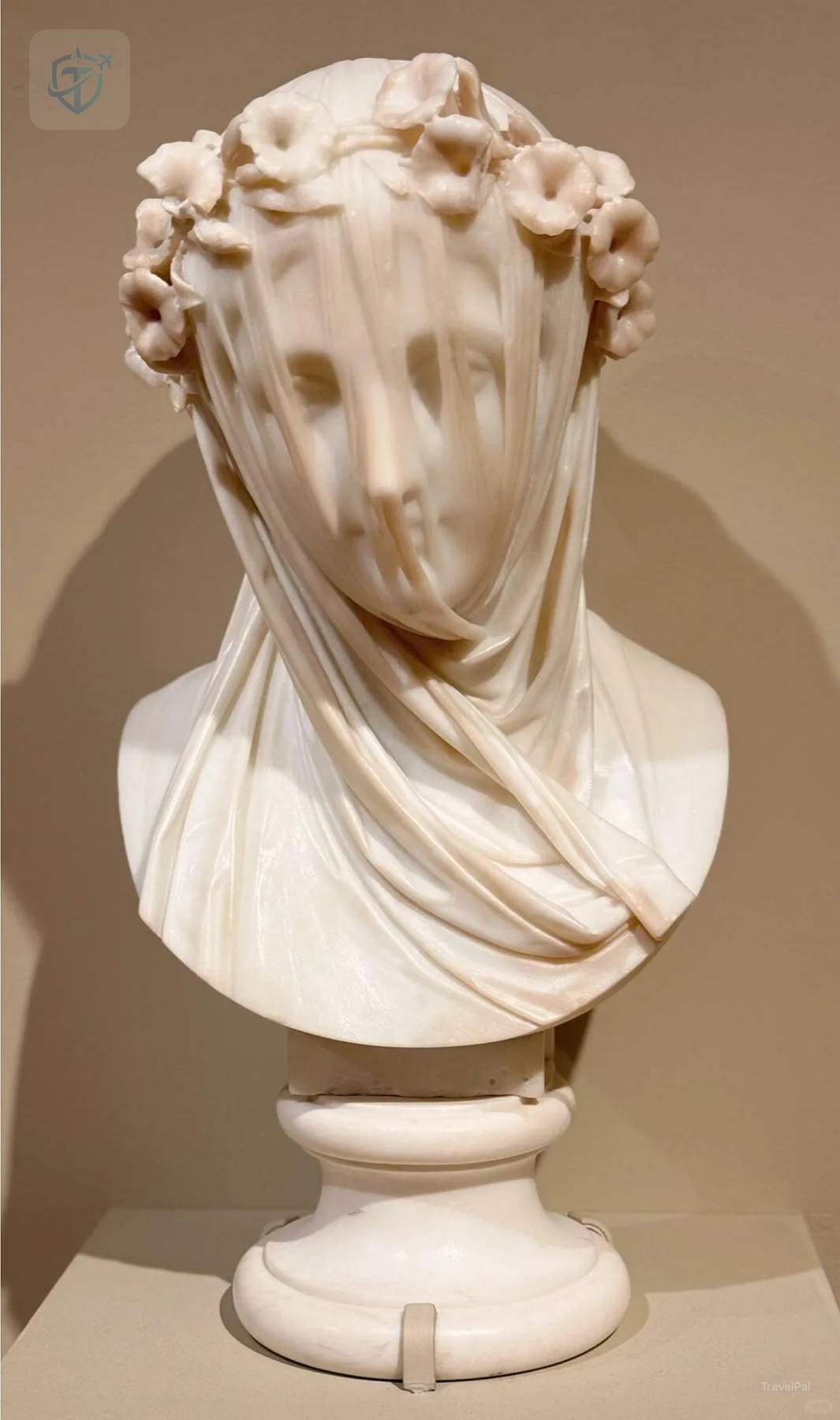
| 30–40 min | European sculpture | Begin with Veiled Lady; circle it and compare side light with the frontal view |
| 45–60 min | European paintings | Pair Monet and Van Gogh; alternate close looking with several steps back |
| 45–60 min | Chinese art | Look for jade, ritual bronzes, ceramics, and period interiors |
| 15–20 min | Return visit | Revisit the work you responded to most instead of adding another gallery |
Pick up the current gallery map when you arrive. Mia rotates works and changes installations, so room numbers in an old itinerary can become misleading. If one of these objects matters to your visit, the museum recommends confirming in advance that it is on display.
1. Begin with the Veiled Lady
Raffaelle Monti carved Veiled Lady around 1860. The trick is immediately legible—the face appears visible beneath translucent fabric—but the sculpture becomes more convincing as you change position. From the front, the veil pools around the nose and lips. From the side, light catches the carved folds and the flower crown separates from the head.
Stand close enough to notice the material, then step back until the stone seems to breathe. That shift is the experience: your mind knows the veil is marble while your eyes keep reading softness, weight, and transparency. Monti’s technical display is not merely decorative; the covering makes the face feel both revealed and withheld.
2. Let Monet turn paint into atmosphere
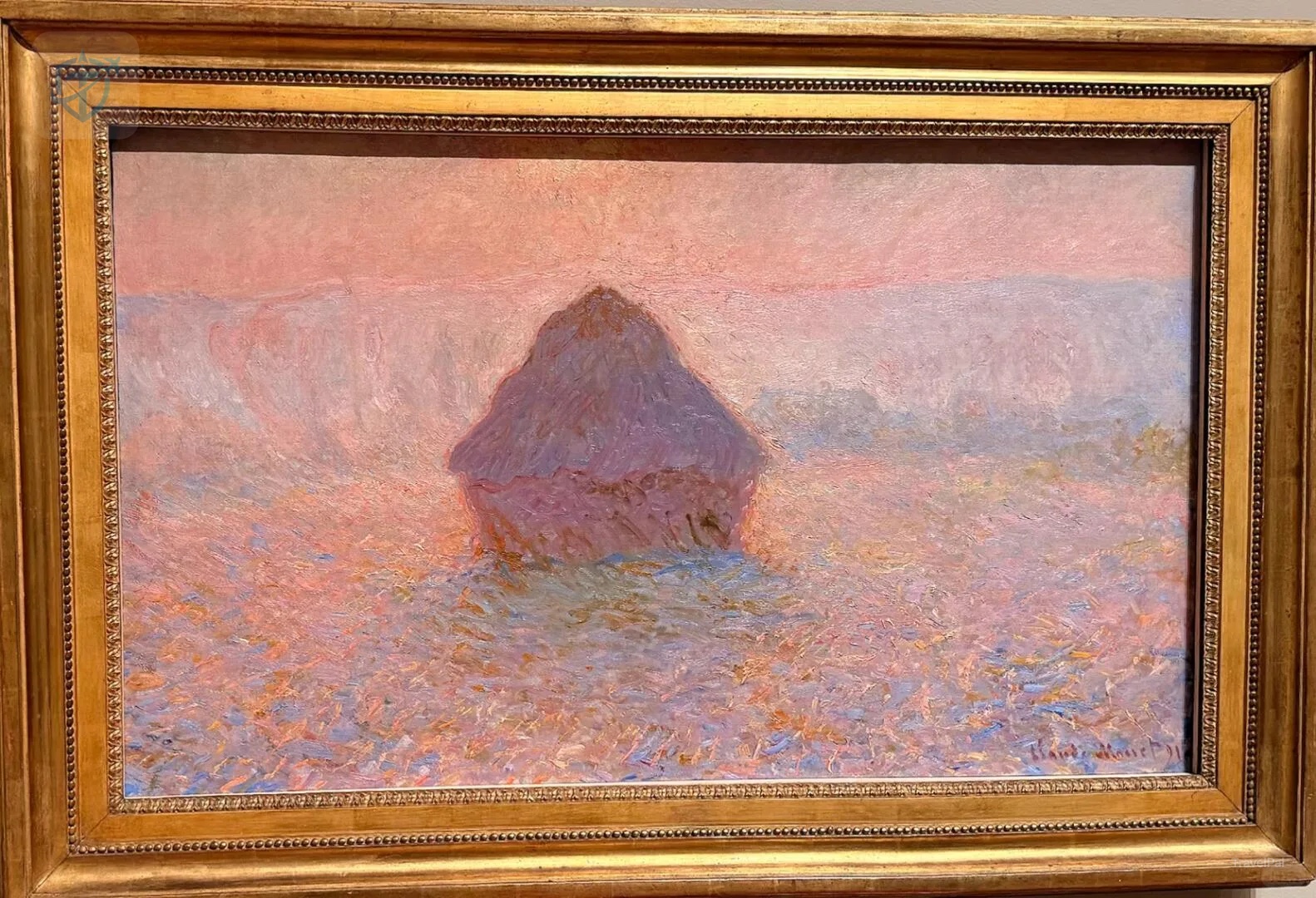
Claude Monet’s 1891 Grainstack, Sun in the Mist is part of his sustained study of one motif under changing conditions. Up close, pink, violet, blue, and pale gold break into separate marks. Several steps back, those marks become damp air and diffuse morning light.
The grainstack is the solid shape, but atmosphere is the real subject. Give the painting more than a quick photograph: approach until you can see the fragmented strokes, retreat until the edges soften, and notice the exact distance at which paint turns into weather.
3. Compare Van Gogh’s temperature
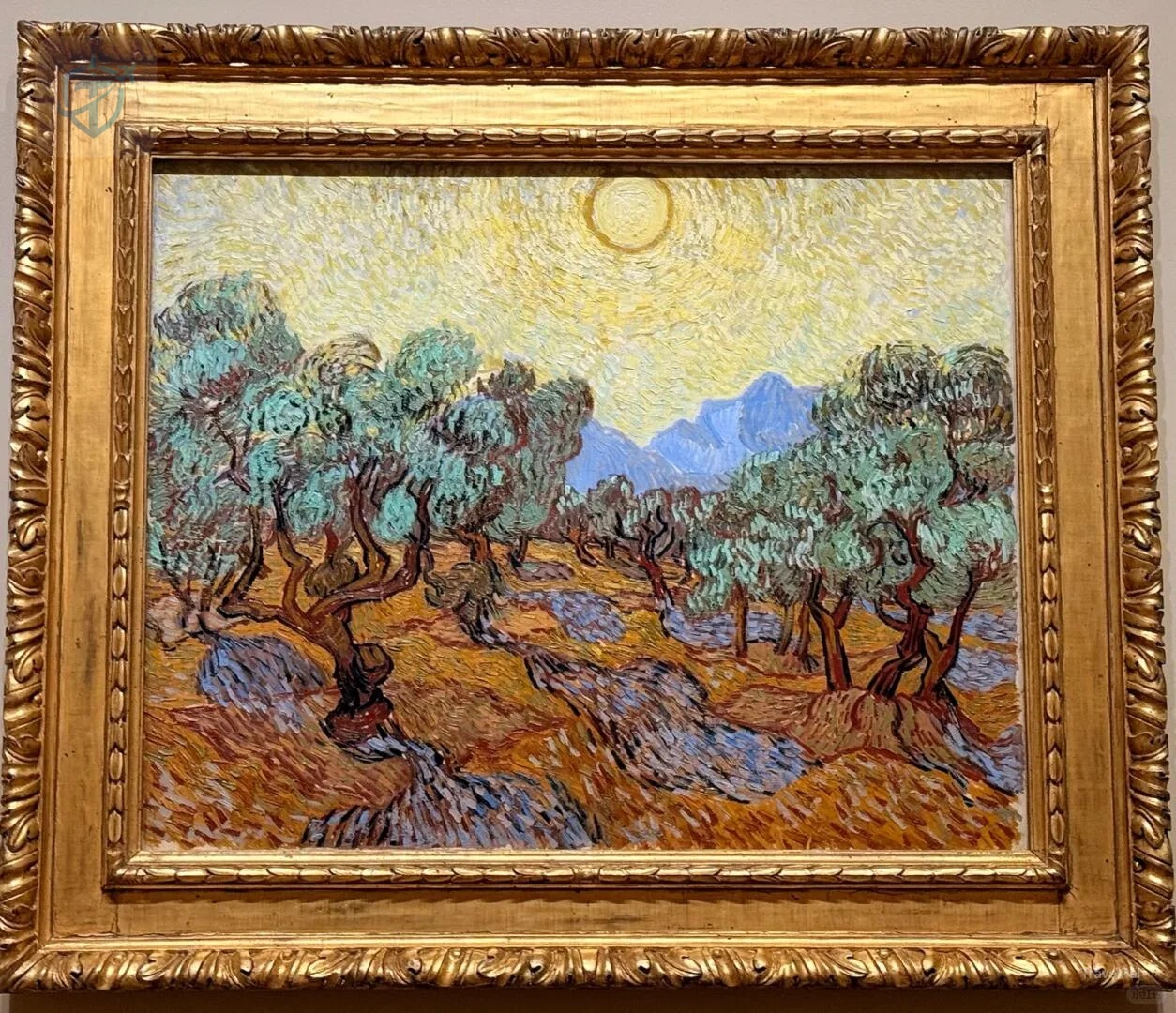
Vincent van Gogh painted Olive Trees in 1889. Where Monet dissolves the landscape, Van Gogh makes every part of it vibrate. The trees twist, the ground undulates, and short strokes radiate around the sun. Even the distant mountains refuse to sit still.
Start with the sun and follow the direction of the surrounding marks. Then trace that motion through the trees and earth. The painting does not simply depict a hot day; it gives heat a rhythm. Seeing it soon after Monet makes both artists easier to understand.
4. Slow down in the Chinese galleries
Move next to Asian art rather than adding another wing of European painting. The strongest anchor is Jade Mountain Illustrating the Gathering of Scholars at the Lanting Pavilion, carved in 1784 during the Qing dynasty. Mia describes it as the largest jade carving outside China. Tiny pavilions, paths, pines, figures, and inscriptions turn a pale-green boulder into a landscape that can be read almost like a scroll.
Find an inscription first, then trace a route through the carved terrain. The subject refers to the celebrated gathering at the Orchid Pavilion, where scholars composed poetry beside a stream. The object holds landscape, literature, social memory, and imperial-scale craftsmanship at once.
Do not rush past the ritual bronzes and ceramic figures nearby. Patina, casting seams, surviving pigment, and the relationship between vessel and inscription often matter more than size. Historic Chinese interiors and architectural installations also change the pace: after looking at objects in cases, entering a furnished room helps restore a sense of how art shaped domestic space.
How to avoid museum fatigue
- Choose four anchors before you begin. Everything else is a discovery, not an obligation.
- Use the benches. Five seated minutes with one work usually creates a stronger memory than another rushed gallery.
- Change viewing distance. Sculpture needs movement around it; Monet needs near and far; Van Gogh benefits from following the brushwork.
- Return to one favorite. Three final minutes with the Veiled Lady changed our impression more than squeezing in another room.
- Respect the art. Mia asks visitors to stay at least one foot away and never touch objects.
Current hours, admission, and visitor details
| Address | 2400 Third Avenue South, Minneapolis, MN 55404 |
|---|---|
| General admission | Free; no ticket required for the permanent collection |
| Tuesday–Wednesday | 10:00 a.m.–5:00 p.m. |
| Thursday | 10:00 a.m.–9:00 p.m. |
| Friday–Sunday | 10:00 a.m.–5:00 p.m. |
| Monday | Closed |
| Suggested visit | 2–3 hours for this route |
Special exhibitions and selected events can require tickets. A self-serve coat check is available; bags larger than 15 by 15 inches, backpacks, umbrellas, and water bottles must be checked. Small bags are permitted in the galleries.
Personal photography is generally allowed with flash off. Do not photograph a work marked as a loan, and ask a gallery guard if the label is unclear. Posed, professional, commercial, flash, tripod, and monopod photography require prior approval.
Best timing: arrive at opening for quieter galleries, or use Thursday evening when the museum remains open later. If this is one stop in a broader trip, our two-day Minneapolis and St. Paul itinerary pairs Mia with Mall of America after lunch and keeps the riverfront on a separate day.
For current admission, hours, accessibility, gallery maps, and object availability, check Mia’s official visitor page before leaving.
Hours, exhibitions, gallery locations, object availability, coat-check rules, and photography policies change. Visitor details were verified against Mia’s official information on July 16, 2026. Follow posted signs and staff instructions during your visit.