
Is the Minnesota State Capitol tour worth it?
Yes—and take the guided tour rather than only wandering the halls. The building is still an active seat of government, so chamber and reception-room access changes with legislative business. A guide can explain the art, point out architectural details, and determine whether the rooftop Quadriga is accessible that day.
Our visit became an almost private tour, which made it easy to ask questions and look slowly. The standard tour lasts 45 minutes. Allow 60–90 minutes total for security, photographs, and a short self-guided walk before or afterward.
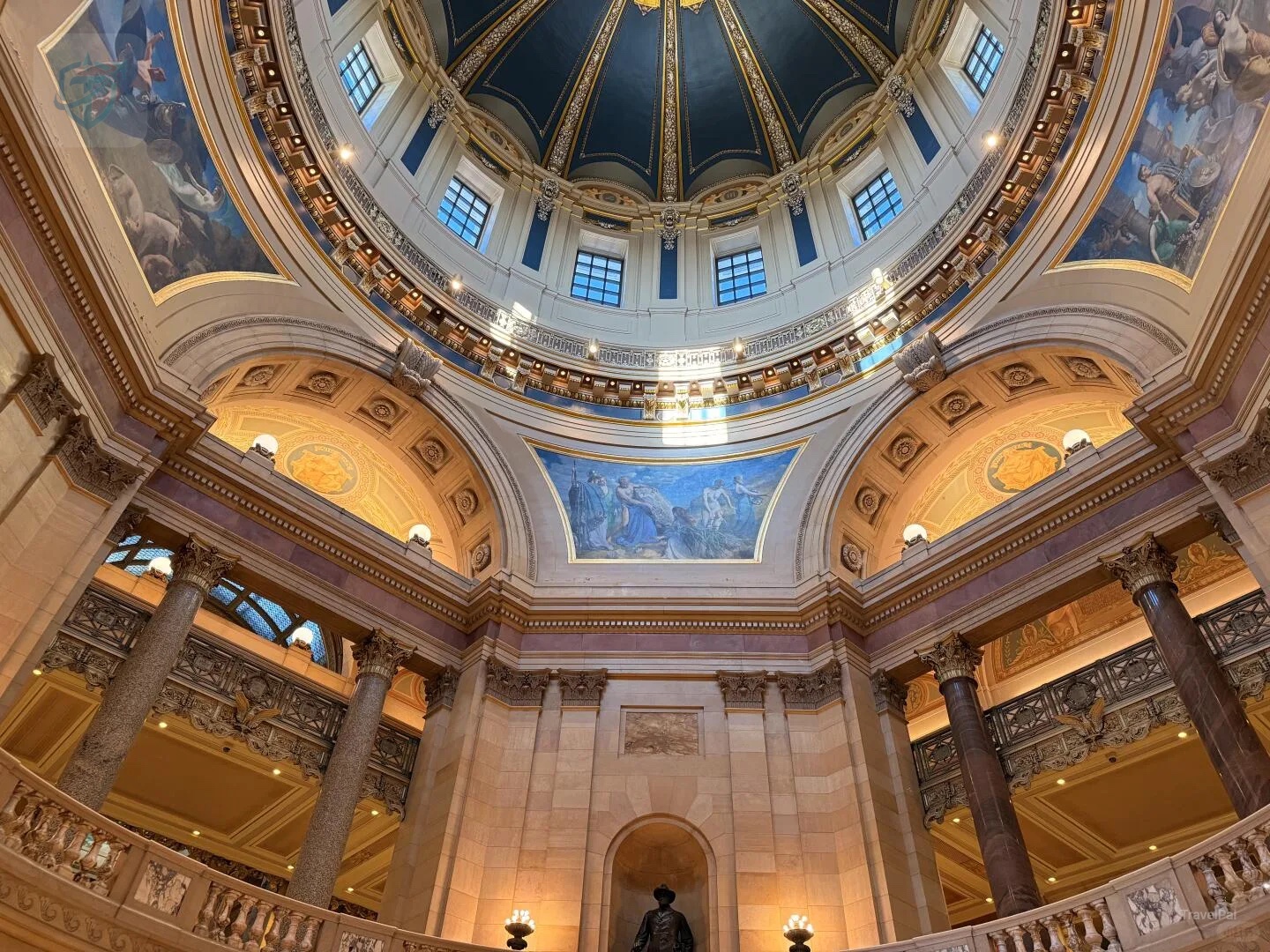
Begin by looking up: three domes, not one
The present Capitol opened in 1905 after nine years of construction. Architect Cass Gilbert—later the designer of the U.S. Supreme Court building—used a Renaissance Revival composition shaped by Beaux-Arts ideals and the 1893 World’s Columbian Exposition.
The dome is more complex than it first appears. The exterior shell consists of Georgia marble blocks that support themselves by their own weight. A hidden brick-and-steel cone supports the lantern and gold ball. The decorated masonry dome visible from the rotunda is the third, interior layer. MNHS describes the exterior shell as the world’s second-largest self-supported marble dome, correcting a frequently repeated “largest” claim.
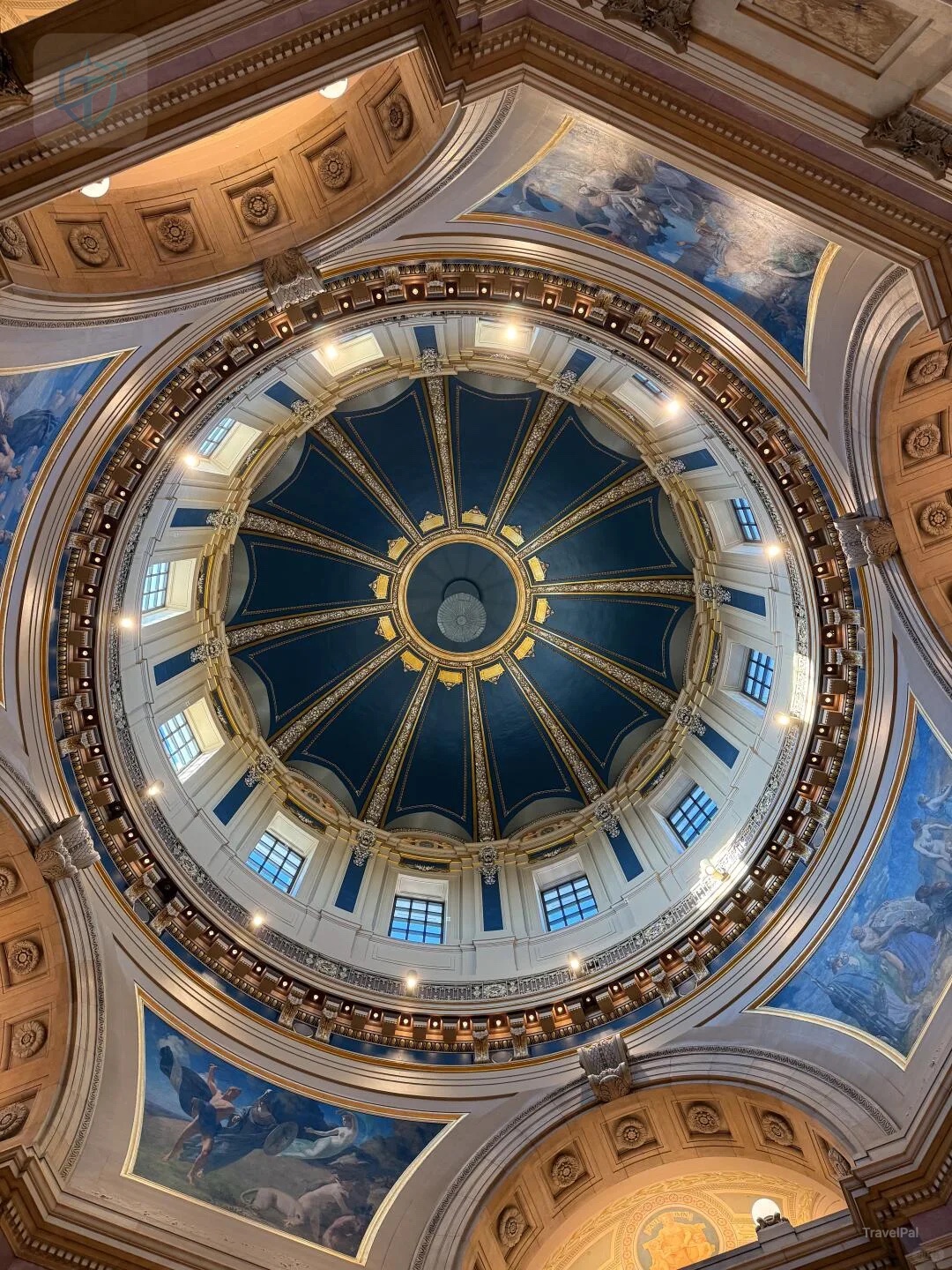
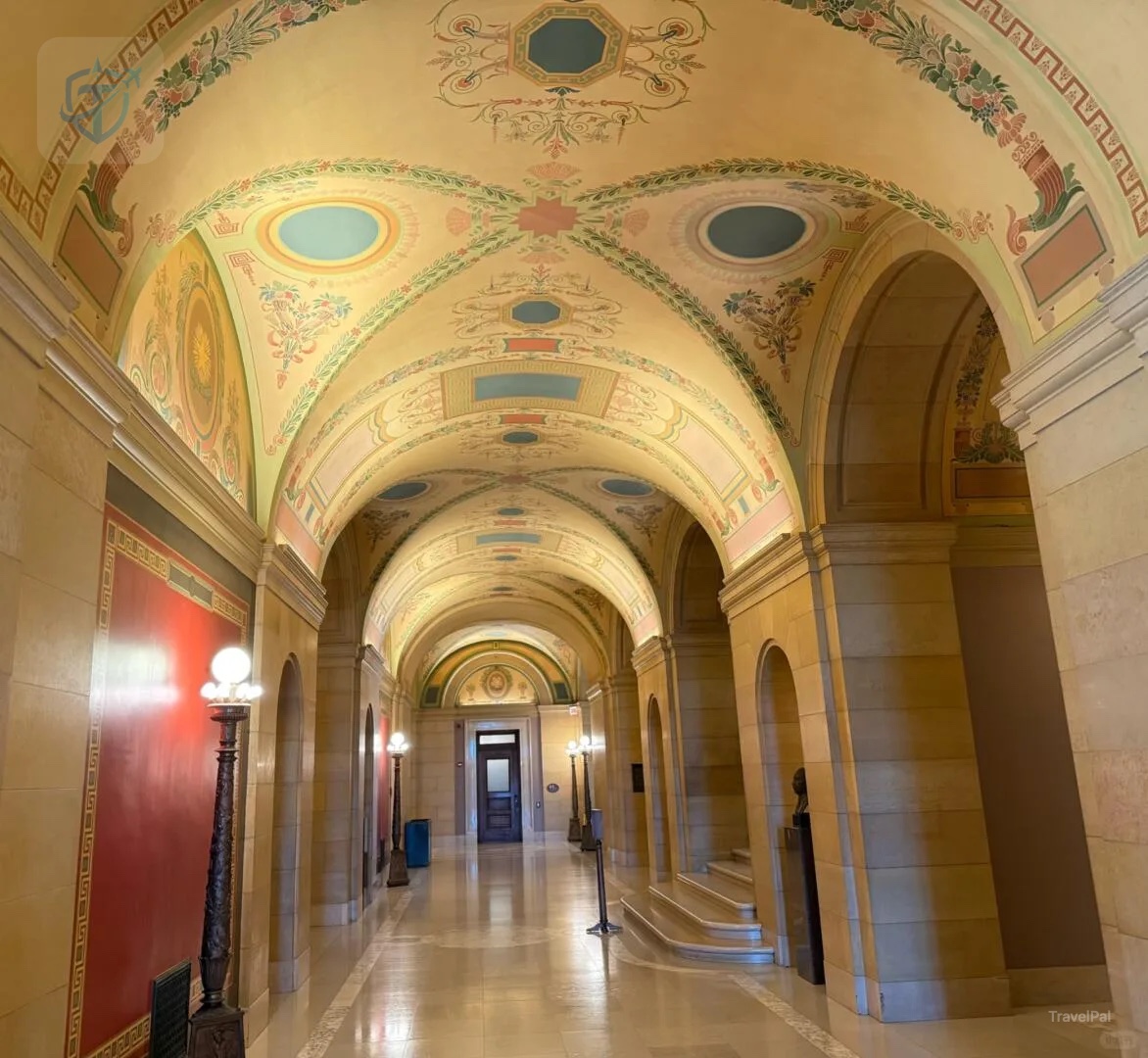
The exterior combines white Georgia marble with Minnesota granite. Rough marble was shipped north and worked by local craftspeople. Inside, different stone colors separate corridors, columns, stairs, and ceremonial spaces without making the building feel visually heavy.
The chambers are workplaces, not museum sets
The second floor holds the Senate, House of Representatives, and Supreme Court chambers. When a room is not in use, a guided tour may enter or look through its public entrance. When lawmakers or the court are working, access can be limited without warning.
The Senate chamber uses murals by Edwin Blashfield to connect agriculture, patriotism, and the Mississippi River with Minnesota’s civic identity. The House and Supreme Court have their own decorative programs. Treat every image as an argument about the state—not a neutral record. The building’s classical allegories present ideals; its historical paintings reflect the assumptions of the era that commissioned them.
The rooftop Quadriga is the tour’s best extra
The Progress of the State, commonly called the Quadriga, sits at the base of the exterior dome. Daniel Chester French and Edward C. Potter designed the four-horse chariot from gilded copper sheets hammered around a steel frame.
Up close, the group feels less like a roof ornament and more like an engineered object: enormous horses, wheels, reins, figures, copper surfaces, and gold leaf assembled against the sky. The rooftop also provides a new perspective across the Capitol Mall.
Do not assume the roof is included. MNHS offers this portion only from April through October, weather permitting. Reaching it requires 63 steps on a tight metal staircase. Wind, rain, ice, legislative operations, maintenance, or staffing can cancel access. Wear secure shoes and keep both hands available.
Governor’s Reception Room and contested history
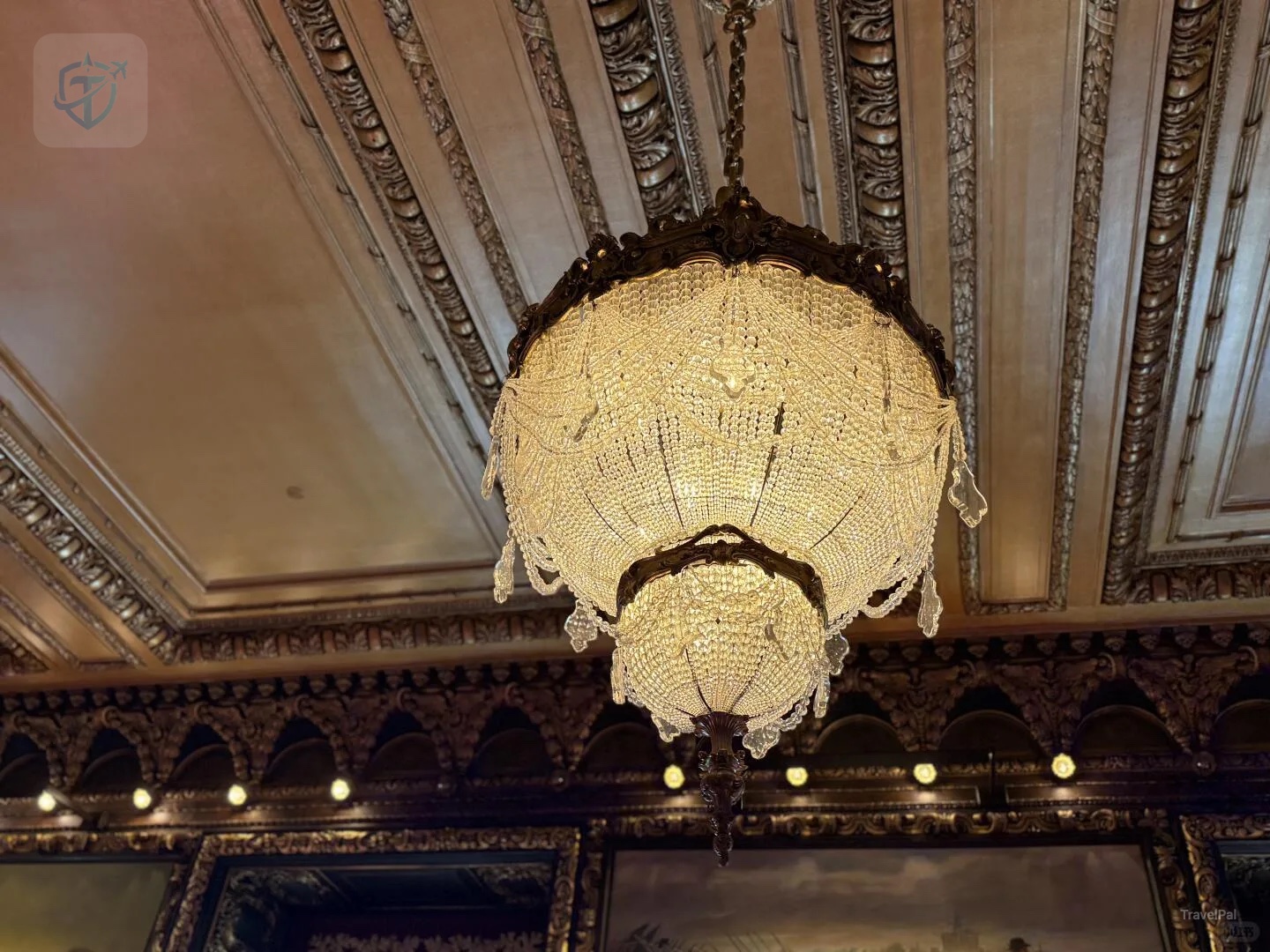
The Governor’s Reception Room combines white-oak woodwork, gold-toned decorative details, historic furniture, and Civil War paintings. It remains a functioning setting for meetings, press conferences, and bill signings, so it may be unavailable.
Two works formerly displayed there—The Treaty of Traverse des Sioux and Father Hennepin Discovering the Falls of St. Anthony—now appear in a dedicated third-floor interpretive space. The change matters because both paintings present romanticized colonial narratives. The exhibit adds Native and historical perspectives rather than asking visitors to accept the images as straightforward documentation.
Current hours, tours, security, and accessibility
| Address | 75 Rev. Dr. Martin Luther King, Jr. Blvd, Saint Paul, MN 55155 |
|---|---|
| Building hours | Monday–Friday 8:00 a.m.–4:30 p.m.; Saturday 10:00 a.m.–3:00 p.m.; Sunday closed |
| Free guided tours | Hourly, Monday–Friday 9:00 a.m.–3:00 p.m.; Saturday 10:00 a.m.–2:00 p.m. |
| Tour length | 45 minutes |
| Admission | Free; suggested guided-tour donation currently $5 |
| Tour meeting point | Capitol Information and Tour Center, Room 126, first floor |
Weapons screening is currently in place. Enter through the south ground-level public entrance beneath the main steps and leave time for screening, especially during the legislative session or with a group.
The main tour route is wheelchair accessible except for the Quadriga level. Elevators, accessible restrooms, loaner wheelchairs, hearing equipment, and other accommodations are available; ASL interpretation should be requested at least 14 days in advance. Accessible parking and the tunnel route are detailed on the official accessibility page.
Metered visitor parking is available around the Capitol Complex, and the Green Line’s Capitol/Rice Street station is just west of the building. Check the official parking map because lot availability changes.
Verify same-day information on the official Minnesota State Capitol page. To continue through Saint Paul, pair the Capitol with our Cathedral of Saint Paul guide; the two landmarks form the strongest architecture-focused morning in the city.
Building hours, tour times, security procedures, chamber access, parking, and rooftop availability change. Details were verified against official Minnesota Historical Society and state information on July 16, 2026. Follow security and staff instructions during your visit.