
Understand the site before you arrive
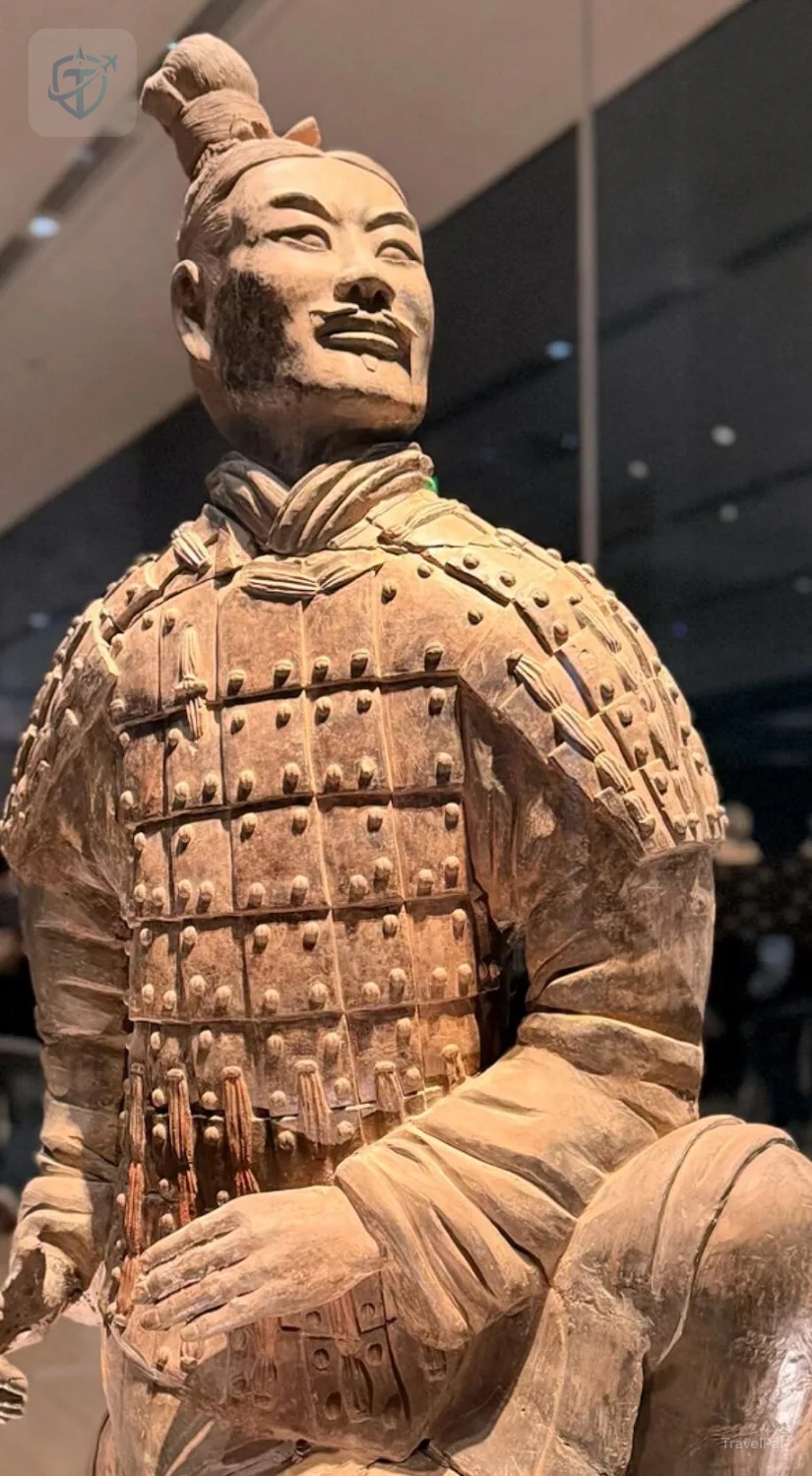
“The Terracotta Army” is shorthand for one part of the much larger Emperor Qinshihuang’s Mausoleum Site Museum in Lintong, east of central Xi’an. Your admission covers two separate areas: the familiar Terracotta Warriors museum with Pits 1, 2, and 3, and the Qin mausoleum archaeological park commonly called Lishan Garden.
The two entrances are about 2.2 kilometers apart. The museum’s official guidance says to allow about 1.5 hours for each and provides a free shuttle between them. In practice, a thoughtful first visit needs longer: four to five hours inside the combined complex is comfortable, especially if you study the bronze chariots and exhibition cases instead of treating them as an afterthought.
The key planning correction: The shuttle between the warrior museum and Lishan Garden is free. A separate sightseeing cart inside Lishan Garden may be sold for an additional fee. Do not confuse the two.
Which half should you visit first?
Most visitors go directly to the warrior pits, and there is a good reason: Pit 1 delivers the monumental first impression people traveled to see. But beginning at Lishan Garden can be a smart alternative if your priorities are the bronze chariots, a quieter morning, and understanding the mausoleum before seeing its army.
Our archaeology-first route
- Lishan Garden: acrobat figures, bronze chariots, civil-official pit, and the mausoleum mound
- Free inter-site shuttle to the Terracotta Warriors museum
- Pit 1 for scale
- Pit 3 for the compact command unit
- Pit 2 for different military formations and close display figures
- Exhibition galleries for objects and interpretation
The tradeoff is real: Pit 1 and the famous display cases may be busier by the time you arrive. We still prefer this order when the bronze chariots are a top priority because the quieter first hour makes their engineering much easier to absorb. If your main goal is an unobstructed first look into Pit 1, reverse the two halves and arrive before opening.
Why Lishan Garden should not be skipped
The mausoleum complex was designed as far more than an underground army. UNESCO describes a funerary landscape that mirrored the organization of an imperial capital, with the emperor at its center and nearly 200 known accompanying pits across the wider site.
Bronze chariots: the technical masterpiece
Two painted bronze chariots were excavated west of the burial mound in 1980. They were made at approximately half life-size, with four horses pulling each vehicle and intricate components reproducing the structure of real imperial transport. The museum notes that the gold and silver fittings on the pair weigh 14 kilograms.
Give this display time. Look beyond the overall silhouette to the canopy, doors, windows, harness fittings, reins, and the way the horses are kept in alignment. The educational displays help explain why these are not simply ornate models but extraordinary evidence of Qin metalworking and vehicle design.
Acrobat and civil-official pits
The K9901 pit produced more than 20 life-size figures with exposed torsos and varied poses, usually interpreted as performers or acrobats. Their bodies feel entirely different from the disciplined military stance of the warriors.
The K0006 pit produced 12 figures, including eight with sleeved hands and four charioteer-like figures. They are often discussed as civil officials, although interpretation of archaeological material can evolve. Together, these pits widen the story from an army to an imagined court and afterlife administration.
The burial mound
Qin Shi Huang’s central tomb has not been excavated and cannot be entered. The mound matters as the organizing center of the landscape, but visitors short on time may reasonably prioritize the excavated pits and bronze chariot exhibition. If you leave the internal cart to walk toward the mound, confirm where and how you will rejoin the route.
How to see the three Terracotta Army pits
Pit 1: do not stop at the entrance rail
Pit 1 is the largest, measuring 230 by 62 meters. Based on excavation density, the museum estimates it contains about 6,000 terracotta warriors and horses. The first overlook is also the most congested.
Take in the opening panorama, then keep moving along the side. Angles farther into the hall often give you more space to see the ranks, partition walls, restored figures, and active archaeology. The rear restoration area can be as revealing as the postcard view because it shows that the army emerged in fragments and required immense conservation work.
Pit 3: a compact command formation
Pit 3 is much smaller and is commonly interpreted as the army’s command post. Its scale makes the layout easier to read, so it works well immediately after Pit 1: the overwhelming mass resolves into a more specific military organization.
Pit 2: stay for the individual figures
Pit 2 contains a richer mixture of military units and is estimated to hold more than 1,300 terracotta figures and horses. Much of the pit remains covered or only partly excavated, so the overhead view may feel less immediately dramatic than Pit 1.
The close display figures are the reward. The kneeling archer, standing archer, cavalry figures, and horses reveal details that disappear across the vast floor of Pit 1. Expect a crowd around the kneeling archer and move patiently rather than forcing the first possible angle.
2026 tickets, reservations, and opening hours
| Item | Current official information |
|---|---|
| Adult admission | ¥120 year-round |
| Eligible full-time student | ¥60 with valid student documentation |
| What admission includes | Terracotta Warriors museum and Lishan Garden |
| Inter-site shuttle | Free |
| March 16–November 15 | Entry 8:30 a.m.–5:00 p.m.; closes 6:30 p.m. |
| November 16–March 15 | Entry 8:30 a.m.–4:30 p.m.; closes 6:00 p.m. |
The Shaanxi Cultural Heritage Administration’s visitor guide lists the year-round adult price as ¥120. Reserve through the official museum ticketing guidance or its official WeChat channels. The museum states that foreign visitors can reserve using passport information. Bring the same original physical passport used for the reservation; screenshots or photocopies are not a safe substitute.
The daily capacity is officially capped, and holiday allocations can sell out. Reserve before traveling to Lintong, including for visitors who qualify for free admission. Temporary extended summer or holiday hours may be announced separately, so treat the standard schedule above as the baseline and check notices for your exact date.
Getting to the Terracotta Army from Xi’an
Metro plus local bus
The most predictable independent route is Metro Line 9 to Huaqingchi station, then local bus 613 or 602 toward the Terracotta Warriors. From central Xi’an you will normally connect to Line 9 via Line 1 at Fangzhicheng. Route numbers, exits, and stopping patterns can change, so verify them in a live map app on the day.
Direct visitor bus or organized tour
Visitor buses operate from selected city locations, but departure points and operators change. Buy only from an identifiable official or established operator, confirm whether the destination is the museum entrance rather than a shopping stop, and ask about the return schedule before boarding.
Taxi, ride-hail, or private driver
This is easiest for a group and avoids transfers. Confirm the exact entrance, tolls, parking, waiting time, and return arrangement. The museum is roughly 35–37 kilometers northeast of central Xi’an, but urban traffic can make road time vary widely.
Crowds, accessibility, food, and realistic timing
Best arrival time
Aim to reach your chosen first entrance around opening. Arriving at 8:30–9:00 a.m. does not guarantee empty galleries, especially on weekends and holidays, but it gives you more control over the day and protects enough time for both sites.
Wheelchairs and mobility
The official visitor guide lists wheelchair rental among its services. The main halls have accessible circulation, but the full visit involves long distances, crowds, ramps, shuttle boarding, and a surprisingly extended exit route. Ask the service desk for the current accessible route before starting and confirm where any borrowed wheelchair must be returned. Do not rely on unverified offers of a paid personal pusher.
Food and breaks
There are many food outlets around the main visitor zone and simpler options near Lishan Garden. Quality and value vary. Carry water and a snack, then choose lunch based on convenience rather than sacrificing museum time to a long search.
How long to budget
- Lishan Garden: 1.5–2 hours
- Warrior pits: 2–3 hours
- Exhibitions and breaks: 30–60 minutes
- Transfers and queues: build in at least 30 minutes
That makes the Terracotta Army a substantial day trip, not a two-hour photo stop. Combining it with Huaqing Palace is possible, but only if you begin early and accept a more compressed museum visit.
Bottom line
Pit 1 supplies the scale, but Lishan Garden supplies the context. The best visit connects the army to the broader project: performers, administrators, transport, an unexcavated ruler, and a funerary landscape built to reproduce imperial order beyond death.
Start at Lishan Garden if the bronze chariots and a quieter archaeological sequence matter most. Start at Pit 1 if the famous panorama is your non-negotiable priority. Either way, reserve in advance, carry your physical passport, use the free inter-site shuttle, and protect at least half a day for the complete site.
Continue your Xi’an history itinerary with our Qianling Mausoleum day-trip guide or the central Xi’an Museum and Small Wild Goose Pagoda.
Ticket prices, reservation systems, operating hours, shuttle and cart arrangements, bus routes, displays, accessibility services, and temporary holiday policies can change. Details were checked against Emperor Qinshihuang’s Mausoleum Site Museum, the Shaanxi Cultural Heritage Administration, and UNESCO on July 16, 2026.