
The route at a glance
| Stop | Walk | Time to allow |
|---|---|---|
| Guthrie Theater public spaces | Start | 20–30 minutes |
| Mill City Museum exterior and Mill Ruins Park | 3–5 minutes | 20–30 minutes |
| Stone Arch Bridge | About 5 minutes | 20–40 minutes |
The basic walk takes about one hour and costs nothing. Allow two to three hours if you enter Mill City Museum, cross the entire bridge, read the interpretive panels, or continue along the east bank.
1. Start inside the Guthrie—even without a show ticket
The current riverfront Guthrie Theater opened in 2006 and was designed by Jean Nouvel. Its dark-blue mass deliberately meets the brick mills and industrial landscape rather than imitating them. The building is open to the public year-round, and visitors may explore designated public spaces without a performance ticket during posted building hours.
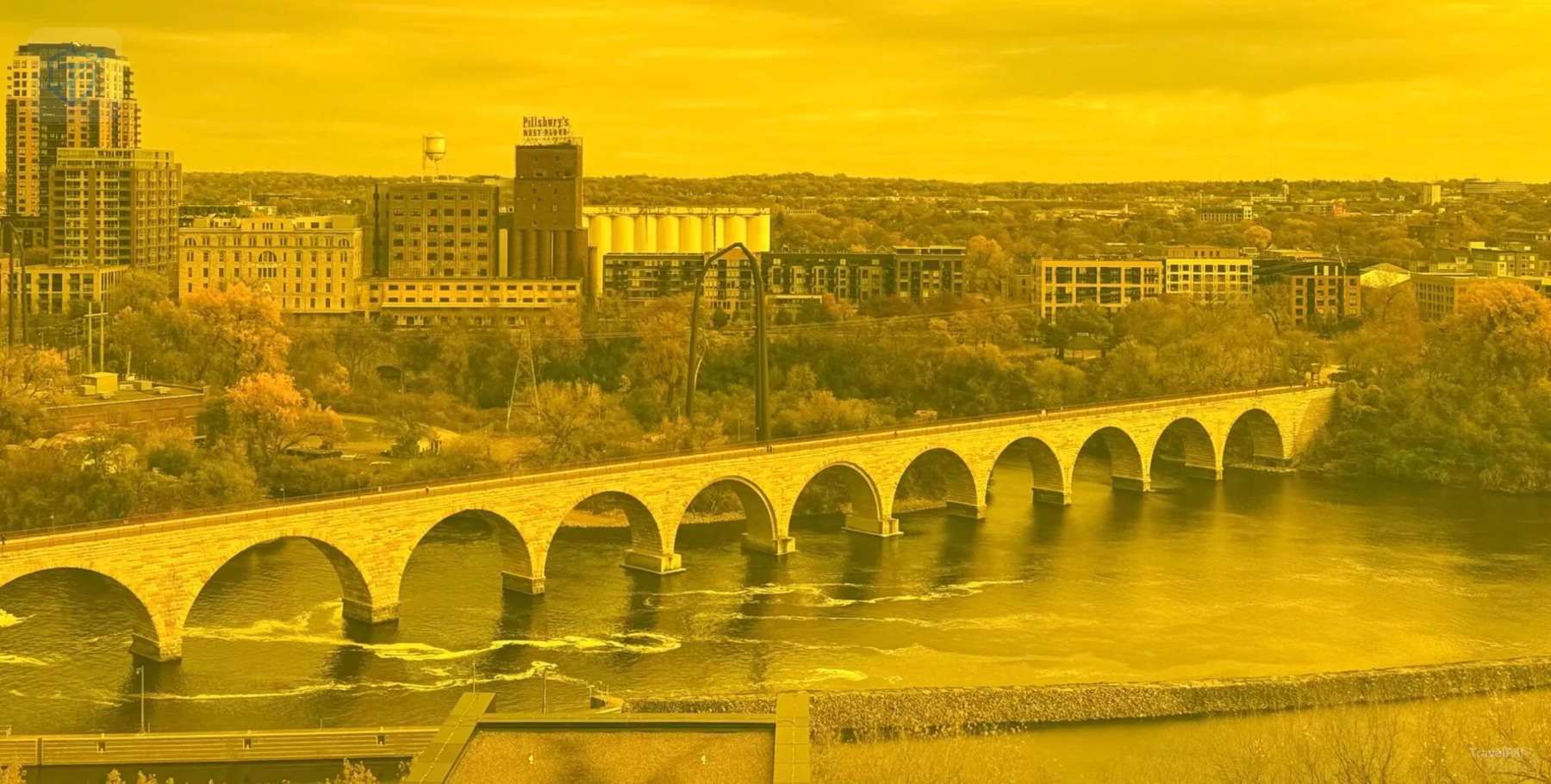
Start with the Endless Bridge, a 178-foot cantilever projecting toward the Mississippi. When wind, ice, maintenance, or an event closes the outdoor terrace, take the elevator to Level Nine and use the Amber Box instead. Its yellow glass turns the river, bridge, skyline, and old mills into a honey-colored panorama.
Check the Guthrie’s daily hours before going; they change with the performance calendar. Public-space access may also be limited for private events. Stay within signed public areas and follow staff instructions.
2. Read Minneapolis through Mill Ruins Park
Walk west from the Guthrie toward Mill City Museum and the exposed ruins. This was once the heart of the world’s largest direct-drive, water-powered milling district. Canals and mill races diverted the force of St. Anthony Falls through machinery, turning wheat into flour at industrial scale.
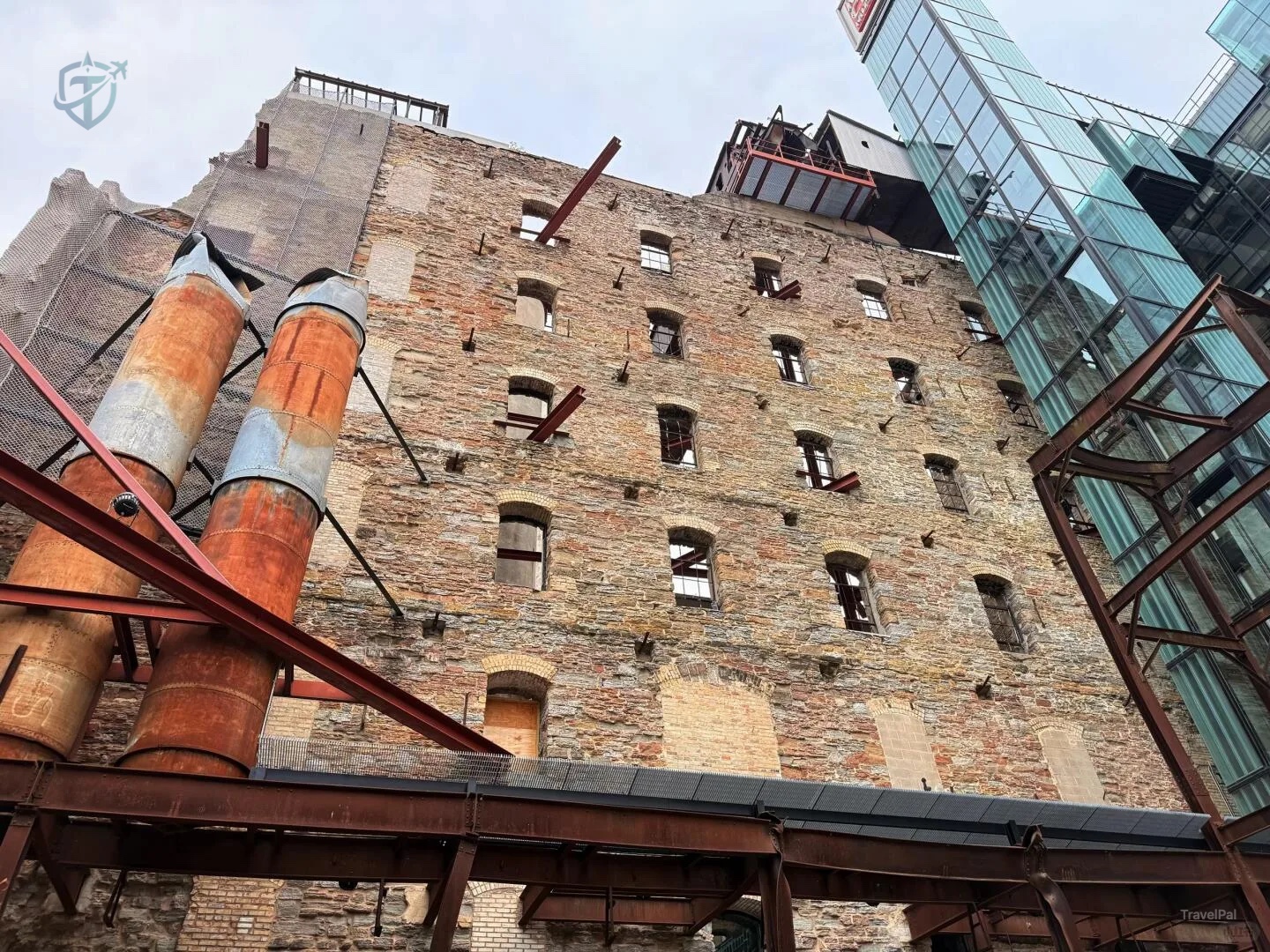
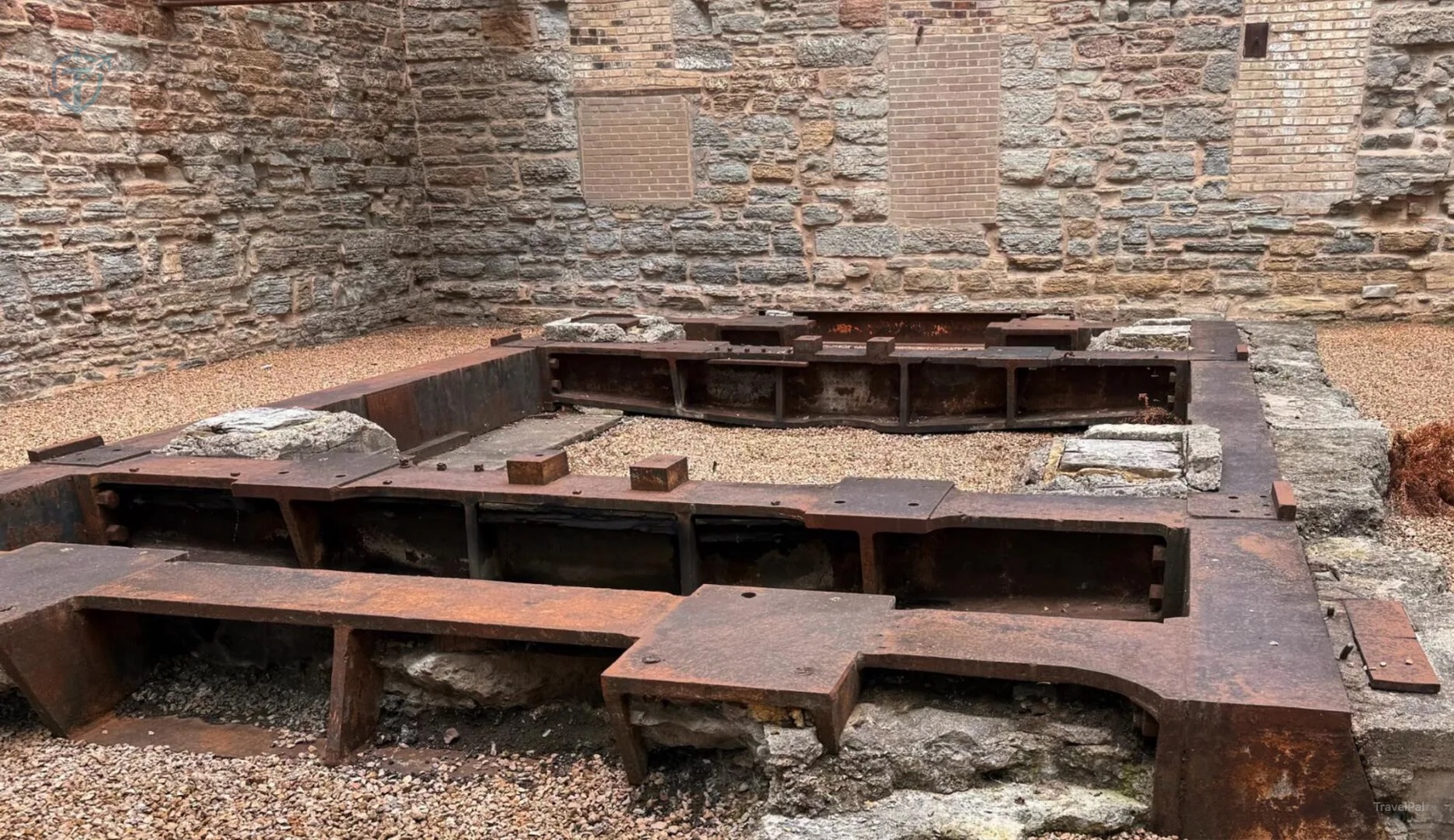
The Washburn A Mill opened in 1874, was rebuilt after a catastrophic 1878 explosion, remained in operation until 1965, and was heavily damaged by fire in 1991. Mill City Museum now occupies the stabilized ruins. Outside, Mill Ruins Park exposes foundations, tailraces, walls, and water channels that make the engineering legible without a ticket.
If the industrial story interests you, enter Mill City Museum. Current general hours are Thursday and Friday 10:00 a.m.–4:00 p.m. and Saturday and Sunday 10:00 a.m.–5:00 p.m.; it is normally closed Monday through Wednesday. Adult admission is currently $15. The museum adds the Flour Tower show, hands-on exhibits, and a rooftop observation deck.
3. Finish on Stone Arch Bridge
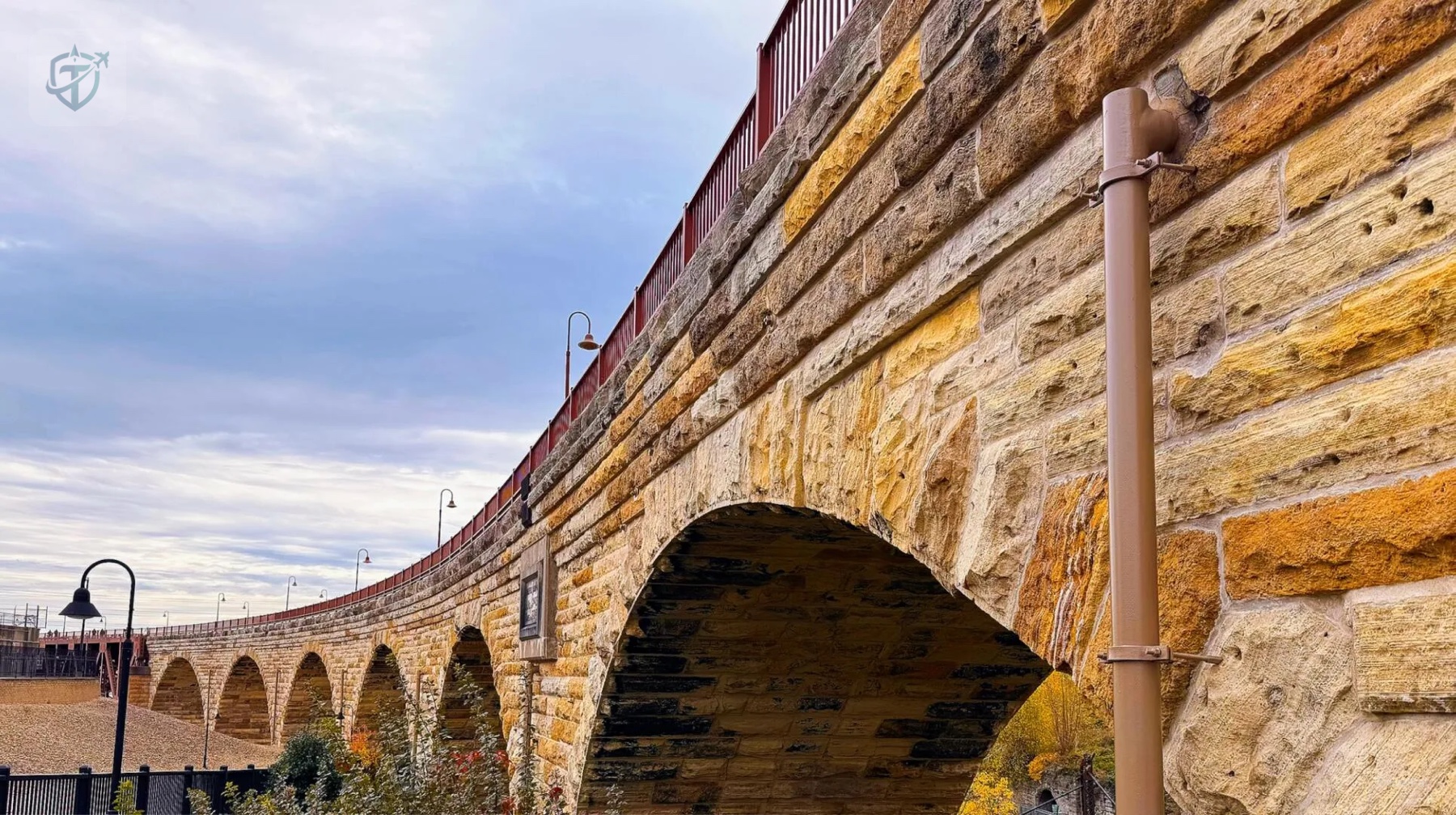
Railroad entrepreneur James J. Hill built Stone Arch Bridge in 1883 to carry trains and flour across the Mississippi. The granite-and-limestone structure is roughly 2,100 feet long, 28 feet wide, and composed of 23 arches. It carried rail traffic until 1978 and was converted to pedestrian and bicycle use in 1994.
The full bridge reopened in July 2025 after a major repair project. Walk at least far enough to look back toward the mill ruins and downtown skyline. Continue across for views toward St. Anthony Falls and an easy connection to Father Hennepin Bluffs Park and the east-bank Main Street area.
This is where the route’s pieces lock together. The bridge moved the products of the mills; the falls powered them; the ruins preserve their physical footprint; and the Guthrie brings a contemporary cultural institution into the same industrial landscape.
Four reliable photo stops
- Amber Box: frame Stone Arch Bridge and the river through the yellow glass. Expose for the bright exterior so the skyline keeps detail.
- Mill City wall: use the contrast between rough stone, rust-colored pipes, and modern glass rather than trying to hide the later additions.
- Gold Medal Flour sign: photograph the sign and look for its reflection in the water channel when conditions are calm.
- Stone Arch Bridge: shoot along the curve from near the west end, then turn around from farther onto the bridge for the mill district and skyline.

Weather, timing, and practical advice
- Best light: morning gives cleaner illumination across the river; late afternoon and sunset add warmth to the stone and brick.
- Wind: the riverfront feels colder and windier than downtown blocks. Carry a wind-resistant layer even when the forecast looks mild.
- Surface: the core route is paved, but wet leaves, snow, and ice can make bridge and park surfaces slippery.
- Guthrie access: verify daily building hours and public-space closures before relying on the Endless Bridge or Amber Box.
- Bridge hours: the National Park Service lists Stone Arch Bridge as open 6:00 a.m.–10:00 p.m. unless otherwise posted.
Start at 818 South 2nd Street for the Guthrie. Mill Ruins Park is adjacent to the museum at 102 Portland Avenue South, and the west bridge entrance is nearby at 1 Portland Avenue. Paid parking is available in the district, but event pricing varies.
Check the Guthrie visitor page for current building hours and the official Mill City Museum page for museum hours and admission. Our two-day Twin Cities itinerary places this walk after Mill City Museum on the first afternoon.
Building hours, public-space access, museum admission, bridge restrictions, parking, and weather conditions change. Details were verified against official Guthrie, Minnesota Historical Society, and National Park Service information on July 16, 2026.