
Park drive and desert pullouts → boulder-and-tree walks → campground → night-sky viewing
This is a text route based on my visit; I have not drawn a decorative map. Use the official Joshua Tree maps and current alerts for roads, facilities, and closures.
Daylight is beautiful, then repetitive
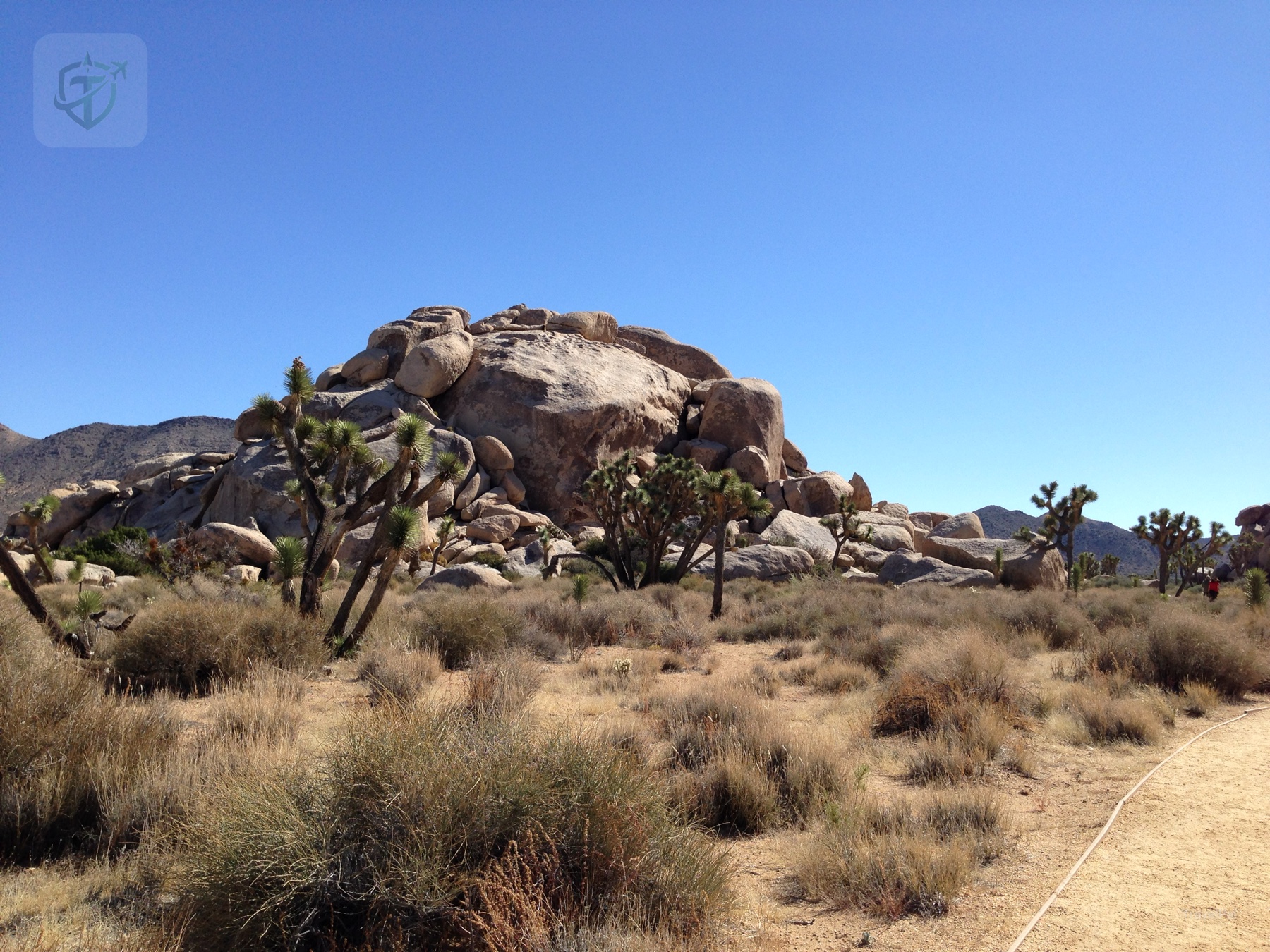
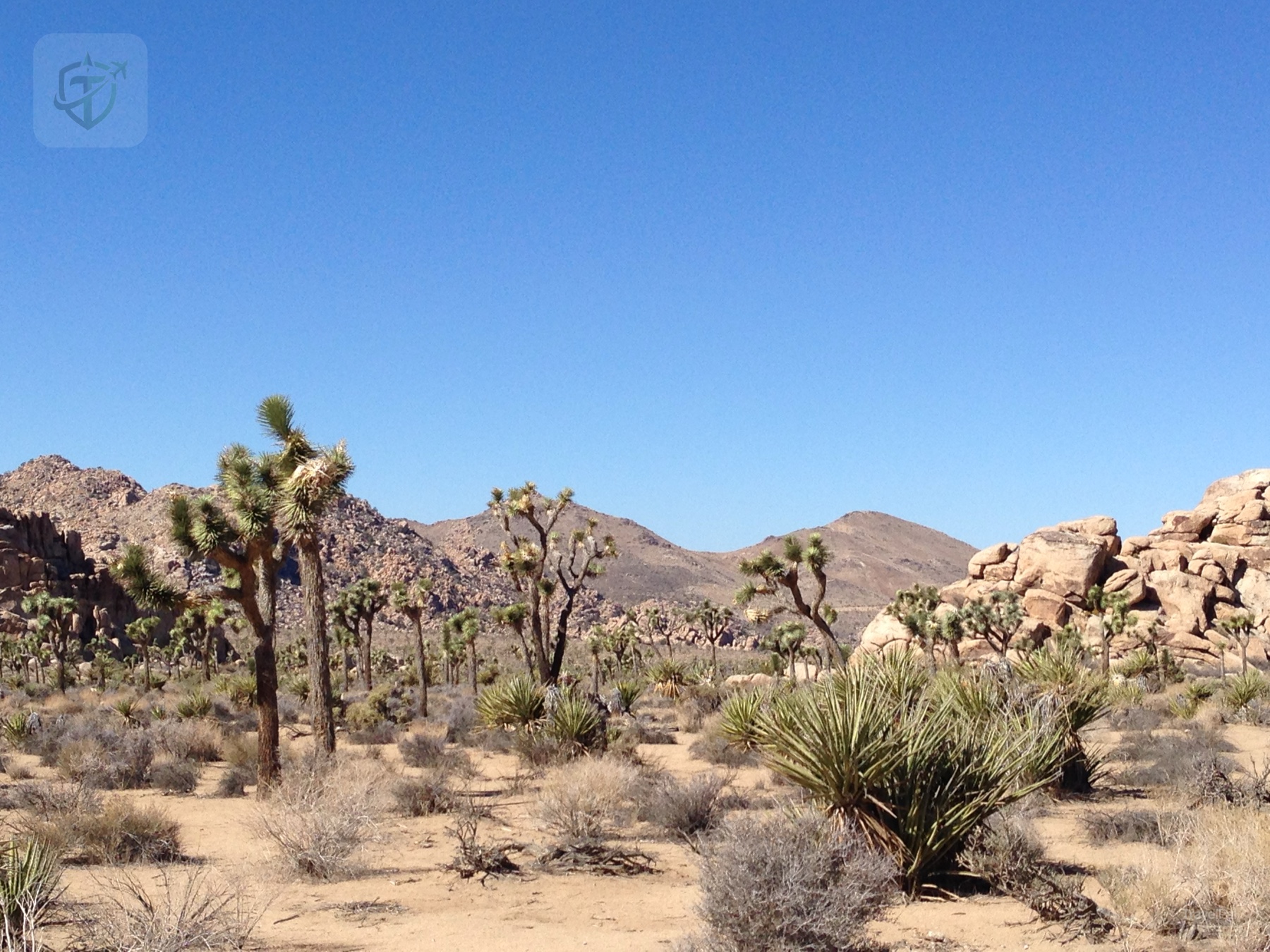
Joshua Tree National Park has an immediately recognizable look. The trees are spiky and eccentric, the ground is pale and dry, and the granite seems to have been rounded by a giant hand. I enjoyed seeing that landscape in person, especially because it does not resemble the mountains and forests I usually seek out.
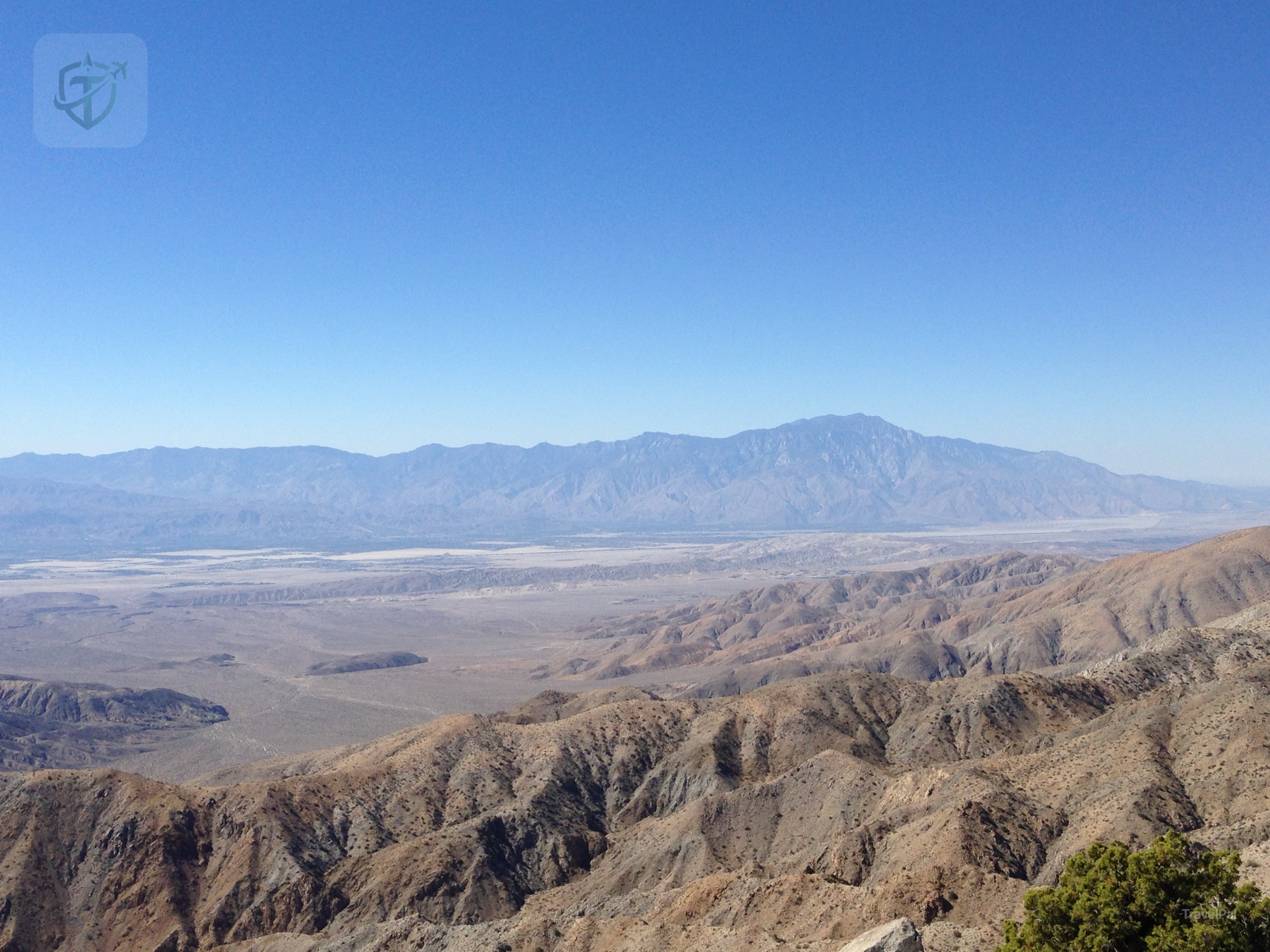
Still, I had to be honest with myself as the day went on: the daytime experience became a little boring. We drove, stopped, walked around a little, and saw another version of the same desert language. The park is special, but it does not give me a strong sense of progression during a simple daylight visit. I kept wondering when the next scene would change.
The boulders give the park its personality
The granite formations were the part of the daytime park I remembered most. One group of boulders looked almost soft from a distance, then revealed sharp cracks, stacked slabs, and little passages when I stood beside it. Joshua trees pushed up around the rocks as if they had negotiated their own route through the stone.
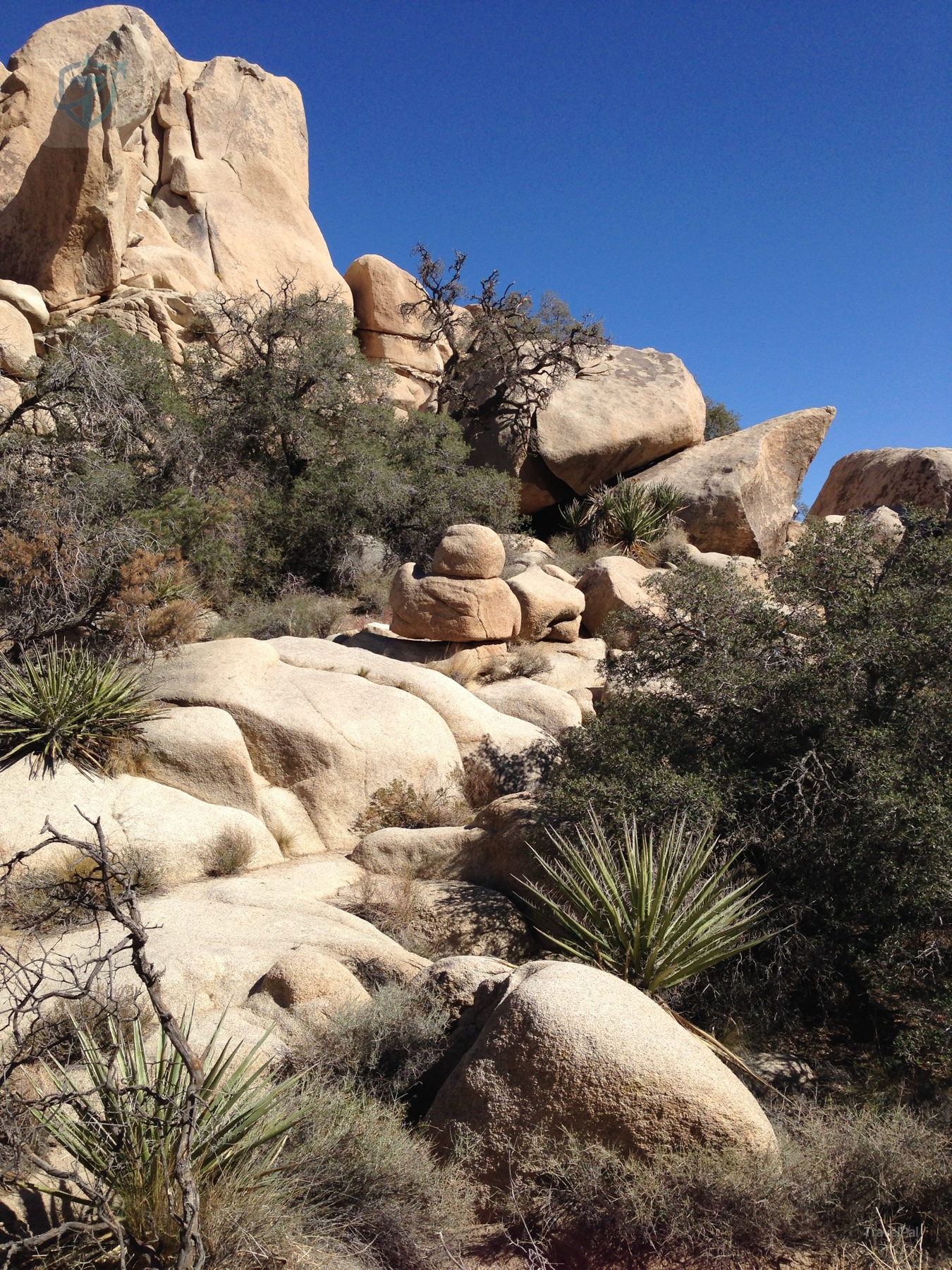
That close-up scale helped. Looking at the park from a car window made it feel like scenery; walking up to a formation made it feel like a place. I would give the boulders more time than I did and treat them as small explorations rather than a checklist of viewpoints.
The park changes after sunset
My best Joshua Tree memory was the night. Camping changed the rhythm completely. After the last bright colors disappeared, the park stopped asking me to move on to the next attraction. I could sit still, let my eyes adjust, and watch the sky become the main event.
That is why my rating is not lower. If I had only driven through Joshua Tree in the daytime, I would have remembered the repetition more than the wonder. With camping and stargazing, the park gained a second personality. The darkness made the desert feel less like a collection of rock stops and more like a landscape with its own time.
I would return for that version of Joshua Tree: arrive with enough supplies, settle into a legal campsite, and give the night room to develop. I would not plan a visit around rushing through every named stop.
Current planning notes
Hours and entry: The National Park Service says Joshua Tree is open 24 hours a day, 365 days a year. No advance reservation is required to enter, but an entrance pass is required. The current private-vehicle pass is $30 and valid for seven days; motorcycle and walk-in/bike prices are different. Buy ahead if useful and save or print the pass because cell service can be limited.
- Camping: Most of the park’s roughly 500 campsites are reservable through Recreation.gov, up to six months ahead; first-come sites can fill quickly. Reserve before entering when possible. Sleeping in a vehicle at a roadside pullout, parking lot, or trailhead is not allowed.
- Stargazing: NPS identifies Quail Springs, Hidden Valley, Cap Rock, and Ryan Mountain parking lots as designated stargazing areas. Stay awake and within 20 feet (6 m) of your vehicle there. Cottonwood Campground is identified as having the darkest campground skies.
- Night safety: Use red light, bring water and warm layers, check the moon phase, wear closed-toed shoes, and watch for cacti, uneven ground, and nocturnal animals. Day-use areas close from dusk to dawn, and overnight camping is not permitted along roadsides or in parking lots.
- Heat and supplies: There are no gas stations, restaurants, grocery stores, or water in most of the park interior. Bring food, water, fuel, and a charged offline map. Summer heat can be severe, while desert nights can cool quickly.
- Fire rules: NPS currently lists an annual campfire ban from June 15 through October 1. Check the park’s alerts before lighting anything, and only use a provided fire ring when fires are allowed.
Before you go, check the official first-time visitor guide, stargazing guidance, campground information, current fees, and alerts and conditions. These details change with heat, fire restrictions, construction, and seasonal operations.
Joshua Tree gets a 5/10 from me. It is a distinctive place, and the night sky can be genuinely memorable. For my taste, the daylight park needs the camping-and-stars experience to become a complete trip. If you love astronomy, desert photography, climbing, or quiet nights outside, you may score it much higher. If you have only a few hours and want a constantly changing sightseeing route, I would choose another park first.
The lesson I took home was simple: Joshua Tree is best when you stop trying to make it perform like a daytime attraction. Let the sun go down.
Visitor information checked July 29, 2026. Park hours, entrance fees, camping availability, fire restrictions, roads, facilities, and night-sky guidance can change; verify current details through the National Park Service before travel. This is a personal account and rating. All photographs and written content on this page are original TravelPal content and are copyright protected.