
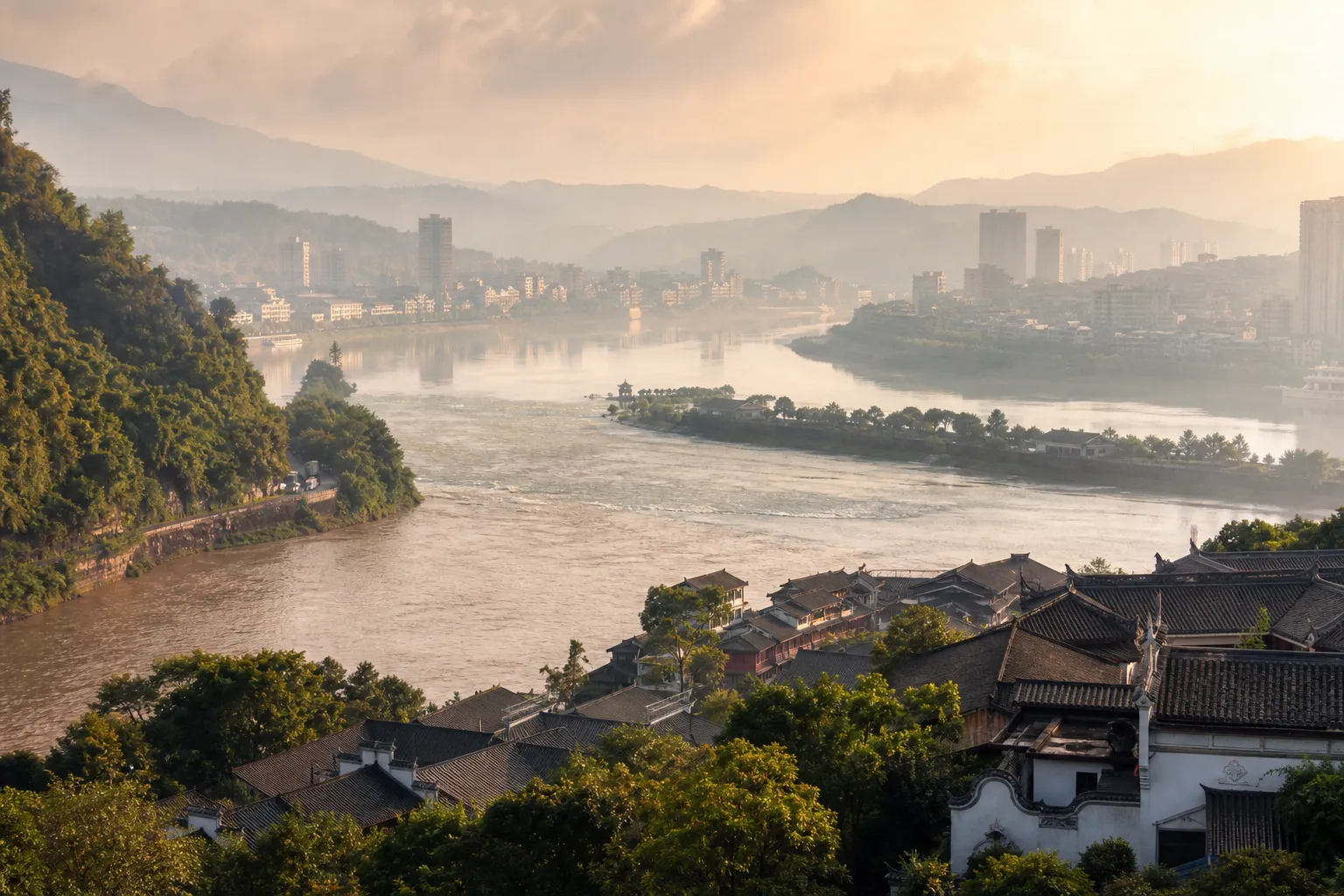
Jinlong Temple—also known as Jinlongshan Temple—sits on a hill south of central Luzhou near the Yangtze River. It works best not as a monumental destination but as a slow walk with moments of unexpected beauty.
The first impression is not the whole visit
The frontal Maitreya figure and entrance buildings combine newer decoration with older fabric. Repairs and additions from different periods sit visibly beside one another, and the result can feel busy or inconsistent.
That first view may tempt you to turn around. Do not. The temple’s most appealing spaces are not necessarily those intended to make the largest statement.
Walk around the sides and continue uphill
Red walls, bamboo gates, and stone steps begin to separate the temple from the city below. Curving rooflines appear against foliage, and the route becomes more intimate as it rises.
In autumn, small patches of color soften the grey tile and red wall. The effect is not grand. It feels like borrowing a quiet interval from the mountain—a place where the pleasure comes from turning a corner rather than arriving at a single climax.
Details worth noticing
Look for the small stone lanterns, child figures, framed views through windows, and the relationship between walls and bamboo. These elements photograph well, but they also reward putting the camera down.
A temple visit can become too focused on ranking architecture or collecting images. Jinlong Temple is better when treated as a sequence: stair, gate, wall, roof, window, pause.
Practical notes
- Time: allow one to two hours.
- Getting there: a taxi to the Jinlong Temple parking area is the simplest option for many visitors.
- Cost: admission was free during our visit; confirm current access before going.
- Best approach: wear shoes suitable for steps and take time around the side and rear paths.
- Respect: this is an active religious place, not merely a photo location. Keep voices low and follow posted rules.
The verdict
If you expect a perfectly preserved monumental temple, Jinlong may disappoint. If you want a lesser-known hillside walk with red walls, changing rooflines, and pockets of calm, it is worth the climb. The key is simple: do not judge the whole place from the front.