
Trailhead → Lower Falls → Upper Falls
This is my 2022 route, not a current conditions notice. Check Parks Canada before going.
Banff can make a person greedy. One mountain view leads to another, one turquoise lake makes the next turquoise lake feel like a requirement, and suddenly a day that was supposed to be gentle has become a schedule. On my 2022 trip, Johnston Canyon was the place I chose when I wanted the opposite: a short walk, a little shade, and a waterfall before lunch.
The canyon quietly changed the terms. It began as an easy promise and ended as one of those small mountain stories I still tell when someone asks what I loved about Banff.
The promise of a short hike
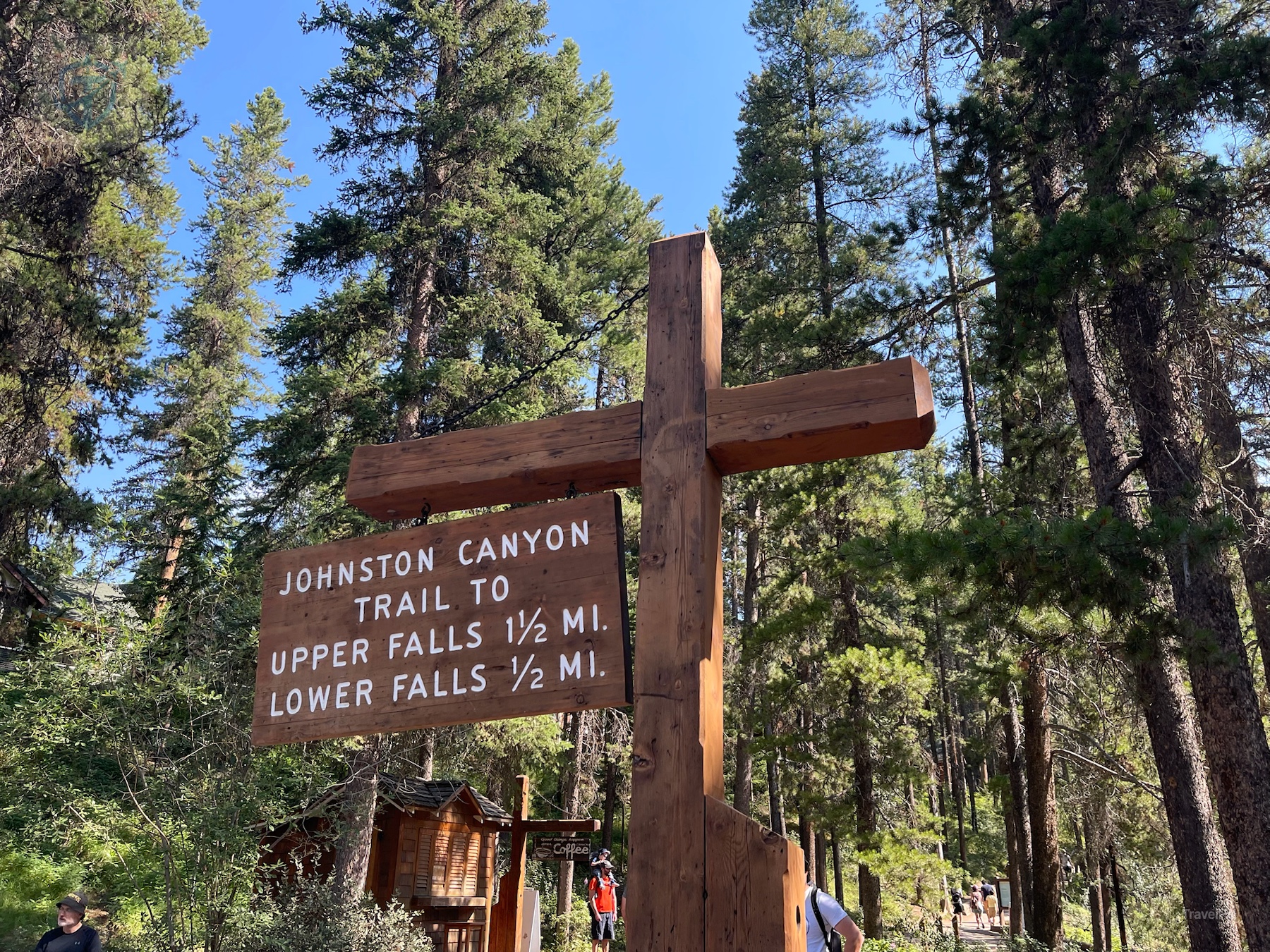
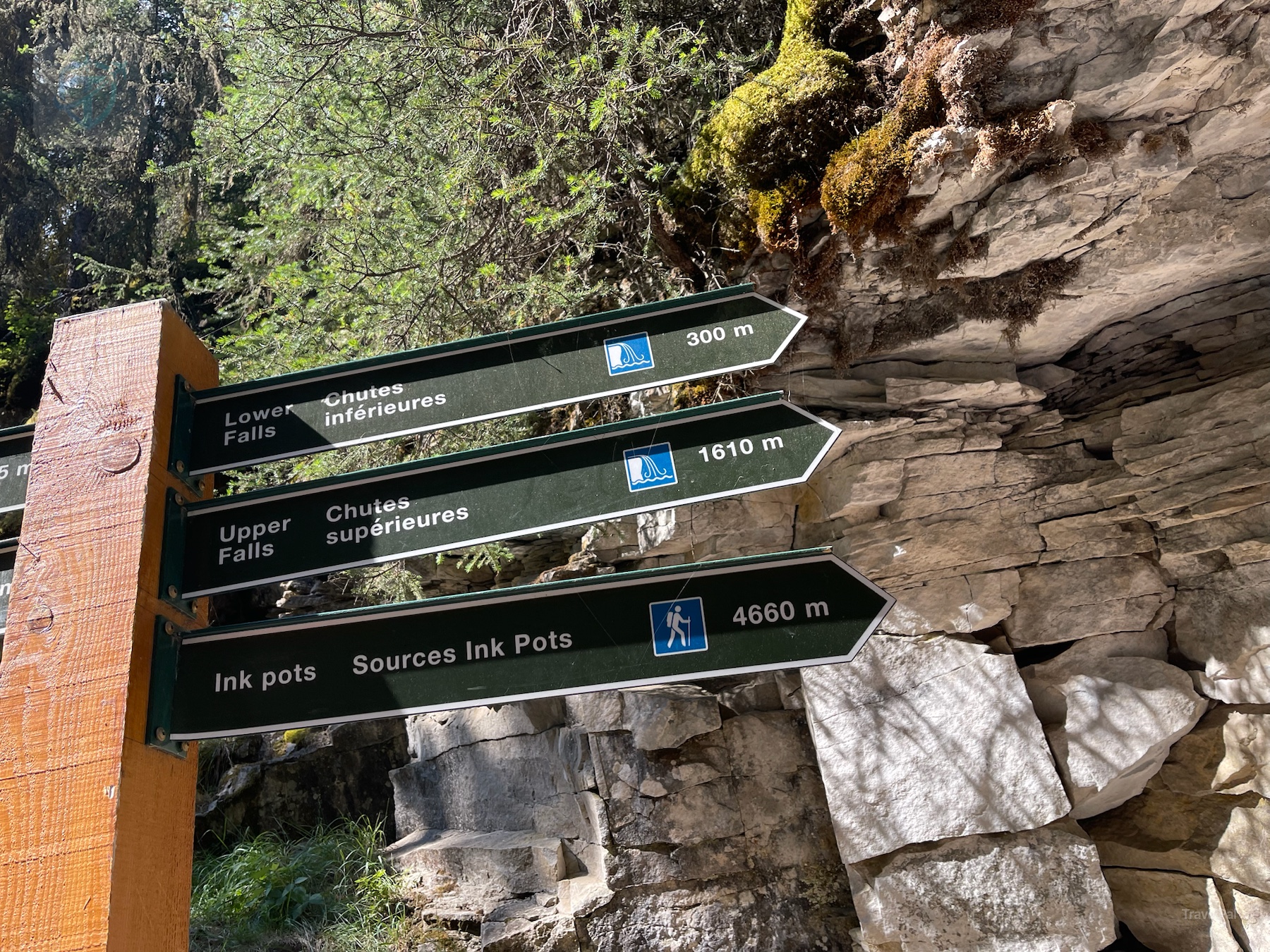
The first thing I saw was the wooden trail sign. Lower Falls: 1½ miles. Upper Falls: 2½ miles. It looked almost comically manageable beside the scale of the Rockies. I took a photograph, adjusted my expectations downward, and started walking.
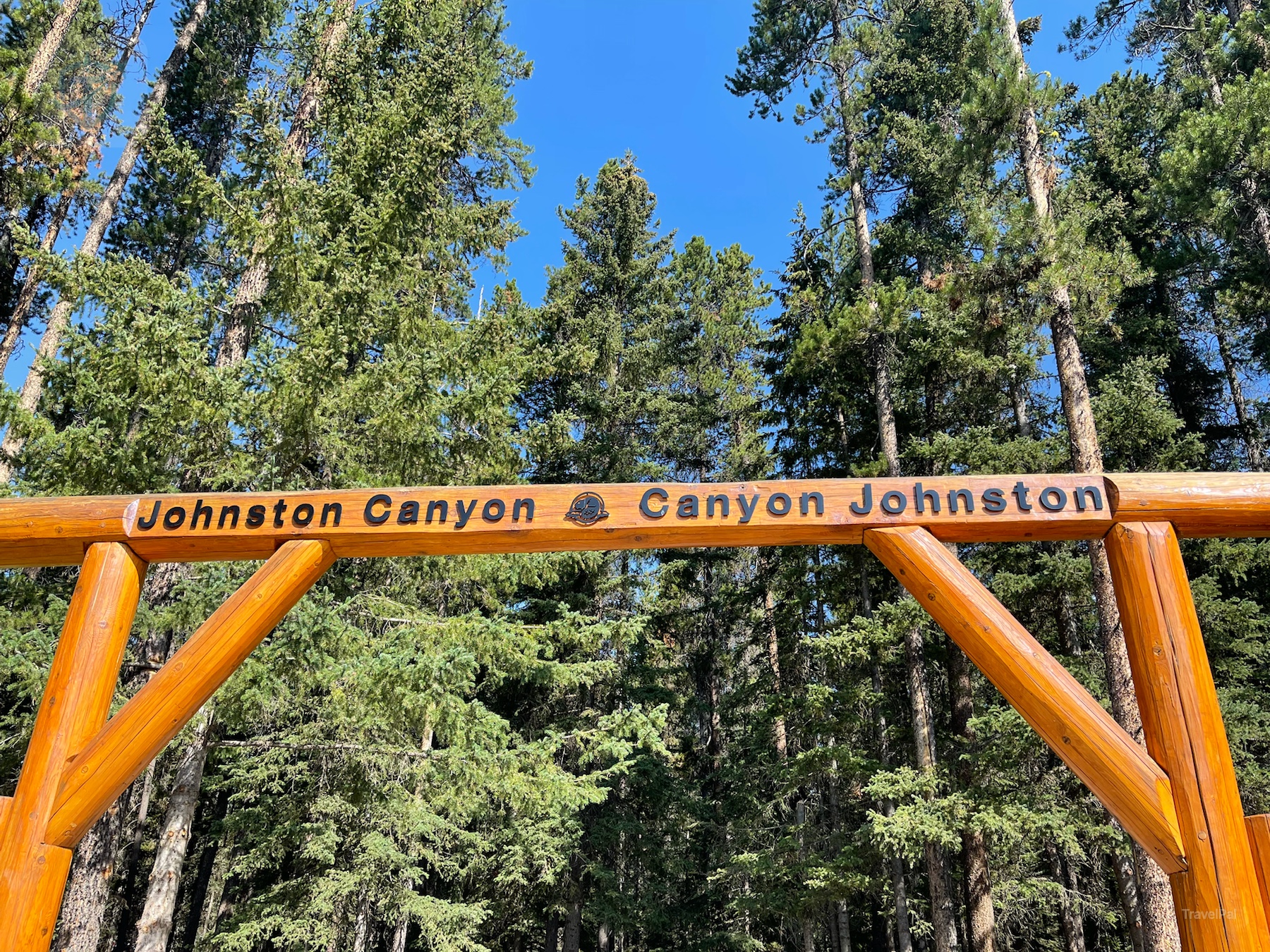
“Short” is true, but it is not the whole truth. The path keeps asking you to look down at the creek, sideways at the cliff, and up at the bridges that seem to have been nailed into the canyon wall by someone with a great deal of confidence. The distance is modest; the feeling is not.
Following Johnston Creek
Johnston Creek is the trail’s real guide. It does not pose for you; it hurries, folds around rock, disappears under bridges, and reappears in a different mood. In one bend it was pale and quick, almost silver. In another it settled into a deep green-blue pocket that looked too cold to touch and too beautiful to leave.
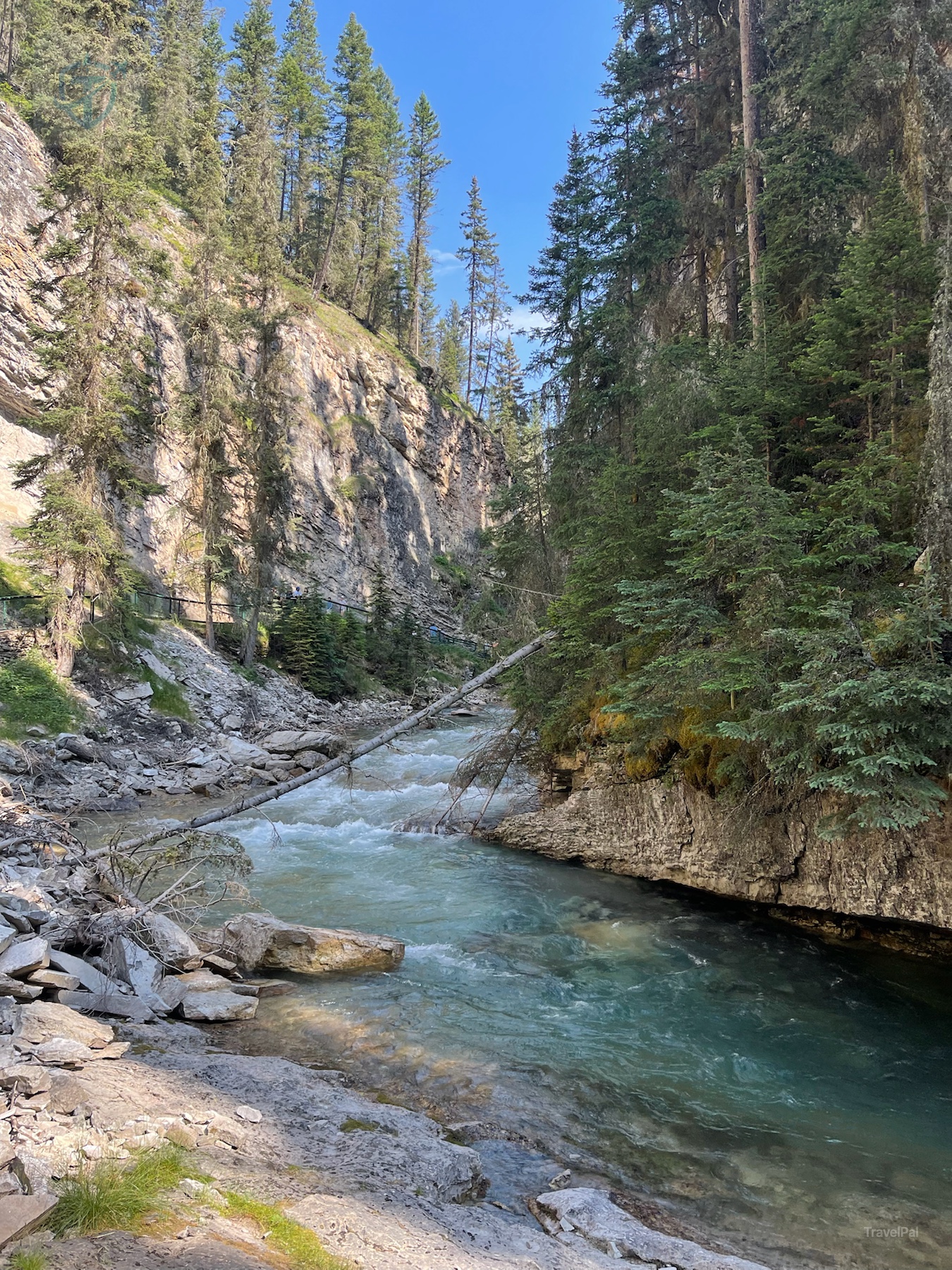
The trail is built for looking. Railings keep you close to the edge without asking you to be reckless, and the canyon walls make even an ordinary turn feel framed. I found myself slowing down—not because the route was difficult, but because the scenery kept changing before I had finished looking at the last version of it.
The little fortune story
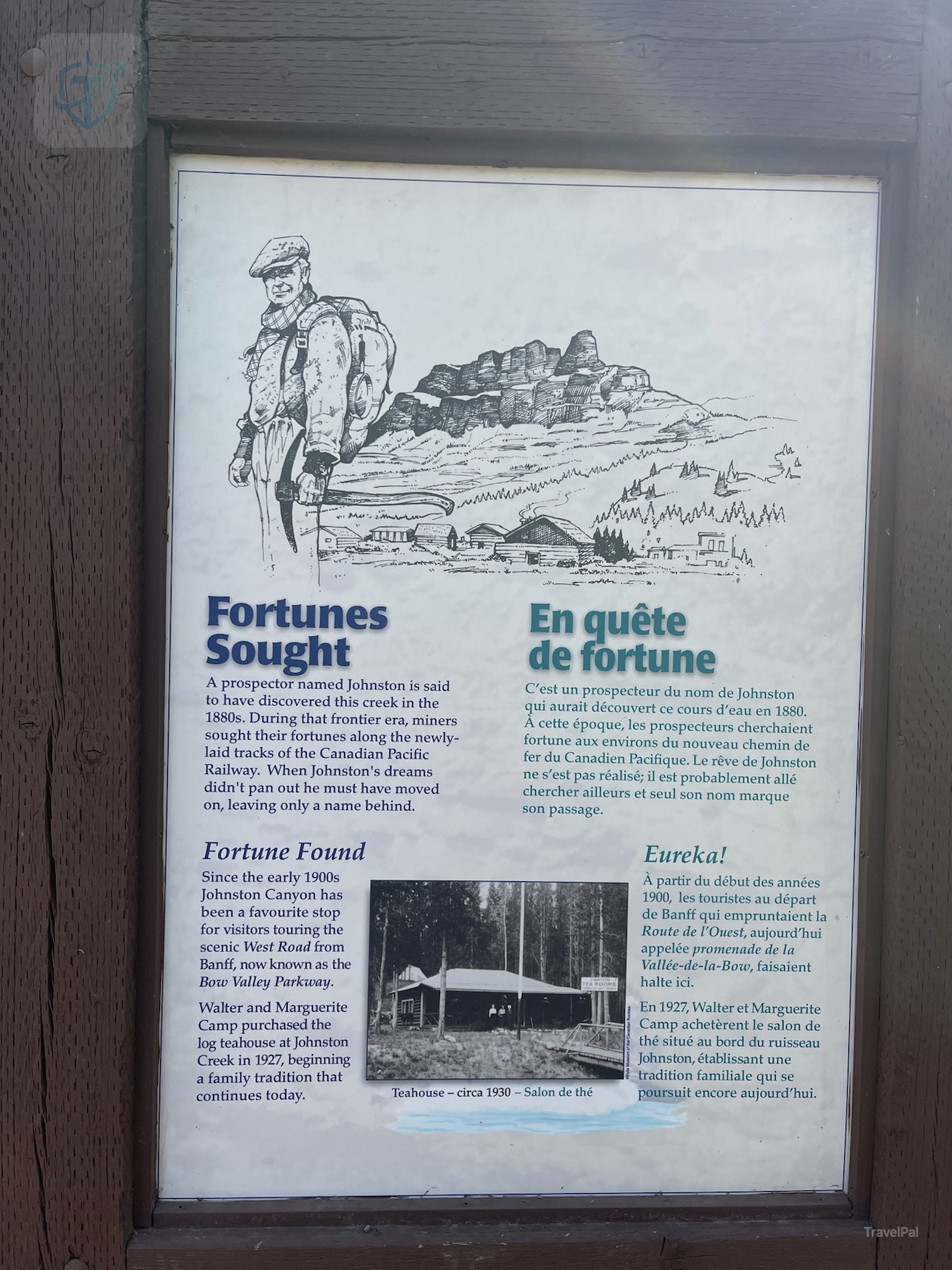
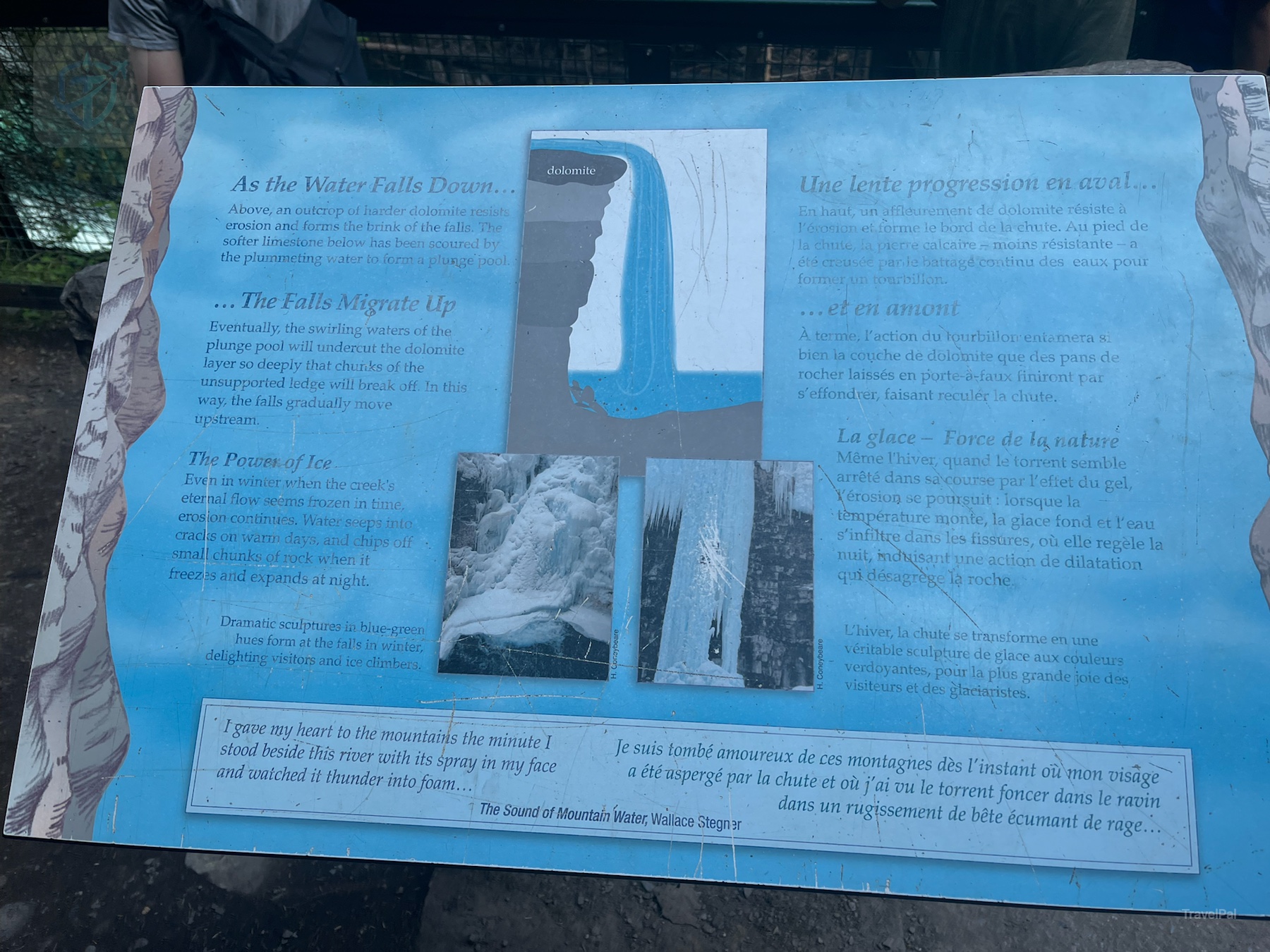
One of the most charming surprises was not a waterfall at all. An interpretive panel told the story of Johnston Canyon’s early tourist era: a prospector named Johnston, a search for fortune, and a teahouse tradition that helped turn the creek into a destination. The exact details mattered less to me than the shape of the story. People have been coming here for a long time, each one arriving with a different idea of what the canyon might give them.
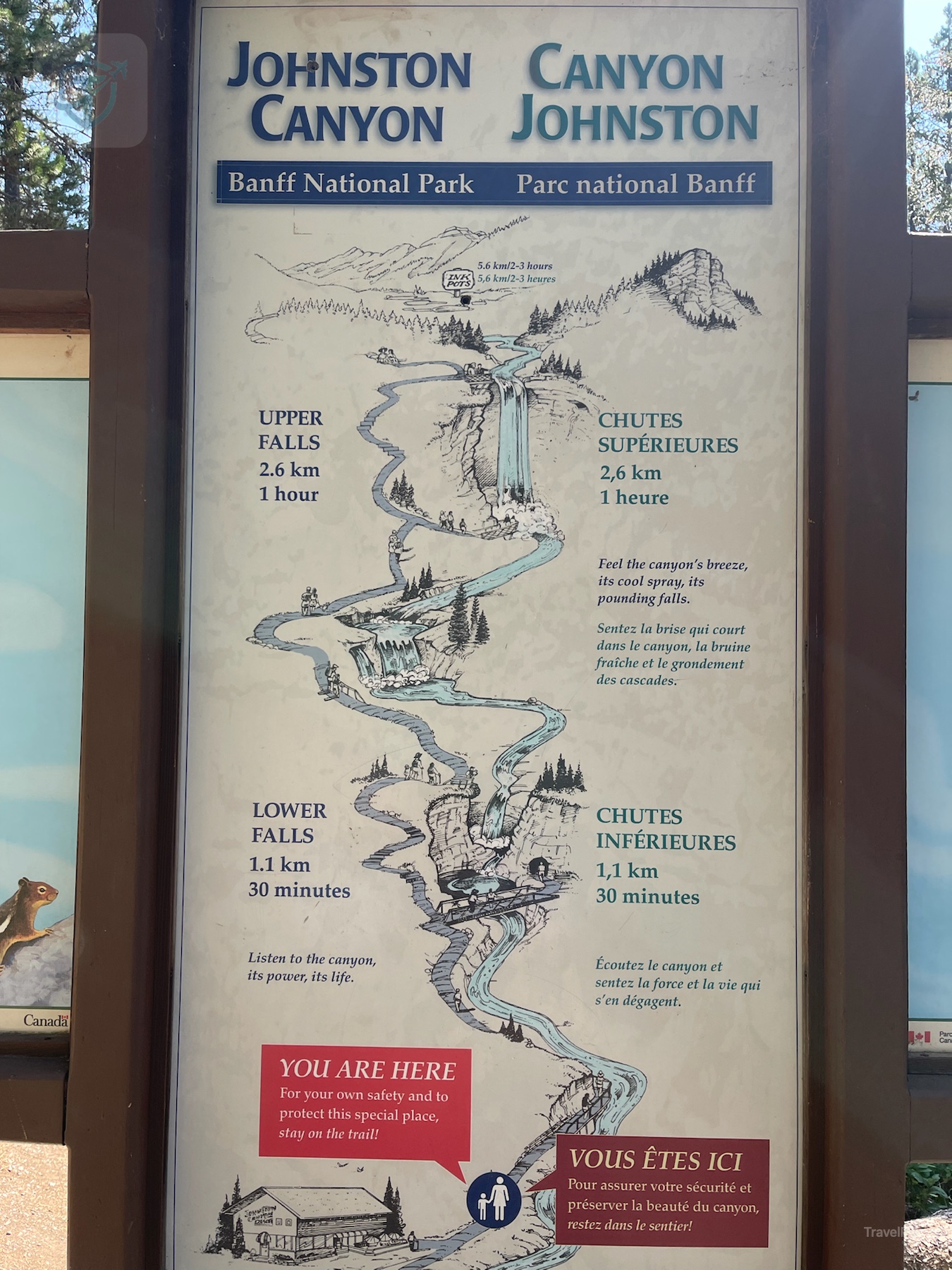
There is also a trail map for the people who like to know the ending before they begin. I appreciated it, even while pretending not to. The canyon offers a useful compromise: enough information to choose your distance, enough mystery to make you keep walking.
When the canyon turns blue
Near the falls, the canyon changes register. The walls close in, the air feels cooler, and the creek becomes a kind of moving glass. A direction sign points toward Lower Falls, Upper Falls, and—if you have the legs and the time—the Ink Pots. I had come for a short hike, but the Upper Falls kept winning the argument.
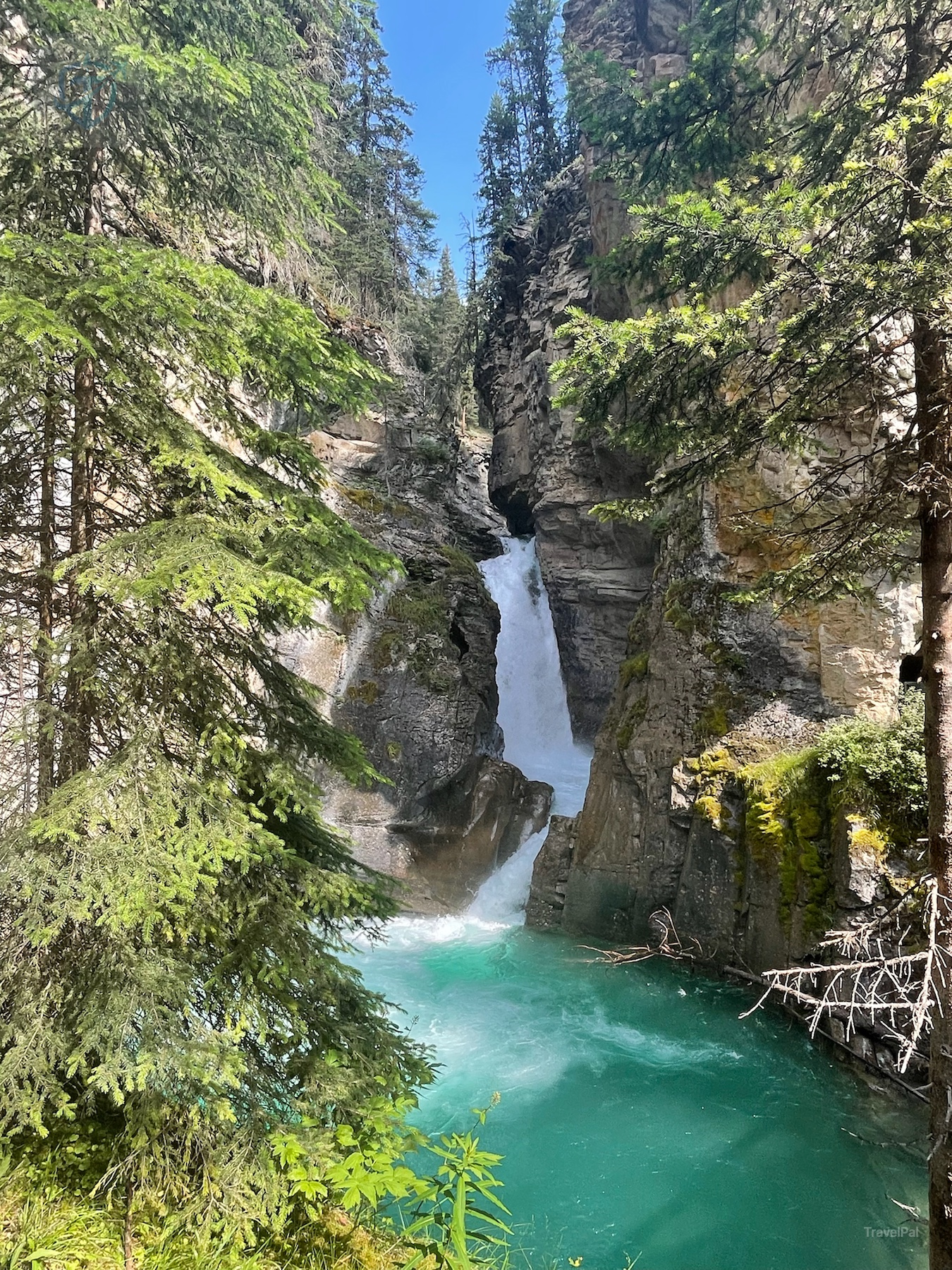
The Upper Falls were not just a curtain of water. They were a small room of color: white water dropping through dark rock into a pool so bright it looked lit from underneath. I stood there longer than I intended, which is how most good travel memories begin—by quietly ignoring the next item on the itinerary.
What I would remember
If I returned to Banff, I would still make room for Johnston Canyon—not because it is the wildest hike or the most remote view, but because it gives a lot back for the amount of time it asks. It is a good reset between grander plans. It lets you hear water, read one old story, climb toward a beautiful ending, and still have the afternoon ahead of you.
Parks Canada currently lists Johnston Canyon as an uneven paved path with narrow bridges and railings, about 1.1 km one way to Lower Falls and 2.4 km one way to Upper Falls. The trail can be busy, and access, parking, weather, and conditions change; check the current Parks Canada hiking page before you go. My 2022 trail signs show slightly different rounded distances, which is another reason to treat old photographs as memories rather than current instructions.
That is the small folktale of Johnston Canyon: I went looking for a short walk, the creek offered a longer story, and the waterfall kept the ending for itself until I had earned the view.
This is a personal account of my Johnston Canyon visit during a Banff trip in 2022. Trail distances, parking, seasonal access, weather, closures, and transit can change. Verify current conditions through Parks Canada before travel. All photographs on this page are original TravelPal photography and are copyright protected.