
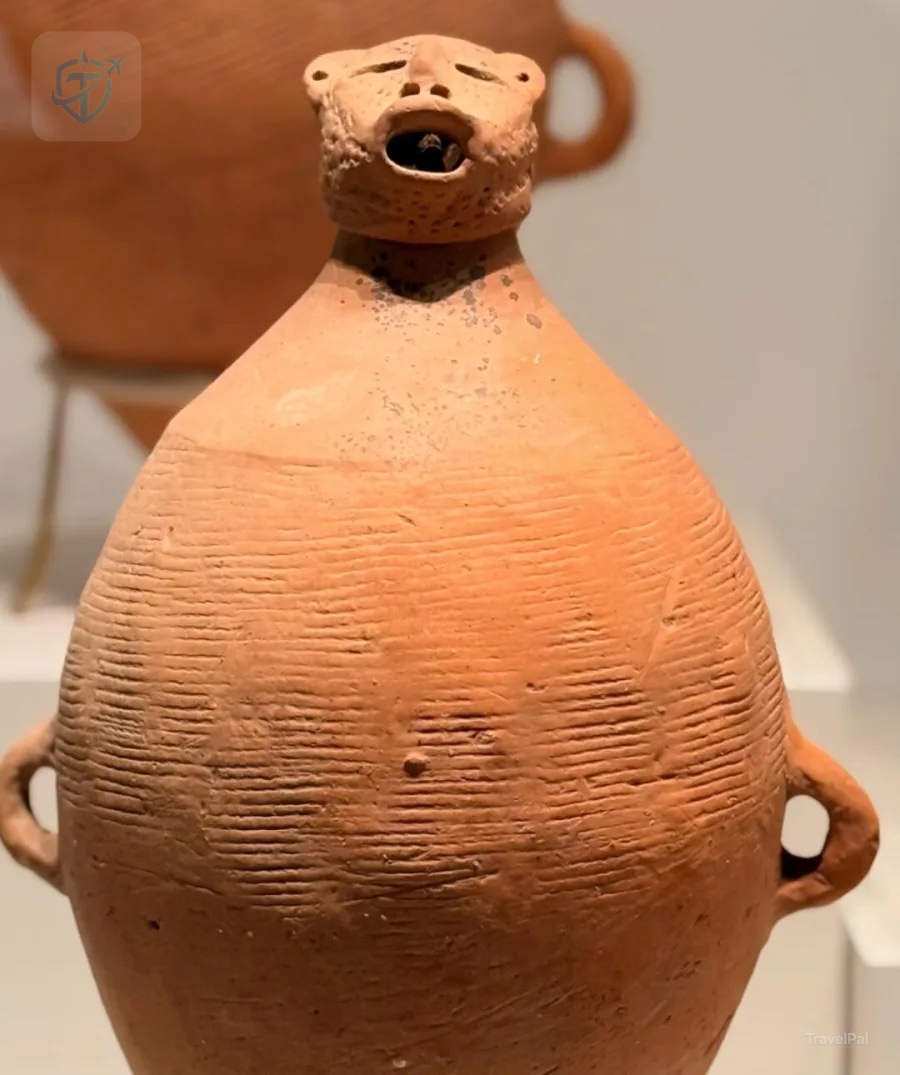
The museum for people who ask “How do we know?”
The Shaanxi Archaeology Museum is China’s first museum devoted specifically to archaeology as a discipline. It opened to the public in 2022 beside the Shaanxi Academy of Archaeology in Xi’an’s southern Chang’an District.
That distinction matters. Many history museums arrange finished objects by dynasty and invite you to admire them. This museum starts earlier in the chain: survey, soil, excavation, recording, typology, laboratory work, interpretation, restoration, and finally display.
Its permanent exhibition is organized into four large chapters: the history of archaeology, cultural sequences, major archaeological discoveries, and conservation science. The result is intellectually coherent rather than merely encyclopedic. On our visit, it was the museum we enjoyed most and the one that consumed the most time.
Our verdict: Make it a priority if archaeology, early civilizations, or conservation interest you. If your Xi’an schedule is built only around famous masterpieces and central locations, the long trip south may be a lower priority than the Terracotta Army or Shaanxi History Museum.
The opening galleries teach you to read the ground
Begin with the archaeology-history section instead of rushing toward the most photogenic objects. It traces the path from traditional epigraphy—the study of inscriptions on ancient metal and stone—to the field methods of modern archaeology.
The most useful displays explain stratigraphy and soil. Disturbed fill can show mixed colors and textures left by human activity, while undisturbed natural soil signals a different archaeological condition. Once you understand that distinction, an excavation trench stops looking like an arbitrary hole and becomes a sequence of events.
The Luoyang shovel receives the same demystifying treatment. It is a narrow, curved soil-sampling tool used to extract a vertical plug from below the surface. Differences in soil color, density, inclusions, and moisture can help archaeologists identify buried features before opening a larger excavation area. It is evidence gathering, not treasure hunting.
Small details explain an administrative world
Figures connected to the Qin imperial mausoleum include civil officials and charioteer-like attendants. A small knife carried by a civil official is not necessarily a weapon: before paper became standard, a writing knife could scrape errors from bamboo or wooden slips so the surface could be written again.
Construction details are equally revealing. Openings and broken surfaces show that some figures were assembled from separately formed components rather than modeled as a single solid body. Damage becomes part of the lesson because it exposes how an object was made.
A cultural timeline built from archaeological projects
The next major sequence moves from the Paleolithic through Neolithic cultures and into increasingly complex societies. Yangshao, Longshan, Shimao, and other names are not presented as isolated vocabulary; settlement patterns, pottery, burials, food remains, and changing social organization help establish what distinguishes one archaeological culture from another.
This is where the museum’s disciplinary focus pays off. Archaeobotany, zooarchaeology, and the study of human remains appear alongside objects, showing that seeds, animal bones, and skeletal evidence can answer questions a ceremonial vessel cannot.
The official overview says the museum draws on almost a century of archaeological work in Shaanxi and a research collection exceeding 200,000 finds. Its galleries cover more than 5,000 displayed pieces, but the quantity never feels like the only point. Projects such as Shimao, Zhouyuan, Qin imperial sites, Han and Tang capitals, and later kiln and tomb discoveries are used to show how interpretations are constructed.
Original Tang murals and the ethics of restoration
Upstairs, Tang-period murals provide one of the visit’s most immediate encounters with the past. These are fragile archaeological surfaces, not simply paintings detached from context. Look for how line, gesture, clothing, and group relationships create movement even where pigment has faded or plaster has cracked.
The conservation chapter is even more distinctive. It covers ceramics, bronzes, complex archaeological deposits, murals, textiles, and lacquer, explaining why each material needs a different approach. Good restoration does not mean making an object look new. Conservators must stabilize what survives, document intervention, distinguish evidence from reconstruction, and avoid replacing uncertainty with invention.
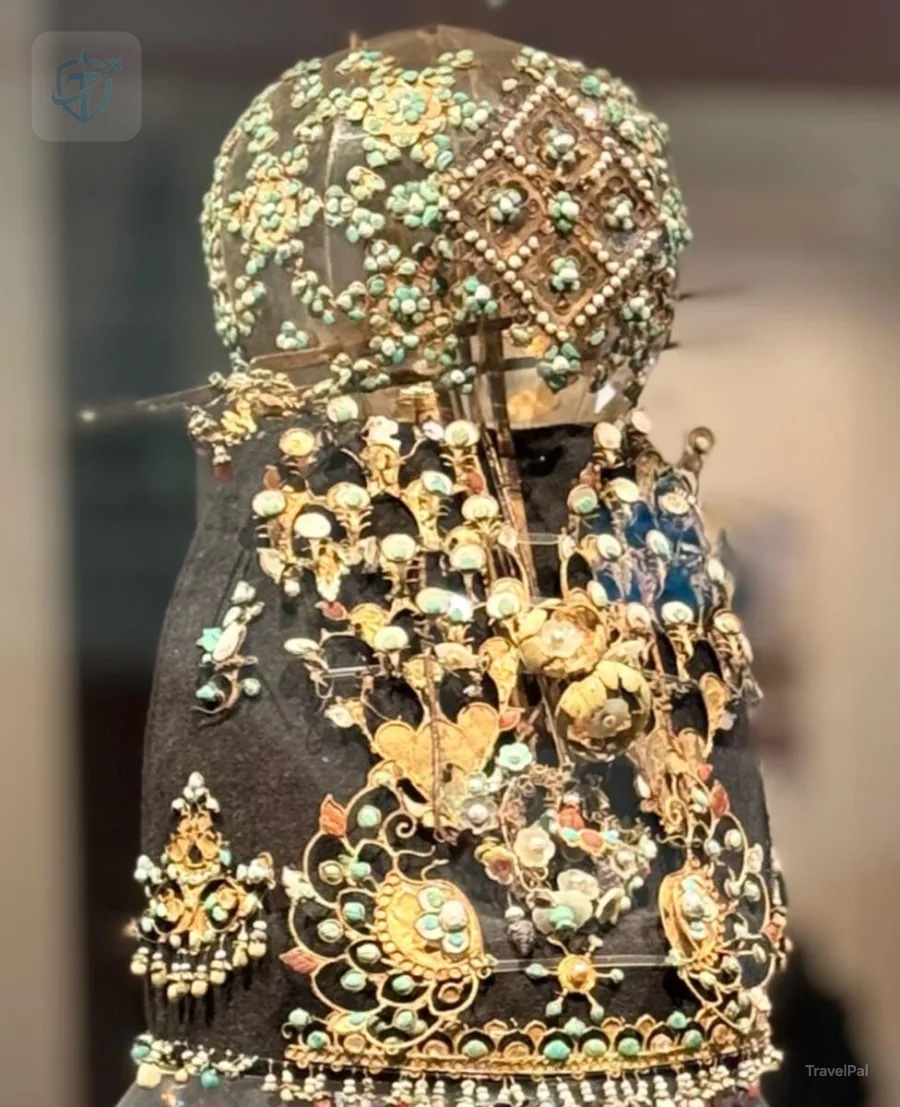
Li Chui’s headdress: conservation as archaeology
The reconstructed headdress from the tomb of Li Chui is the section’s clearest case study. Its many tiny ornaments were found layered together in a fragile mass. Instead of separating attractive pieces and discarding their positions, specialists lifted and studied the deposit under laboratory conditions, recording relationships that allowed its structure to be reconstructed.
The result is dazzling, but the process is the real exhibit. Gold, silver, copper, iron, turquoise, amber, pearl, gemstone, glass, shell, agate, and traces of kingfisher feather demanded different treatment. The reconstruction shows what becomes possible when excavation and conservation preserve spatial information as carefully as the objects themselves.
2026 reservations, opening hours, and passport entry
| Item | Current official rule |
|---|---|
| Admission | Free with reservation |
| Opening hours | 9:00 a.m.–5:00 p.m. |
| Last entry | 4:20 p.m. |
| Closed | Wednesday, except national public holidays |
| Reservation window | Up to five days ahead, including the current day |
| Ticket release | 8:00 a.m. daily |
| Official channel | Shaanxi Archaeology Museum WeChat account |
The museum says its WeChat account is the only authorized reservation channel and that it has not appointed third-party ticket sellers. Most visitors—including older adults and children over six—need an individual reservation. Time slots are enforced, so do not treat the booking as an all-day pass.
Foreign passport procedure
Foreign visitors can reserve using a passport. Bring the original document used in the reservation and arrive during the selected time slot. The official instructions direct non-mainland visitors to exchange the reservation for an entry credential at the ticket window west of the main entrance. The staffed ticket window currently operates from 9:00 a.m. to 4:00 p.m.
Read the current official visitor rules before traveling. The museum can change release schedules, capacity, holiday opening, or document handling.
Getting to Shaanxi Archaeology Museum
The museum is at the intersection of Zhongnan Avenue and Wenyuan South Road in Chang’an District, well south of central Xi’an. Its remote location is the main practical drawback.
Taxi or ride-hail
This is the simplest choice and the one we recommend when time and energy matter. Enter the full museum name and inspect the destination before confirming, because “Shaanxi Archaeology Museum” and “Shaanxi History Museum” are different institutions in different parts of Xi’an.
Metro plus bus
The official route is Metro Line 2 to Weiqunan, then bus 738 to Wenyuan Road South Entrance. This saves money but adds a transfer and may be less convenient after several hours in the galleries. Verify the current bus route and direction in a live map app before boarding.
A reasonable compromise is public transport outbound and a ride-hail return—or the reverse during traffic. Build a buffer around your reserved entry slot rather than planning to arrive at the last possible minute.
How long should you allow?
Two hours is enough only for a selective walk. Allow three to four hours for the permanent galleries, and consider most of a day if you read method panels, study the murals, watch conservation media, and take breaks.
- Archaeological methods and discipline history: 45–60 minutes
- Cultural sequence and major discoveries: 90–120 minutes
- Murals and conservation: 60–90 minutes
- Breaks, temporary displays, and outdoor areas: 30–60 minutes
The building and exhibition program are substantial: the official opening overview lists 5,800 square meters of indoor exhibition space and more than 5,000 displayed pieces. Museum fatigue, not a shortage of content, is the limiting factor. Eat beforehand, carry water within current rules, and decide which chapter matters most before your attention fades.
Bottom line
Shaanxi Archaeology Museum is worth the distance because it provides something Xi’an’s more famous sites often cannot: a clear explanation of how knowledge moves from buried context to museum label.
You leave remembering beautiful objects, but also disturbed soil, sampling tools, broken joins, conservation ethics, and the patient reconstruction of Li Chui’s headdress. That shift—from asking “What treasure is this?” to asking “What evidence supports this story?”—is the museum’s real achievement.
For Xi’an’s headline collection and the hardest reservation, use our Shaanxi History Museum ticket guide. For a smaller central option, compare our Xi’an Museum and Small Wild Goose Pagoda guide.
Opening hours, reservation release times, passport procedures, entry slots, bus routes, gallery access, temporary exhibitions, and holiday schedules can change. Details were checked against the Shaanxi Cultural Heritage Administration and the museum’s official ticket system on July 16, 2026.