
Xi’an itinerary at a glance
| Day | Main plan | Pace |
|---|---|---|
| 1 | Arrive, Giant Wild Goose Pagoda, optional evening district | Easy |
| 2 | Shaanxi History Museum, optional Tang Paradise evening | Full |
| 3 | Terracotta Warriors and Lishan Garden | Full day |
| 4 | Beilin Museum, Xi’an City Wall, optional performance | Full |
| 5 | Shaanxi Archaeology Museum | Focused |
| 6 | Han Yangling or SHM Qin-Han Civilization Museum, then Xi’an North | Departure day |
This plan assumes arrival and departure at Xi’an North Railway Station. It is intentionally not optimized for malls or checklist tourism. The route moves from an accessible first-night landmark into the hardest museum reservation, devotes a complete day to the Qin imperial complex, and finishes with quieter archaeology.
Choose a central hotel near useful metro connections if you want the most balanced commute. Southern Qujiang is peaceful and convenient for Days 1, 2, and 5, but it is less efficient for the City Wall and final northern departure. Our Hyatt Regency Xi’an review explains that tradeoff.
Day 1: arrive and start gently at Giant Wild Goose Pagoda
After arriving at Xi’an North, go directly to the hotel and leave your bags. Do not turn the first afternoon into a test of endurance.
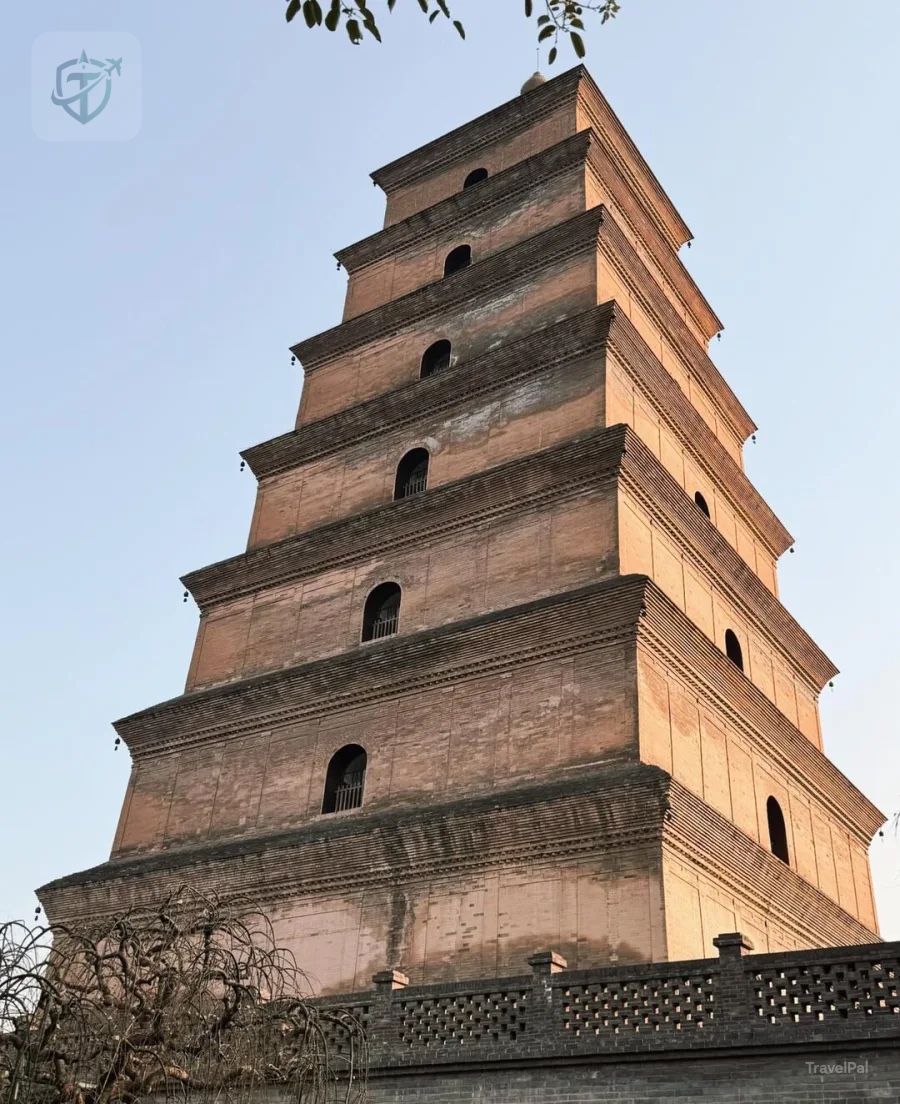
Visit the Giant Wild Goose Pagoda and Daci’en Temple in late afternoon. The temple adds the story of Xuanzang, Buddhist translation, and Tang-era international exchange; the public squares provide the strongest exterior views. Climbing the pagoda is optional rather than essential.
Stay through sunset if energy allows. The North Square fountain schedule changes, so treat a performance as a bonus and check the same-day Qujiang notice. Grand Tang Mall south of the pagoda is a modern entertainment district, not an archaeological reconstruction. Walk a short section after dark or skip it and protect your feet for the museum days ahead.
Day 1 rule: make the evening expandable. Pagoda only is enough after a long journey; add the squares and pedestrian district only if everyone still feels good.
Day 2: Shaanxi History Museum, then an optional Tang evening
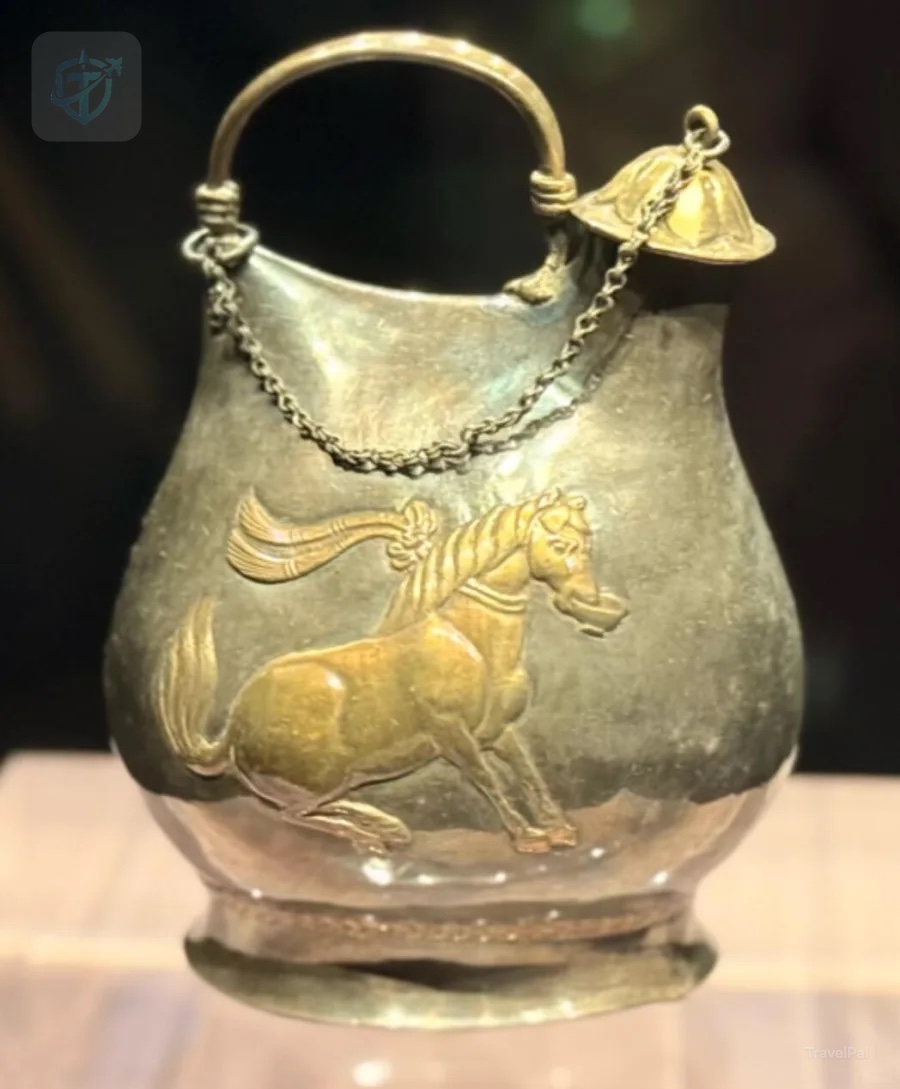
Make the Shaanxi History Museum the intellectual center of the trip. Follow the collection chronologically, but choose a few anchors rather than trying to photograph every case: the Tang dancing-horse silver ewer, sancai figures, and objects that explain Chang’an’s connections across Eurasia.
Current official instructions release tickets five days ahead at 5:00 p.m. The main museum is closed Mondays except national holidays. Use the official Shaanxi History Museum WeChat account and bring the original passport or identity document used to reserve.
Do not pay an unofficial ticket agent. The museum says it has not authorized third parties to sell its free admission. If free inventory is gone, check the museum’s official paid special-exhibition options; an eligible dated exhibition ticket may include main-building access, but availability and exhibitions change.
For the evening, Tang Paradise is a reasonable contrast: reconstructed Tang-inspired scenery, lighting, and scheduled entertainment. Any named boat or water-light performance requires a separate current check. Programs, showtimes, seating, and weather policies change; buy only after confirming the official schedule for your date. Bring a layer because open-water areas can feel cold after dark.
Day 3: Terracotta Army and Lishan Garden
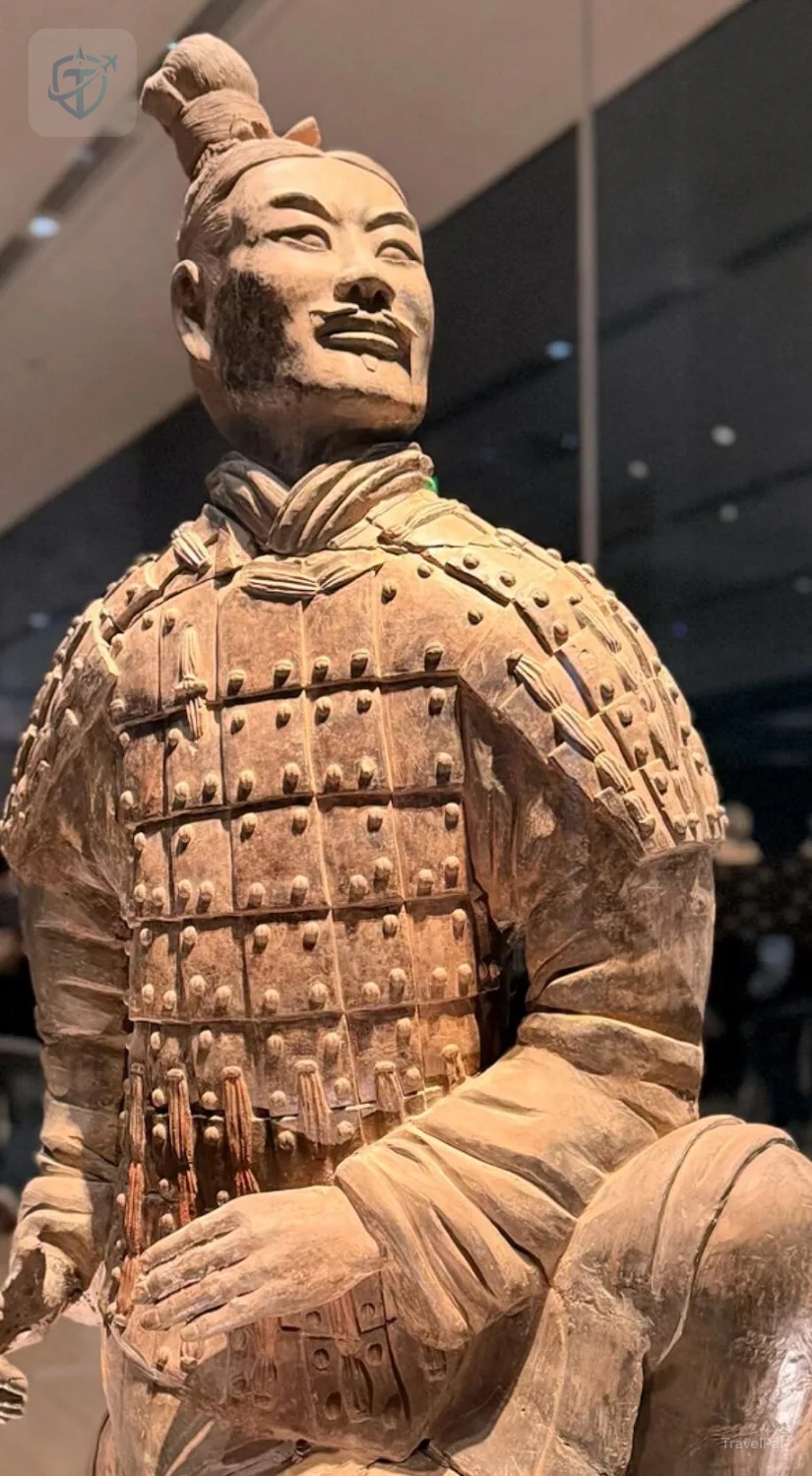
Give the Terracotta Army and Lishan Garden a full day. The combined site is more than Pit 1: Lishan Garden adds bronze chariots, accompanying pits, the mausoleum landscape, and evidence for the wider imperial afterlife project.
Use the official combined ticket and reserve in advance. Adult admission is currently ¥120 and includes both halves. The shuttle between the warrior museum and Lishan Garden is free; a sightseeing cart inside Lishan Garden is a different, optional service.
From central Xi’an, the predictable independent public-transit route is Metro Line 9 to Huaqingchi, then local bus or a short taxi. A direct taxi or ride-hail is simpler for a family or travelers with limited mobility. Do not build the plan around an old rail recommendation: timetables and last-mile transfers can erase the advantage.
Arrive early, carry water and a small snack, and expect long walking distances. The museum lists wheelchair rental, but confirm the accessible route and return point at the service desk before starting.
Day 4: Beilin Museum, City Wall, and an optional evening show
Begin at Xi’an Beilin Museum for stone inscriptions, calligraphy, and sculpture. Prioritize Yan Zhenqing’s forceful calligraphy and the Zhaoling Six Steeds reliefs, then let the rest of the collection build context around writing, state power, memory, and preservation.
Beilin currently uses timed admission with advance booking through its official WeChat service account, Alipay mini-program, or website. Hours can be extended seasonally. Check the live notice instead of copying an old closing time.
Continue to the nearby Xi’an City Wall. Walking a short, well-chosen segment is better than forcing the entire circuit after a museum morning. Weather exposure is significant; carry sun protection in summer and wind protection in colder months.
An evening historical production such as Jiujiu Daqin can supply spectacle after a text-heavy day, but only add it if the official performance calendar and location work for your date. Show names, venues, and schedules are commercial and change more often than museum hours. A bowl of biangbiang noodles or saozi noodles is an equally valid ending.
Day 5: understand how archaeology works
The Shaanxi Archaeology Museum deserves most of a day. Unlike a treasure-first museum, it explains excavation, chronology, interpretation, mural removal, laboratory work, and conservation. Follow the galleries in sequence and aim to understand two or three discoveries rather than filling a camera roll.
Admission is currently free with a reservation. Tickets open at 8:00 a.m. for dates up to five days ahead, including the current date, through the museum’s official WeChat account. It is normally closed Wednesday, not Monday. Foreign visitors can reserve with a passport and should bring the original document to the ticket window west of the entrance.
Public transport requires Metro Line 2 to Weiqunan and a bus transfer; a ride-hail for the final segment reduces friction. Allow three to four hours at minimum.
Day 6: choose one northern museum, then depart
Do not drag luggage through a museum unless storage has been confirmed directly. Leave bags at your hotel, use a verified railway-station facility, or arrange a driver to retain them. The museum visitor pages do not provide enough current evidence to promise luggage storage.
Option A: Han Yangling Museum
Choose Han Yangling for an archaeological site experience. The underground exhibition hall lets visitors look through glass into excavated burial pits filled with smaller Han figures and evidence of everyday life. It complements the Terracotta Army by replacing Qin military scale with a broader model of imperial society.
This option is more transport-dependent. Use a taxi or prearranged car, reserve through the official channel, and preserve a large departure buffer. It is the stronger choice for archaeology enthusiasts with a later train.
Option B: SHM Qin-Han Civilization Museum
Choose the Shaanxi History Museum Qin-Han branch for simpler public transport and a conventional museum visit. Current official information places it about 666 meters from Qingong station on Metro Line 14—the same line serving Xi’an North. It is open Wednesday through Monday and closed Tuesday except national holidays; 2026 guidance currently allows visitors to enter with the original identity document without advance reservation.
This is the safer choice when train timing matters. Select a few signature objects, leave before attention collapses, and continue to Xi’an North with a substantial buffer.
Reservation calendar and practical corrections
| Place | Current planning rule |
|---|---|
| Shaanxi History Museum | Five days ahead at 5:00 p.m.; official WeChat; normally closed Monday |
| Terracotta Army | Reserve before traveling; original passport; combined ticket includes Lishan Garden |
| Beilin Museum | Timed ticket through official WeChat, Alipay, or website; check seasonal hours |
| Shaanxi Archaeology Museum | Up to five days ahead at 8:00 a.m.; normally closed Wednesday |
| Qin-Han Civilization Museum | Current 2026 guidance: original document, no reservation; normally closed Tuesday |
| Evening performances | Check the official same-day calendar, weather policy, venue, and separate ticket |
Place the itinerary days around closures first, then around ticket inventory. Day numbers are flexible: if Day 2 would fall on Monday or Day 5 on Wednesday, swap them. The Terracotta Army day is the easiest to move because it does not depend on a weekly museum closure.
Final principle: Xi’an rewards sequence. See the Tang pagoda, then Tang objects; see the Qin army, then its landscape; read inscriptions, then walk the wall; learn how archaeology works, then compare Qin and Han burial worlds. The trip becomes a connected historical argument instead of six unrelated sightseeing days.
Museum reservations, release times, weekly closures, admission rules, transit routes, luggage services, performance schedules, show content, and seasonal hours change. Practical details were checked against official museum and cultural-heritage sources on July 16, 2026. Reconfirm every timed reservation and departure-day service before travel.